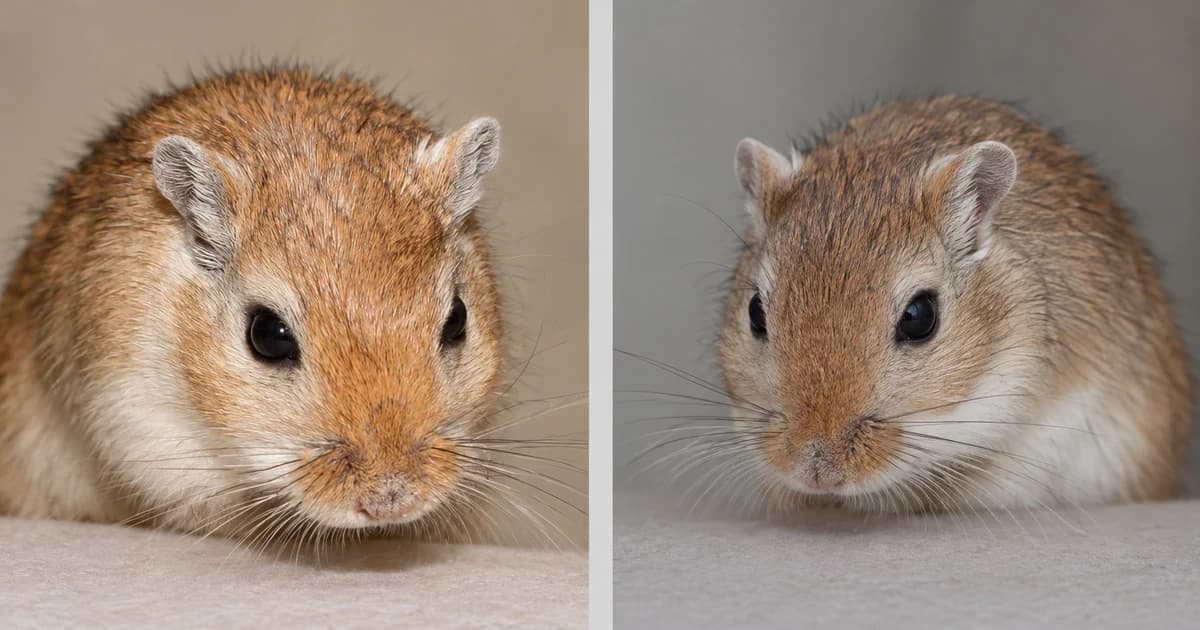
Start gerbil handling with voluntary contact. Lifting comes later.
Start at the enclosure
The RSPCA starts with voice and presence, without touching. Let gerbils investigate hands at their own pace, and never force unwanted handling.
Blue Cross begins with a hand inside the tank for sniffing, then gentle stroking. Stay at this stage if lifting is not welcome.
Use two hands near a surface
Form a cup with your hands on either side; scoop onto your palms and support the whole body. Keep them low above a flat surface, as the PDSA guide describes.
Never lift by the tail, scruff them or hold them high. Lower your hands close to the enclosure surface before allowing the gerbil to step off.
Think about the return before you begin: where will your hands go, and is that landing area available? If you have to work out the destination while holding the animal, pause and prepare the arrangement first. This is a planning check, not a test of how long a gerbil will stay on your hands.
Keep children involved appropriately
PDSA recommends that small children do not pick up gerbils, and that older children are supervised. Blue Cross also requires adult supervision for children handling them.
An adult can take responsibility for the lifting while a child observes. There is no need to turn each interaction into a holding attempt or to meet a timed handling goal.
For the broader accommodation task, see our gerbil enclosure setup guide. When the purpose is a cleanout, use the separate gerbil cage cleaning guide; holding an animal does not complete either job.