Introduce a cat to a harness and leash in small, voluntary steps indoors, and let its response decide whether to continue. Familiarity with the equipment, accepting a correctly fitted harness and moving with a slack leash are separate stages. If a stage causes discomfort, step back or stop; an outdoor walk is not a deadline every cat needs to meet.
Cat harness training tips are useful only when they preserve the cat’s choice at each stage. Keep familiarity with the unworn equipment, brief accepted fitting, indoor movement and a slack leash as separate steps. Record the response, pause or return to an earlier step when needed, and decide about going outdoors separately. Duration alone is not a measure of comfort.
The first decision is whether this activity is appropriate for the individual cat at all. A harness is equipment, not a requirement for a satisfying life. This guide helps you organize an introduction and record the cat’s response without forcing progress or treating stillness as proof of comfort.
Choose an endpoint that leaves the cat a choice
Cats Protection’s guidance on harnesses says many cats find wearing one stressful and may be better off indoors. If an owner chooses a harness, it recommends gradual introduction, positive associations and careful attention to stress. Its article on harness walks generally discourages them, emphasizing familiar territory, choice and the ability to retreat.
American Bird Conservancy includes harnesses alongside enclosures and other options for contained outdoor access. That conservation perspective is different from Cats Protection’s general caution about walking cats. It does not show that every cat should be trained for a neighborhood walk, and the two sources should not be presented as endorsing the same outcome.
For an introduction, the immediate question is narrower: can this cat choose to be near the equipment, accept the next small step and still move away? Choosing to stop is a valid outcome. A richer indoor environment can remain the plan rather than a consolation for “failing” leash training.
Prepare the room and understand the harness first
Use a familiar indoor area where the cat can withdraw. Keep the introduction separate from an open doorway or an intended trip outside. Avoid making the first contact a restraint exercise, a photo session or a test of how long the cat will tolerate being held.
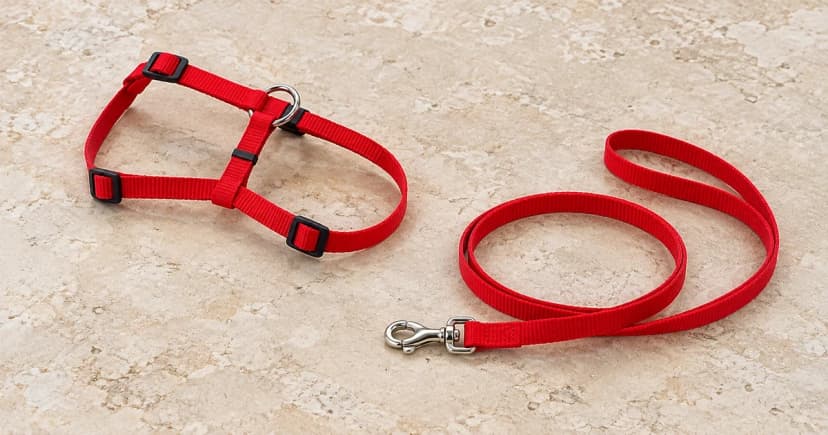
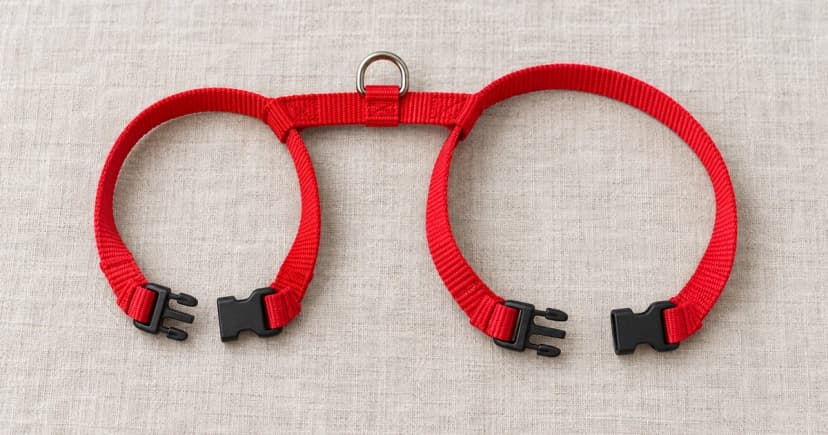
While the harness is off the cat, read its actual fitting and removal instructions. Identify the openings, fastenings, adjustment points and designated leash attachment. Choose the size using that model’s measurements. Resolving these details beforehand lets you concentrate on the cat’s response rather than working out an unfamiliar buckle while it waits.
When browsing cat harnesses and leashes, look for clear model instructions. A photograph showing another cat in the item is not proof of the right fit or a successful introduction. The harness should also be removable using its intended closures; do not improvise a tighter fit to prevent refusal.
Move through stages, rather than through a calendar
The following stages organize the source advice into decisions. They are not a validated training timetable, and a cat may need repeated pauses or may not proceed beyond the first stage.
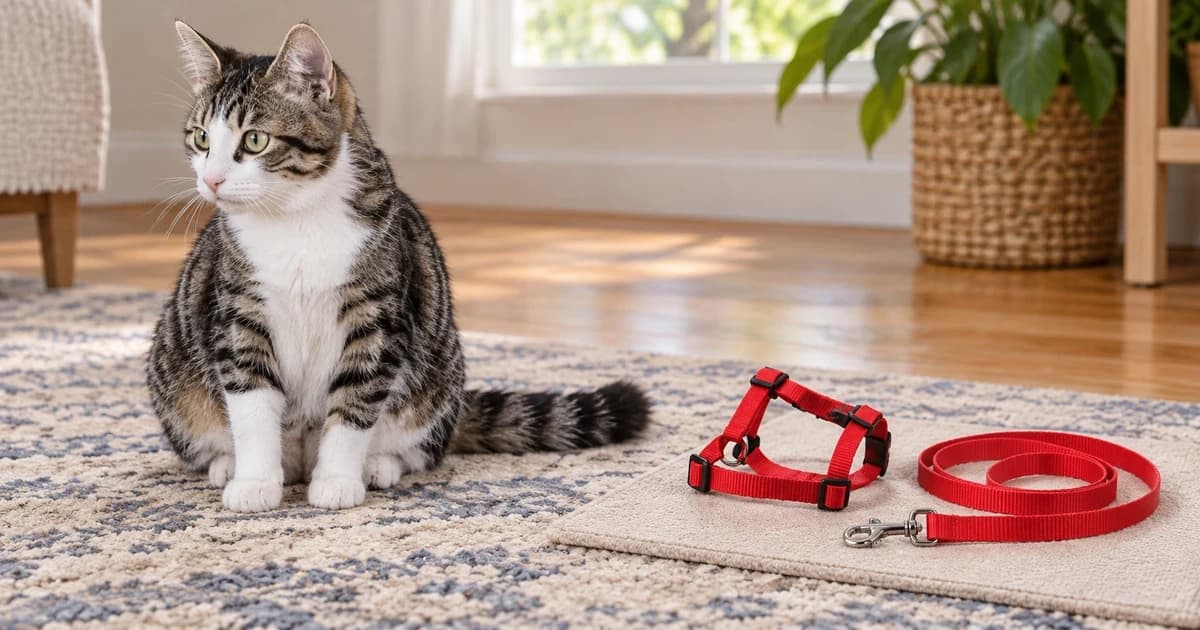
- Equipment nearby. Let the unworn harness be present without placing it on the cat. Keep the interaction optional. Reward an accepted interaction with something the cat likes rather than drawing it into a situation it cannot leave.
- Brief fitting when accepted. If the cat is willing to continue, follow the harness maker’s exact fitting sequence indoors. Stop if placement or fastening causes discomfort. Correct sizing and a willing response are both necessary questions; neither answers the other.
- Comfortable indoor movement. Let the cat move at its own pace during a brief supervised session. Do not use restraint to keep it in the harness until it appears to give up. Remove the equipment when the session ends according to its instructions.
- Leash introduced separately. Once the earlier stage is accepted, use the authorized attachment point and keep the leash slack. Follow the cat’s pace rather than pulling it into a route. If its response changes, return to an earlier accepted step or stop.
Cats Protection suggests using rewards from the cat’s daily food ration when food is used. This is not a reason to withhold normal meals, keep a cat hungry or make essential access depend on cooperating. Praise or another accepted positive interaction should likewise remain a reward rather than a way to prolong an uncomfortable session.
Use the response to choose the next step
PetSafe’s Come With Me Kitty use guide describes short indoor walks, rewards, allowing exploration at the cat’s pace and never yanking or jerking the leash. It also notes that acclimation varies. Its reference to a few days is not a deadline for all cats or a reason to progress despite discomfort.
For its named harness, PetSafe identifies tail flicking, a hunched back and general discomfort as reasons to allow a break. Those observations support pausing; they are not a diagnosis or a complete checklist of every possible reaction. Do not treat silence or remaining motionless as proof that the process is working.
| What happened | Useful next decision |
|---|---|
| The cat chooses to leave the equipment. | Let it leave. Do not make proximity compulsory. |
| Fitting or fastening brings discomfort. | Stop the attempt and reassess the accepted stage, size and instructions. |
| The leash creates pulling or changes the response. | Release the pressure, pause and reconsider the previous stage. |
| A short indoor session is accepted. | Record the observation without treating it as proof of outdoor readiness. |
Keep a simple introduction note
Record four things after a session: the stage attempted, what the cat actually did, whether it had a clear option to withdraw, and what you will change or repeat next time. “Approached the unworn harness, then left” is more informative than “training went well.” “Moved with a slack lead indoors” does not mean “ready for a public park.”
Do not score progress by wearing duration or distance alone. A longer session can be the wrong next step if the response changes. The record is an editorial observation tool, not a clinical behavior assessment or a guarantee that repetitions will produce a specific result.
Decide about outside separately
Accepting equipment indoors does not establish that an unfamiliar location, another animal or an unexpected event will be manageable. A harness also cannot guarantee containment. This introduction guide deliberately does not prescribe a public walking route, an outdoor health plan or a date to go outside.
Keep sessions supervised and remove the harness when its intended use is finished. PetSafe says its Come With Me Kitty harness should not be left on when not in use, and Cats Protection advises removing a walking harness after use. Neither an introduction nor a successfully fitted harness authorizes unattended wear or tying a cat out.
Research basis: the linked sources provide gradual introduction, named equipment use and differing views on outdoor access. The stage notes are editorial organization, with no hands-on training or effectiveness test. See our editorial policy.