Put a cat harness on by following the instructions for that exact design. Before bringing it to your cat, identify the head or leg openings, fastening points, adjustment straps and designated leash attachment. A photograph of another harness cannot supply the missing sequence.
Measuring for a cat harness is separate from working out its openings. Use the measurement points requested by the exact model, compare them with that model’s size range and then follow its fitted checks. A large-size cat harness label does not replace the cat’s measurements or establish that a different strap system uses the same adjustment rules.
Correct orientation is only part of the decision. The harness must match the cat’s measurements and its own fitting guidance, and the cat must be willing to accept the process. Do not force a cat through an uncertain opening or assume that any harness can be made suitable by tightening it.
Work out the shape while the harness is off the cat
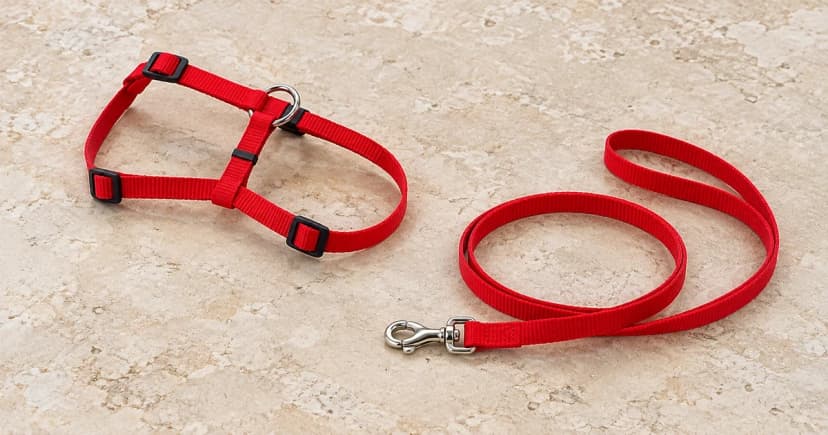
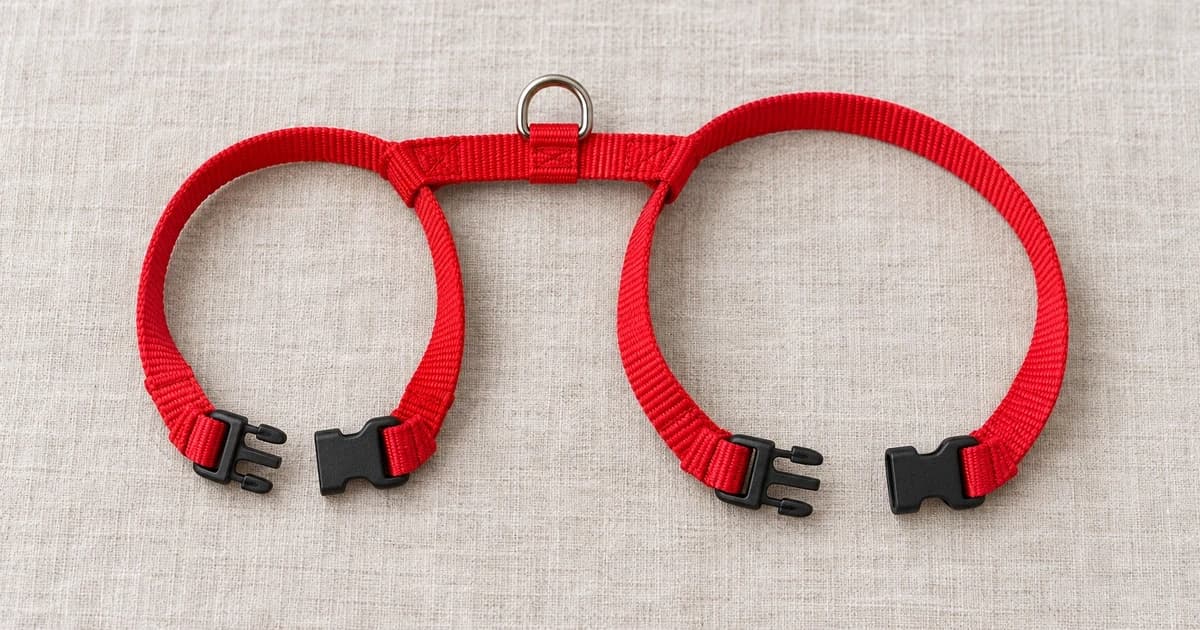
Lay the harness flat with its instructions beside it. An overhead strap design, a vest and a step-in design can have different openings and fastening sequences. Their marketing names are not enough to tell you how to put them on. Use the maker’s diagram to identify the actual parts.
Separate the adjustable section of a strap from a buckle, and a leash attachment from a decorative loop. Check whether an instruction tells you to open a fastening before placement or make an adjustment after removal. These are details to confirm, rather than reasons to improvise a universal method.
- Opening: which part is intended for the head or each leg on this design?
- Orientation: which section belongs on the back, chest or rib cage?
- Fastening: which buckles or closures must be opened, and how are they secured?
- Adjustment: which strap changes which part of the fit?
- Attachment: where does this maker authorize clipping the leash?
If the diagram and the item in your hand do not agree, check the model and version. A replacement part, missing component or similar-looking design can make the wrong instructions unhelpful.
Choose the size using the model’s measurements
For PetSafe’s Come With Me Kitty harness specifically, the manufacturer’s fitting page calls for measuring girth around the rib cage behind the front legs and selecting the appropriate size from that measurement. This is an example for that named harness, not a size chart for all cat equipment.
Check the chart supplied with your own model and record the measurements it requests. Do not choose a harness solely from the cat’s weight, age or breed, or transfer a measurement range from another maker. An adjustable strap does not prove that every cat falls within the item’s fit range.
When considering cat harnesses and leashes, look for identifiable fitting instructions and usable size information. A product title containing “escape proof” or a photo of a cat wearing it is not a substitute for those details, and it does not establish escape resistance for your cat.
A named example: PetSafe Come With Me Kitty
The Come With Me Kitty instructions illustrate why the exact structure matters. They name an O-ring, chest slide and rubber stopper, so their sequence belongs to that design. If your harness has different parts, use its own instructions instead.
- Prepare the opening. The PetSafe page starts with the fastening unbuckled and places the neck loop over the cat’s head. Confirm the correct loop from its diagram before attempting this.
- Set the girth straps. It describes adjusting them for a snug fit and then buckling them.
- Check the O-ring position. PetSafe places the O-ring directly on the rib cage.
- Make further strap changes with the fastening open. Its page tells users to unbuckle if further adjustment is needed.
- Locate the chest slide and stopper. With the harness buckled, PetSafe says to move the chest slide to the breastbone without pressure on the throat; its rubber stopper keeps the shoulder straps in position.
These named landmarks help you compare the item with its instructions. They do not make the same neck loop, ring placement or stopper necessary for a vest or another strap system. The page also does not establish a universal “two fingers” rule for every cat harness. If your model supplies a clearance or adjustment check, use that model’s wording.
Pause if the cat or the equipment is not ready
Cats Protection’s harness-and-lead advice emphasizes the stress and loss of choice that restraint and unfamiliar outings can cause. It generally discourages walking cats and says that, if a harness is used, it should be made for cats, fit comfortably and be put on according to its instructions.
Treat the cat’s response as part of the decision, rather than a problem to overcome by force. If the cat is uncomfortable with the approach or placement, stop and return to a stage it accepts. Do not hold it in place until it stops resisting, pull it into position with a leash, or use a tighter setting to prevent it from objecting.
If orientation is uncertain, a closure will not work as described, or the size is outside the stated range, the next step is clarification or different equipment. Continuing the sequence with an unresolved fit issue does not make it correct. Becoming familiar with a harness is a separate process from locating its straps and closures.
Keep fitting separate from a decision to walk outside
The presence of a harness does not mean a cat needs a walk. Sources also differ in their emphasis. American Bird Conservancy includes harnesses among options for contained outdoor access, while Cats Protection generally advises against harness walks because of their potential stress. These positions are not a shared recommendation to take every cat to a park.
A fitting guide cannot settle whether a particular outing is appropriate. It also cannot establish that a cat will remain comfortable, that the harness cannot come off, or that a person can safely respond to every surprise. Keep the equipment instructions and the individual cat’s response in view without treating the accessory as a guarantee.
Remove the harness when its intended use is finished. PetSafe’s named fitting page says the Come With Me Kitty harness should not be worn when not in use; Cats Protection likewise advises removing a walking harness after returning home. Do not turn a fitting session into unattended wear or a tie-out arrangement.
The useful endpoint is simple: you can identify the model, match its measurement guidance, explain every opening and adjustment from its instructions, and stop if the cat or the fit is unresolved. That is a more reliable basis for the next decision than copying a universal putting-on sequence from another harness.
This guide is based on the linked manufacturer and animal-welfare/conservation sources. No escape-resistance or hands-on fitting test was performed. See our editorial policy.