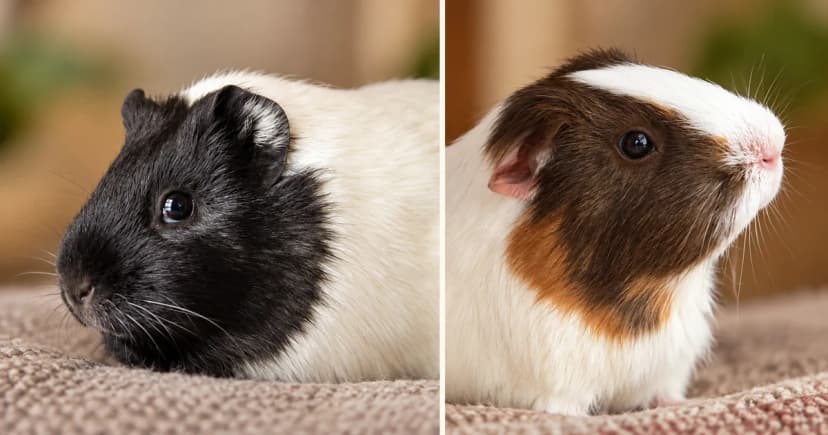
Set up the whole guinea-pig living arrangement before collection: accommodation, exercise access, flooring, retreats and everyday resources. Furnishing a cage is only part of that job.
Plan the occupied space
Blue Cross describes an indoor main area of at least 5ft by 2ft when a separate 6ft by 4ft exercise run is available. For permanent indoor housing without a separate run, it gives at least 6ft by 4ft. Do not treat the smaller main area as the complete arrangement.
Plan for your actual compatible group, with room to move and withdraw. A rabbit is not a guinea-pig companion. Resolve grouping through the separate guinea-pig introduction guide rather than introducing strangers while arranging the enclosure.
Choose the site and floor
The RSPCA's environment guidance calls for quiet, dry, ventilated indoor housing away from draughts, direct heat and predators. Outdoor housing needs shelter from direct sun and wind, with protection from weather extremes and predators.
Use a solid base, not an exposed grid floor. Provide soft flooring and dust-free hay for hiding and burrowing. Avoid coarse straw and fluffy stuffing that separates into strands. If using a fleece liner, follow its own first-use preparation instructions; a fleece surface alone does not establish the bedding beneath it.
Make retreat and resources accessible
Provide refuges that outnumber the guinea pigs by one, with clear routes to reach them. Include covered places as well as exercise space; an exposed open area alone does not give them somewhere to retreat.
PDSA lists constant access to hay and fresh water. Arrange the group's feeding and drinking points so each animal can reach them. For an installed drinking bottle, complete the separate flow and leak check.
Check the arrangement before use
Before collection, check the enclosure's security and any fittings against the equipment's own instructions. A finished assembly does not verify the whole living arrangement.