Use a flirt pole as a supervised chase game with a clear beginning, regular chances to catch the lure, and pauses for a familiar release. Keep the lure moving along the ground rather than lifting it for jumps. Finish by putting the equipment away, rather than leaving the dog with the cord or lure.
The useful sequence is begin, chase, catch, release and pause. How you move through those stages matters more than completing a set number of rounds. Check the instructions for your particular pole before trying the game; a bungee model and a plain-rope model do not have identical handling requirements.
Decide whether to start
Blue Cross's flirt-pole guidance says this game is unsuitable for arthritic, elderly or not-fully-grown dogs. Its discussion of maturity varies with breed; reaching a particular birthday is not an individual assessment of readiness. If you are unsure whether this kind of chase suits your dog's age, health or movement, ask your veterinarian before starting.
Blue Cross also advises warming up and cooling down around the game. Plan for those transitions instead of going straight from rest into an animated chase. Do not treat a warm-up as a guarantee against injury or use the pole to work through an existing movement problem.
Your dog should already understand how to release a toy when asked. Blue Cross describes a reliable drop or leave response as preparation for this game. If that piece is missing, work on it separately before adding a moving lure. You do not need to make the chase more exciting to teach the pause.
Prepare the pole and play space
Choose an outdoor area with room to move the lure without running it into obstacles. Squishy Face Studio's instructions recommend a grass or earth surface for its poles. Match the space to your equipment and its instructions, rather than borrowing a minimum area from a different model.
Inspect the equipment as its maker directs. Squishy Face Studio specifically tells owners to check the cord frequently and stop using it if damage is found. Keep the lure and line available for inspection; damage is a reason to remove the equipment from use, not to make the game gentler and carry on.
Pawlivy's flirt pole category groups this type of equipment. Before choosing or using a particular pole, identify its line construction, intended lure and handling instructions. A category name or an illustration does not establish those details.
1. Begin with a still lure and a clear invitation
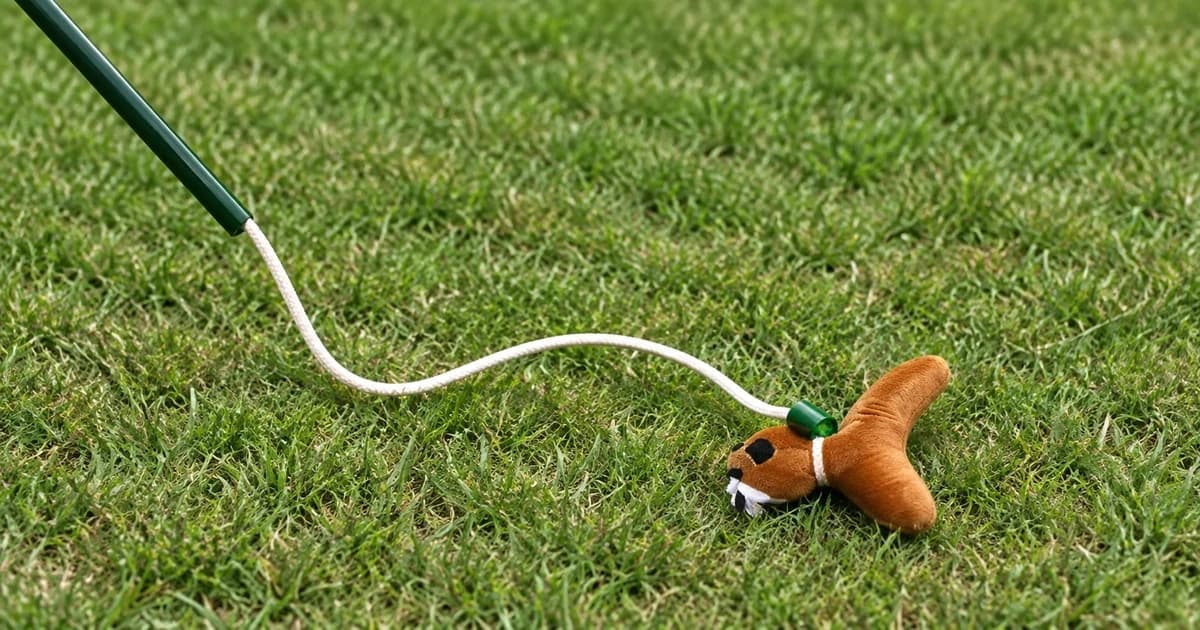
Get into position before starting the movement. Blue Cross describes asking the dog to sit, casting the lure away from the handler so it lands opposite the dog, and then giving the invitation to chase. Use cues your dog already understands.
Trail the lure along the ground. Keep your attention on where both the lure and dog are going, rather than waving the toy upward to preserve the chase. Blue Cross warns against holding it high because that encourages jumping. Keep the game manageable from the first invitation; speed and sharp changes of direction are not goals to build toward.
2. Let the catch happen
Give your dog regular opportunities to catch the lure. Blue Cross advises allowing time to hold and play with it before asking for a release. A successful catch belongs in the game; it is not a mistake that requires you to whip the toy away.
When the lure has been caught, stop trying to keep it in motion. Move to the familiar release and pause rather than turning the attached toy into a strength contest. If your aim is a separate shared-resistance game, use the dog tug-play guide and equipment intended for that task.
3. Pause before inviting another chase
After the dog releases, give yourself a moment to decide whether to restart. Blue Cross notes that some dogs become so excited that leaving the toy or responding to a sit is difficult, and recommends building excitement slowly. If the release is no longer manageable, stop the moving-lure invitation and return to the easier skill another time.
Squishy Face Studio calls for breaks and access to water, rather than extended continuous play. There is no need to invent a universal number of minutes or repetitions. A pause is part of supervising the game, not a reward that must be earned by playing longer.
| Where you are in the game | What to do next |
|---|---|
| Ready to begin | Position the lure and use the familiar invitation before moving it. |
| Lure caught | Allow the catch, then move to the practiced release rather than pulling into a contest. |
| Release becoming difficult | Pause the chase and reduce the excitement of the next invitation; practice the missing skill separately. |
| Damaged cord or lure | Remove the equipment from use and follow the maker's replacement instructions. |
| Game finished | Check the equipment and store the complete pole, line and lure out of reach. |
This is an editorial sequence for organizing the interaction, not a fitness test or a medical clearance checklist.
Keep bungee handling instructions specific to the pole
For its bungee poles, Squishy Face Studio warns against letting go of the pole while the dog has the cord stretched: the pole can recoil toward the dog. It also warns against attaching a hard or heavy lure because a released, stretched line can send the lure back toward the handler. Follow the exact manufacturer's instructions for your equipment; do not assume every cord behaves the same way.
The maker's instructions say its pole is not designed as a tug toy. Its FAQ distinguishes some incidental tugging during play from using the pole specifically for a tug game. That distinction does not establish a safe force, prove another pole's strength or justify testing the attachment by pulling harder.
Finish the game and put the equipment away
Use the familiar release to finish, allow a calmer transition, and store the pole when the interaction is over. Squishy Face Studio says not to leave its equipment with a dog unsupervised or allow chewing on the cord. Blue Cross similarly tells owners to monitor the dog so parts of the toy are not swallowed.
Retrieval training is a different task: the dog does not need to bring an unattached toy back to complete this game. Use the fetch guide for pickup and return training, or the daily activity planning guide when you want a broader variety of opportunities. The editorial policy explains how source-based guidance differs from product testing.