To wash a cat bed, first establish which parts the maker allows you to wash. A removable cover, a loose cushion and a foam shell can have different instructions. Remove loose hair, separate only the intended removable parts, wash the permitted pieces, and use their specified drying method before putting the bed back together.
The useful question is not simply whether the bed is “washable.” It is whether that permission covers the outer fabric, the filling, the base or the complete assembled bed. A care label for one piece should not be treated as permission for everything attached to it.
Make a parts list before adding water
Look underneath the bed and inside any accessible opening for its label or model identifier. Find the instructions for that exact version, especially if a product family includes both removable-cover and complete-bed designs. Photograph the assembled bed before separating it so you can restore the cushion orientation and close each intended fastening afterward.
Identify these parts without cutting stitching or forcing a seam open:
- Outer cover: is it intended to unzip, or is it sewn around the filling?
- Sleeping cushion: does it lift out as a separate washable pad?
- Inner material: is there loose fiber filling, a foam insert or a shaped foam wall?
- Base and lining: do these remain attached, and do they have their own care restrictions?
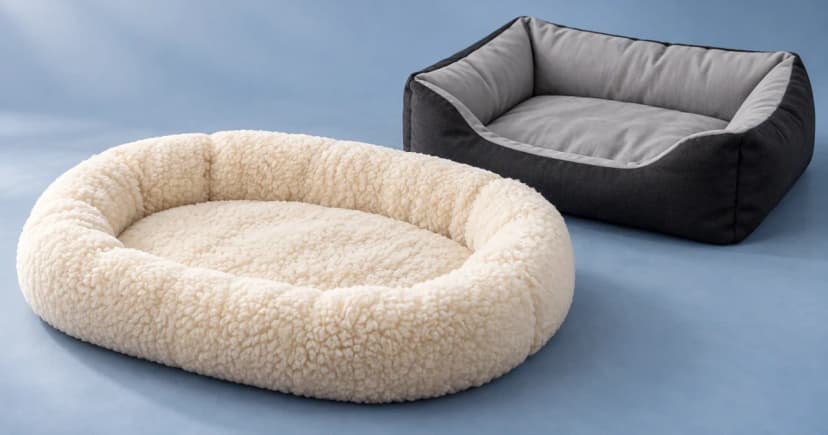
For example, a cave can have a removable washable cushion while its shaped shell has no stated washing permission. An open round bed can have a sewn-in cover. Neither its shape nor the presence of a zipper somewhere else tells you what can go in the machine. Compare the construction described in cat caves and covered beds or cat cushion beds, then check the actual item's instructions.
Hand washing still wets the filling, so it is not an automatic fallback for an unidentified foam bed. Keep uncertain components out of a wash until their care method is confirmed.
Compare permissions, rather than borrowing a wash setting
These named examples show why similar-looking beds need different routines. They are manufacturer instructions for those products, rather than instructions for every bed in Pawlivy's categories.
| Named bed or system | What the maker permits | What needs separate attention |
|---|---|---|
| Ruggable pet bed | Wash only the removable outer covers separately in cold water with a mild detergent without bleach; tumble dry on low heat. | The inner foam cushions and white water-resistant liners must not be machine washed, submerged or machine dried. Do not use fabric softener on the covers. |
| Cat Street Bungalow | Remove the teddy cover for a gentle warm machine wash with mild detergent; hang it to dry. The separate waterproof lining has cold-wash instructions. | Do not wash the memory-foam pieces. The cover instructions prohibit bleach, tumble drying and ironing; reassemble only when all covers are dry. |
| K&H Self-Warming Lounge Sleeper | The product's care section permits washing the entire bed in cold water on a gentle cycle, followed by line drying or a no-heat dryer cycle. | That complete-bed permission belongs to this named design. It does not establish that other foam, cave or electrically heated beds can be washed whole. |
Read the current Ruggable care guide, Cat Street care and washing instructions and K&H Lounge Sleeper instructions for the full procedures. Even the two removable-cover systems differ: Ruggable excludes its white liner from machine washing, while Cat Street gives its removable lining a cold-wash instruction.
Prepare the permitted parts for washing
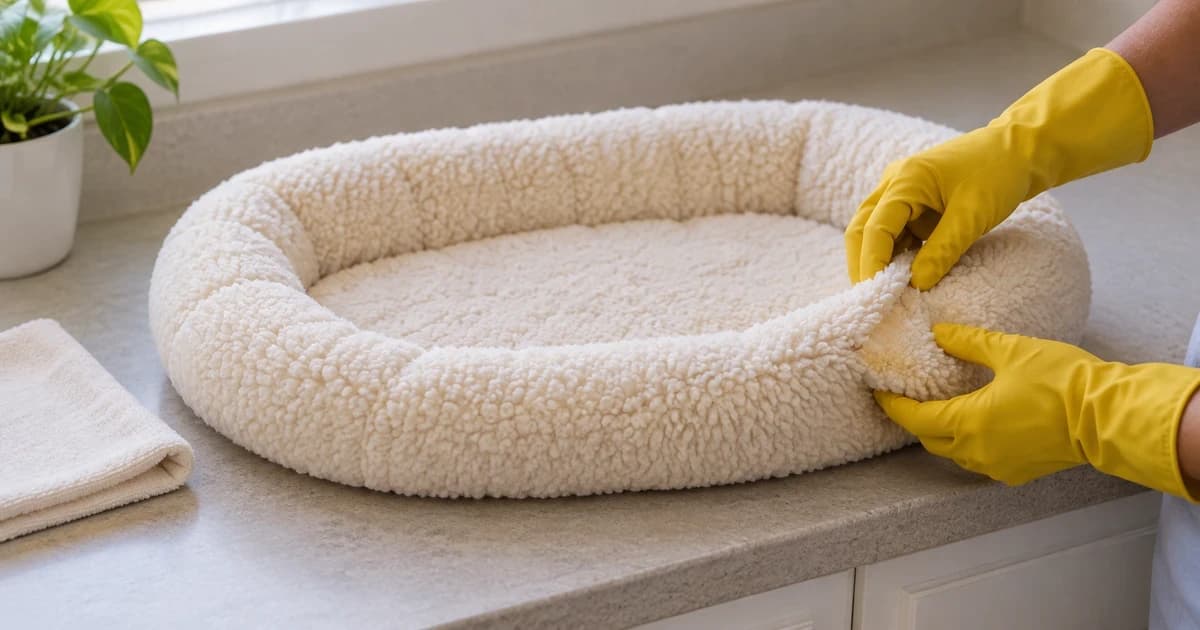
Set the bed aside when your cat has moved elsewhere, and provide another resting place while the parts are unavailable. Remove loose hair and debris before laundering. K&H's cat-bed washing guide suggests shaking out loose hair and using a hand, vacuum or lint brush for remaining hair. Choose a method that does not snag the fabric or pull at worn seams.
Remove each washable cover or cushion according to the design. Keep excluded foam and lining pieces separate from the laundry. For Ruggable covers specifically, the maker says to close the empty covers' zippers before washing; use another bed's own directions for its fastenings.
Check seams, fabric and closures while the bed is empty. Loose filling, a split seam or a broken zipper needs attention before the next wash or reuse. Do not cut open a sewn bed to convert it into a removable-cover design.
For a stain, use a treatment only if the bed's care instructions permit it, and follow the cleaner's directions for the actual fabric. Ruggable's guide gives a blot-and-dab treatment for its system, but that does not authorize the same cleaner on another bed's foam or backing. Avoid improvising a mixture from several cleaning products.
Wash and dry each component on its own terms
Check the permitted water temperature, cycle, detergent and drying method together. “Gentle wash” alone is incomplete information: a cover that permits warm water and hanging may prohibit tumble drying, while another requires cold water and allows a low-heat dryer.
If the complete bed is approved for machine washing, also check your washing machine's instructions for its size and load. Do not force a bulky bed into a drum just because its fabric is washable.
Air drying is also a model-specific decision. Some soft beds explicitly require dryer drying, whereas the Cat Street cover prohibits it. Follow the item's directions instead of choosing whichever method seems gentler. Check the thicker cushion areas and seams, as well as the exposed surface, before reassembly; a dry-looking cover alone does not establish that a washed filled bed is ready.
If the care instructions permit only wiping a component, follow that limited procedure. Do not soak it to obtain a more thorough-looking result. An electrical warmer or a permanently integrated powered part requires its own manual and falls outside this ordinary fabric-bed routine.
Put the bed back together and record what was cleaned
Reinstall only fully dried permitted parts. Match each insert to its cover, check that it sits without bunching, and close the intended fastenings. Check the underside and the resting surface for debris, and make sure no loose threads, filling or cleaning tools remain in the bed.
A short care note makes the next wash easier: model; components washed; components kept dry; drying method; damage found. “Cover washed, foam kept dry” records a different job from “complete bed washed.” Add the actual date after you finish, rather than marking the whole bed clean when only one cover was laundered.
When comparing cat beds and resting equipment, look for explicit care instructions and accessible removable parts. Treat those details as questions to verify for the model you choose. Pawlivy's editorial policy explains the distinction between source-backed equipment guidance and a firsthand product test.