Introduce your dog to a bike trailer while it is stationary in the training arrangement approved for that exact model. Let the dog investigate before adding entry, cover changes or movement. A dog choosing to sit in the cabin has not automatically accepted a closing cover or the sensation of rolling.
Keep three questions separate: whether the equipment is configured correctly, what your dog currently accepts and whether you are ready for a ride. Progress in one does not answer the other two.
Find the supported stationary setup first
Locate the trailer model and its current instructions before inviting the dog inside.
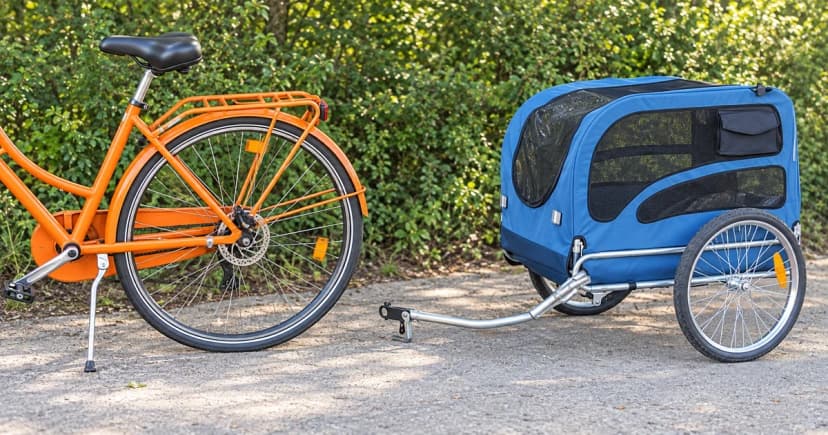
A bicycle connection is a separate mechanical question. Our dog-trailer hitch compatibility guide covers the bicycle, axle and hitch documentation. It does not establish that a dog is comfortable entering or travelling in the trailer.
Croozer's familiarisation arrangement is model-specific
The Croozer Dog familiarisation page describes removing the wheels and using its cardboard support block for an indoor den. It also discusses open passages and an optional front-crossbar change, with the exact manual needed for that work and proper reinstallation before riding. These are Croozer conditions, not a dismantling recipe for any trailer.
Its outdoor sequence is different: attach the empty trailer to the bicycle before loading the dog, close the door after entry and begin by pushing in a quiet area while watching the dog. Moving from indoor familiarisation to that setup requires the correctly restored equipment; an open training passage is not permission to travel with it open.
Thule describes a different supported base
The Thule Bexey L page describes its indoor training mode with the wheels and hitch arm removed and the plastic base resting on the floor. That illustrates why the actual model matters. It does not authorize copying that arrangement onto a trailer with a different base or support system.
Separate investigation from entering and staying
Once the trailer is supported as instructed, give the dog room to investigate the stationary equipment. Keep the first invitation manageable rather than starting with a closed cabin. Familiar items or rewards can be part of the maker's introduction guidance, but their presence is not a reason to hurry the next change.
Notice what the dog chooses to do: approach, look inside, enter or come back out. Do not force entry or use a restraint to substitute for willingness. If the dog moves away, reduce the task rather than repeating a more demanding invitation. A dog investigating today does not owe you a ride tomorrow.
Watch the response when something changes
In Maria Schultz's 2020 account hosted by Burley, her two dogs responded differently: Kona accepted movement, while Riley jumped out when the trailer began rolling. She also noted that a cover change should have been introduced at home. This is a first-person experience, not a controlled trial or a schedule to copy. It illustrates why entering, cover changes and movement need separate observations.
Before changing a cover or beginning permitted movement, know the relevant model instructions and how you will stop. Do not recreate an uncontrolled exit to see what happens. If a change brings a response you cannot manage, stop that attempt and return to the easier situation the dog accepted.
Keep a record of the actual change
A short record helps distinguish a new equipment sensation from a familiar task. Use observable descriptions rather than treating a quiet moment or one reward taken as a readiness test.
| Situation | Record | Keep separate |
|---|---|---|
| Stationary setup | The exact supported configuration and openings used | Mechanical questions still unanswered |
| Investigation or entry | What the dog chose to approach, enter or leave | Any change to a cover or closure |
| A permitted cover change | What moved and how the dog responded | Rolling movement |
| First permitted movement | The correctly prepared equipment and response observed | A decision to ride |
If several things changed together, simplify the next attempt. Do not add distance, a new cover position and movement merely because entry went well. Describe the difficulty precisely when asking the maker or a qualified reward-based trainer for help.
Finish familiarisation before deciding about a ride
This task ends with an honest account of the stage your dog accepts, including any unresolved response. There is no fixed number of sessions that makes the trailer suitable or certifies a comfortable passenger. Keep the model's assembly, closure and operating requirements with that record.
When comparing dog bike trailers, check the actual instructions and permitted use rather than assuming every trailer has an indoor mode. Willing entry and a successful mechanical check remain separate from the eventual riding decision.