When planning how to set up a leopard gecko vivarium for one adult Eublepharis macularius, start with a secure, ventilated enclosure at least 60 × 30 × 40 cm (choosing larger where possible per the RSPCA), arrange warm, cool and damp-moss hides over a suitable substrate, establish a thermostatically controlled thermal and UVB gradient (28–30 °C and UVI 0.7 in the basking zone, 24–26 °C and 30–40% humidity at the cool end, 0 UVI in shade, and 18–20 °C unlit night heat if the room drops below 18 °C), and run the empty vivarium for at least a week before your gecko arrives.
Site and hygiene
RSPCA Australia recommends placing the vivarium in a quiet room away from cold drafts and direct window sunlight, with space to accommodate adult housing. Because ordinary window glass blocks UVB wavelengths and can overheat a glass tank, window sunlight cannot replace dedicated reptile lighting.
The CDC advises keeping reptiles and their habitat equipment out of kitchens and food-preparation areas. Plan to wash vivarium decor outdoors where weather permits, or use a dedicated tub or laundry sink that you disinfect afterward, and wash your hands with soap and running water after touching any equipment. For ongoing habitat maintenance, see our reptile enclosure cleaning guide.
Build usable ground
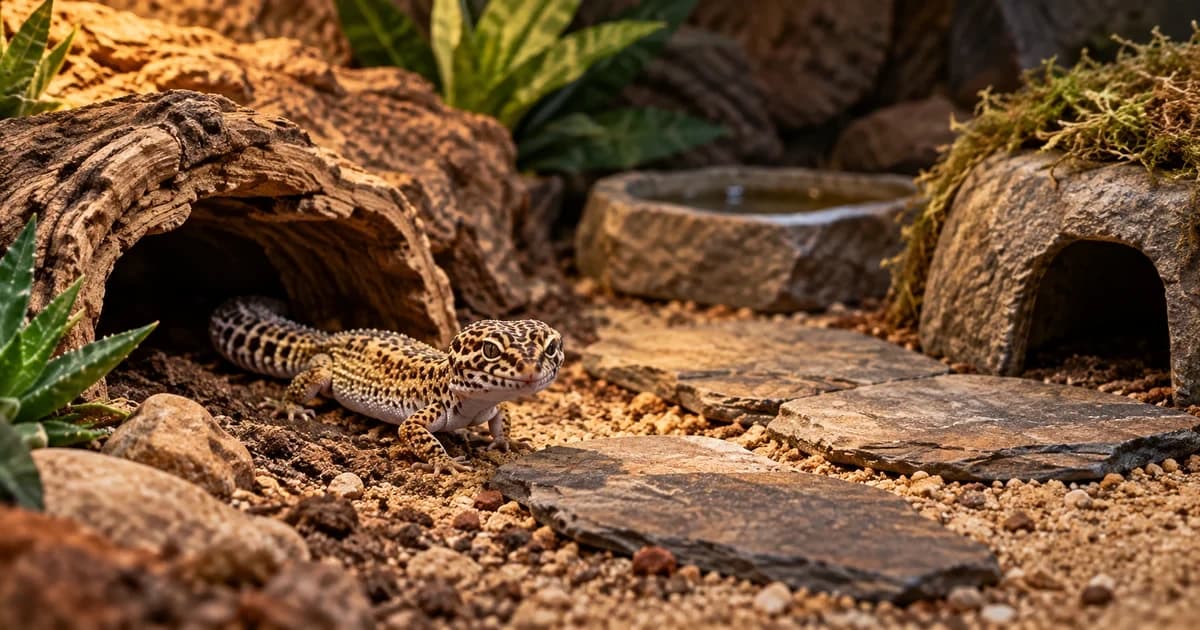
The RSPCA leopard gecko guide specifies a minimum enclosure size of 60 × 30 × 40 cm (length × depth × height) that is secure, easy to clean and properly ventilated, while recommending a larger footprint where possible. House an adult leopard gecko singly to prevent territorial stress. Place hides at both the warm and cool ends, low sturdy rocks for climbing, a shallow water dish at the cool end refreshed daily, and a separate waterproof humid hide lined with damp sphagnum moss kept moist to support shedding.
For a healthy adult leopard gecko kept under verified temperatures and hydration, the RSPCA describes an approximately 50:50 mix of organic topsoil and clean play sand; avoid builder's sand, calcium sand (calcisand) and beech wood chips, which carry impaction risks.
Measure the gradients
Use the RSPCA target table below to verify each zone at its specified position:
| Measurement & position | RSPCA target for an adult leopard gecko | How and where to check |
|---|---|---|
| Basking zone temperature (warm end) | 28–30 °C | Controlled by a thermostat and verified with an independent thermometer at the warm basking surface. |
| Cool-end temperature (daytime) | 24–26 °C | Verified with a second independent thermometer placed at the cool end. |
| Cool-end relative humidity | 30–40% | Measured with a hygrometer at the cool end; increase ventilation if ambient humidity rises too high. |
| UV Index (UVI) at animal height | 0.7 at basking; 0 in shade | Measured with a UVI meter at gecko height in the warm zone and inside shaded hides (consult a reptile vet before choosing lighting for red-eyed/albino morphs). |
| Nighttime minimum temperature | 18–20 °C (when room drops below 18 °C) | Maintained during the 12-hour dark cycle using a thermostatically controlled, non-light-emitting ceramic heater. |
Fit protective guards over all heat and UV lamps so the gecko cannot reach hot surfaces. Place the UVB lamp toward the warm end and follow its manufacturer's mounting distance and bulb-replacement schedule. Because red-eyed (albino) leopard gecko morphs can be more sensitive to UV and bright light, ask a reptile veterinarian for individual lighting advice before installing bulbs. Maintain a 12-hour light and 12-hour dark photoperiod.
Run an empty trial
Operate the fully furnished, empty vivarium for at least one full week before bringing your leopard gecko home, checking and logging daily readings across every zone:
| 7-day empty-trial check | Target & location (RSPCA) | Daily reading & adjustment log |
|---|---|---|
| Warm-end basking temperature | 28–30 °C at basking surface | Daytime reading and thermostat set-point check: ____ |
| Cool-end daytime temperature | 24–26 °C at cool end | Cool-end thermometer reading: ____ |
| Overnight minimum temperature | 18–20 °C with unlit ceramic heat if room < 18 °C | Nighttime low reading: ____ |
| Cool-end humidity & damp hide | 30–40% cool-end ambient; damp moss inside humid hide | Hygrometer reading and moss moisture check: ____ |
| Animal-height UVI & shade check | 0.7 UVI at basking height; 0 UVI inside hides | UVI meter reading and lamp guard check: ____ |
Match your thermostat controller, heat lamp or ceramic emitter, and probe placement using the exact manufacturer manuals for those units before starting the seven-day empty trial.