When planning how to set up a bearded dragon vivarium for one adult Pogona vitticeps, build a secure, ventilated enclosure (1.2–1.8 m long × 0.6 m wide × 0.6–0.9 m high per RSPCA Australia), establish a thermostatically controlled temperature and UVB gradient measured at both ends and at animal height (38–42 °C and UVI 3–5 in the basking zone, 22–26 °C and 30–40% humidity at the cool end, 0 UVI in shade, and a 20–22 °C nighttime minimum per the RSPCA care sheet), and run the empty setup for at least a week to verify stable readings before the dragon arrives.
Space and access
RSPCA Australia describes an adult enclosure 1.2-1.8m long, 0.6m wide and 0.6-0.9m high. It recommends individual housing, climbing branches and rocks; newspaper or paper towels are listed flooring options.
SPCA New Zealand calls for a secure cover, ventilation and a hide fitting the whole animal. Check door closure and interior access before adding heating and lighting equipment.
Build a gradient
The RSPCA care sheet gives these targets for an adult bearded dragon vivarium:
| Location or period | Target (RSPCA care sheet) | Where and how to verify |
|---|---|---|
| Basking zone (warm end) | 38–42 °C | Measured at the basking area using an independent thermometer alongside thermostat control. |
| Cool end (daytime) | 22–26 °C | Measured at the cool end with a second independent thermometer so the full gradient is checked. |
| Nighttime (entire vivarium) | 20–22 °C minimum | Checked during the dark phase of the 12-hour light/dark cycle. |
| Cool-end humidity | 30–40% | Monitored at the cool end alongside shallow fresh water placement. |
| UVB / UV Index (UVI) | UVI 3–5 at basking; 0 in shade | Measured with a UV index meter at animal height in the basking zone and inside shaded hides. |
Guard all heat and UV lamps so the dragon cannot touch them. Use thermostatic control plus independent thermometers at both ends. Place the UVB lamp toward the warm end and follow its manufacturer's distance and replacement schedule. Measure UVI at animal height: 3–5 at basking, and zero in shade. Use 12-hour light/dark periods.
Test before arrival
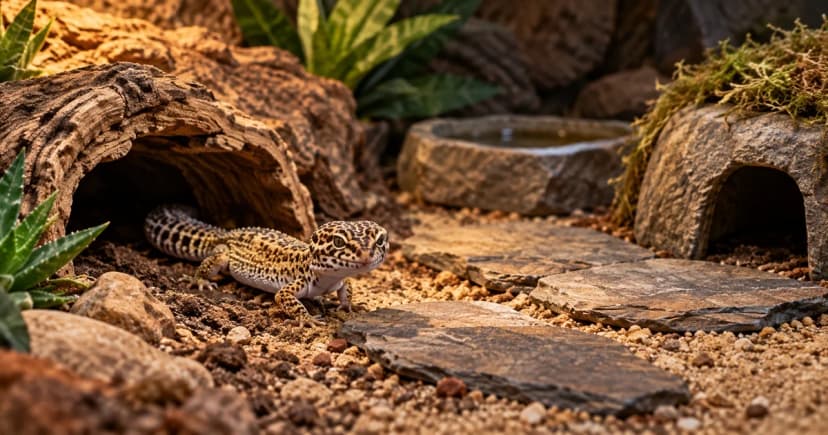
Add hides that fit the whole dragon at both warm and cool ends, shallow fresh water at the cool end, and a sand/soil digging box. Before the bearded dragon arrives, run and adjust heating, lighting and humidity in the completed empty vivarium for at least a week, logging each position below:
| Empty-trial log item (at least 7 days pre-arrival) | Measurement location & RSPCA target | Daily reading & adjustment note |
|---|---|---|
| Warm-end basking temperature | Basking surface / warm zone (RSPCA: 38–42 °C) | Record daytime stability and any thermostat set-point or probe adjustment: ____ |
| Cool-end daytime temperature | Cool end via second independent thermometer (RSPCA: 22–26 °C) | Record cool-end reading to confirm the thermal gradient holds across the day: ____ |
| Nighttime minimum temperature | Vivarium interior during the 12-hour dark period (RSPCA: 20–22 °C minimum) | Record overnight low and verify night-heat control if room temperature drops: ____ |
| Cool-end relative humidity | Cool end with water bowl and substrate in place (RSPCA: 30–40%) | Record daily humidity reading and ventilation checks: ____ |
| UVI at animal height & in shade | Basking height (RSPCA: UVI 3–5) and inside hides/shade (RSPCA: UVI 0) | Record lamp distance, animal-height UVI reading, and complete shade availability: ____ |
Check controller-to-heater compatibility, wattage ratings, and sensor probe placement directly in the operating manuals for your exact thermostat, heat source, and UV fixture before powering the vivarium on.