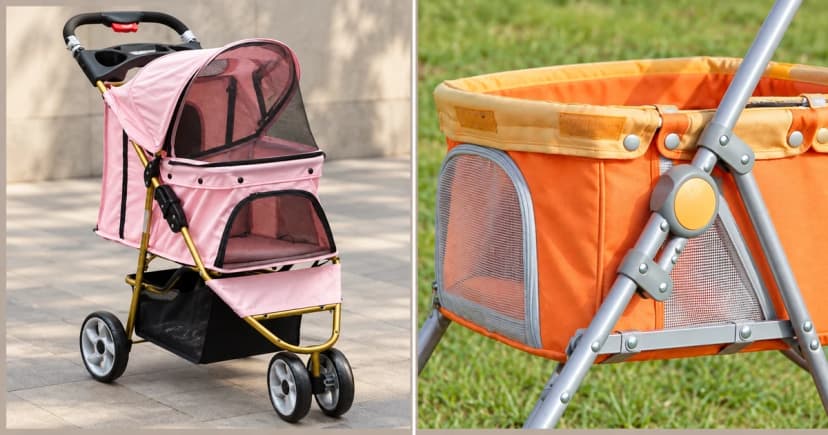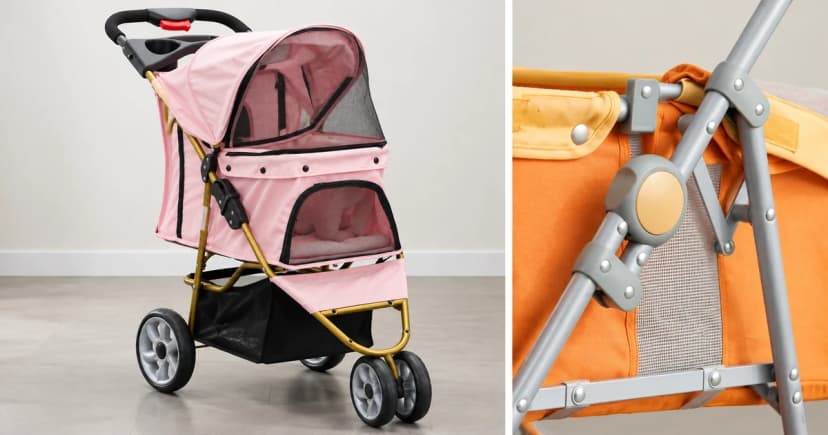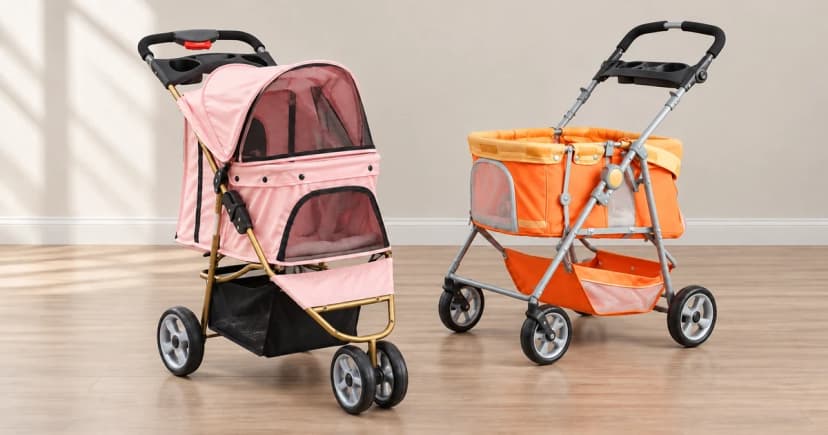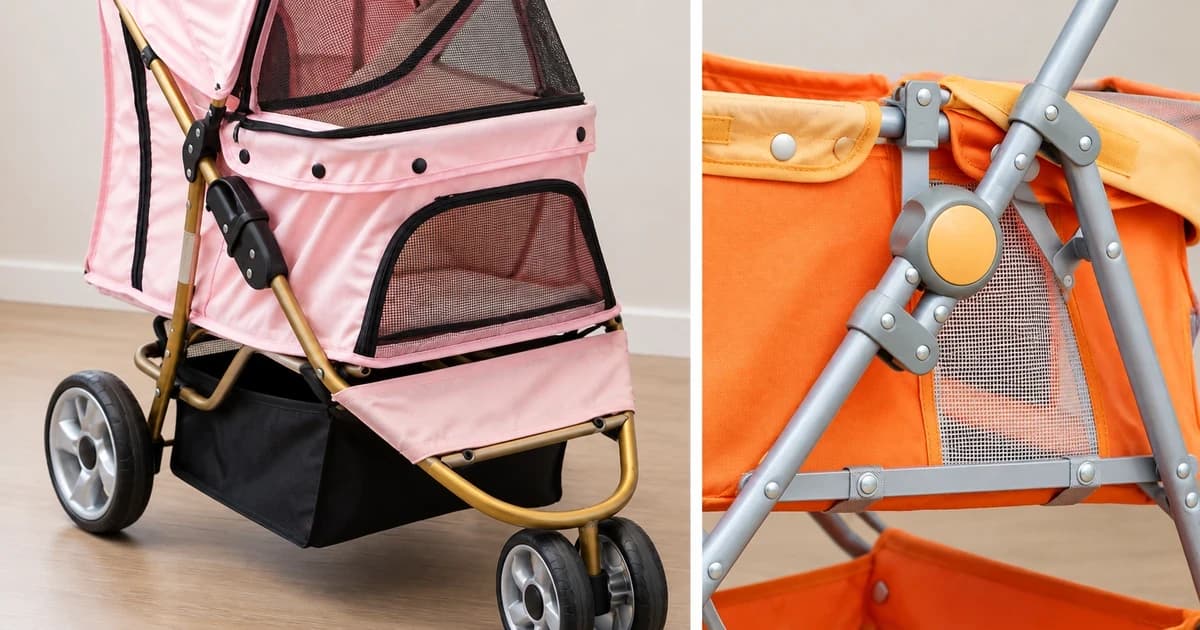
Anyone who has pushed a senior beagle through wet park grass or taken a nervous cat to the vet knows how fast a pet stroller gets gross. Within three outings, ours usually collects a mix of crushed liver treats in the rear seam, shed undercoat woven into the ventilation mesh, and dried sidewalk mud caked onto the rear axle. If you only want the quick answer on how to clean a pet stroller without ruining the frame or fabric: vacuum every dry crumb and hair out of the cabin first, spot-clean the fabric shell in place with plain water or mild soap, wash mud off the rear wheels separately, and never let lubricant touch the plastic brake cogs.
The biggest mistake we see pet owners make is treating a folding pet stroller like a removable dog bed—unbolting frame straps to toss the whole fabric tub into the washing machine, or hosing down the entire stroller on the driveway and folding it up damp. Here is how we actually clean our strollers after messy walks, along with a few surprising rules (and one funny contradiction) buried inside official Pet Gear manuals.
Why You Shouldn't Unbolt the Cabin Fabric (Even If It Has Zippers)
When we first unboxed a three-wheel Pet Gear stroller, the zippers and snap tabs around the canopy made it look like the entire fabric cabin was meant to zip off for laundry day. It isn't. On almost every enclosed stroller—including the Pet Gear No-Zip Excursion (PG8650NZ), the Special Edition (PG8250), and the Happy Trails Lite (PG8030NZ)—those zippers only attach the top weather hood or open the entry doors.
The lower cabin tub is tensioned around the metal tubing to support your pet's weight. If you pry off riveted straps or force stitched fabric sleeves over the folding hinges, you can tear the load-bearing seams or warp the internal plastic baseboard. Even more importantly, machine-washing the outer shell strips the water-repellent backing off the nylon and leaves the canopy sagging.
The only piece you should ever pull out before cleaning is the loose fleece bolster pad sitting on the cabin floor—and even then, check its sewn laundry tag first before tossing it into a cold wash cycle.
Step 1: Dry-Vacuum Before You Touch a Sponge
If you take a wet sponge straight to a dusty stroller cabin, shed dog hair and dry dirt turn into a muddy paste that gets ground deep into the mesh windows and corner stitching. Before bringing water anywhere near the stroller, lock the rear wheels on a dry patio or hallway floor and spend five minutes on dry prep:
- Pull out the loose floor pad and toys: Shake out the removable liner outdoors and check underneath the baseboard where stray kibble always hides.
- Use a crevice tool along the bottom seams: Run a handheld vacuum with a soft brush nozzle along the perimeter where the nylon floor meets the side walls. Keep sharp plastic vacuum tips from snagging the nose-level ventilation mesh.
- Brush dried mud off the lower storage basket: Let wet mud dry first, then flick it off with a soft bristle brush so you aren't smearing dirty water across the fabric later.
Step 2: Spot-Cleaning the Cabin and Canopy
In all three Pet Gear manuals linked above, the fabric rule is strict: spot clean only, without harsh detergents, bleach, or abrasive scrubbers. Bleach and heavy laundry detergents break down UV-resistant canopy coatings and leave chemical residues right where your dog or cat rests their chin.
- For everyday drool and muddy paw prints: Wring out a microfiber cloth in lukewarm water so it is damp—not dripping—and blot the soiled panel from the outside edge inward.
- For motion-sick accidents or urine inside the tub: Blot up any liquid immediately with paper towels. Use a cloth dampened with cool water (hot water sets protein stains) and a tiny drop of unscented, pet-safe dish soap on the spot, then "rinse" by wiping the area two or three times with a fresh cloth dipped in plain water.
- Skip stiff scrub brushes on mesh panels: Claw-resistant stroller mesh is tough against a cat's paw, but stiff nylon scrub bristles will fray the coating and leave permanent fuzzy spots in the window view.
Step 3: Washing Muddy Wheels Without Ruining the Brakes
After a winter walk on salted sidewalks or a muddy trail run, the wheel hubs take the worst beating. If grit stays packed around the rear axle or front swivel fork, the stroller starts pulling to one side and squeaking on every turn.
What you can safely wash—and where you need to keep oil far away—comes down to how the brake cogs work:
| Stroller Part | What Actually Works (and Matches the Manual) | Mistakes That Cause Breakdowns |
|---|---|---|
| Rear wheels & tires | Wash with warm soapy water using a sponge, rinse thoroughly with clean water so soap scum doesn't dry inside the hub, and towel dry completely. | Leaving wet mud or road salt packed around the axle release pins, which corrodes the spring-loaded clip. |
| Squeaky plastic wheel hinges | Dab a single drop of light oil or silicone lubricant onto the squeaky plastic hinge joint using a cotton swab after the wheel is 100% dry. | Spraying aerosol WD-40 or silicone blindly at the wheel hub—overspray coats the brake cogs right next to the hinge. |
| Rear brake pedals & front swivel locks | Brush out dry pebbles and rinse with plain water only. Keep brake drums and locking pins completely dry and grease-free. | Getting any oil or silicone on the brake or swivel lock—lubricated friction teeth will slip when parked on a driveway slope. |
| Powder-coated metal frame tubes | Wipe down with a damp microfiber cloth and dry immediately with a towel, keeping water out of the handlebar folding button. | Sloshing soapy water into open tube ends or smearing heavy oil across the frame where it rubs onto the fabric canopy. |
A Funny Contradiction in the Official Manual (And How to Handle It)
If you actually read page 9 of the Pet Gear PG8650NZ and PG8030NZ manuals (or page 6 of the PG8250 manual), you will notice all three print the exact same copy-pasted maintenance block—and it contradicts itself within three paragraphs. In the first paragraph, the manual tells you to "wipe the frame with a lightly oiled cloth; do not use detergents or abrasives." Two paragraphs later, under wheel care, it tells you to "clean the rear wheel assembly and the rest of the frame with warm, soapy water."
In real life, wiping a painted aluminum or powder-coated stroller frame with an oily rag is a terrible idea: it leaves a sticky film that attracts sidewalk dust, stains the edges of your fabric canopy, and makes the folding latches slippery. Conversely, drenching the upper frame in soapy water can let moisture seep into the push-button folding mechanism on the handlebar. Our practical middle ground: save the warm soapy wash for the lower wheel forks and mudguards, and simply wipe the upper metal frame tubes with a clean, slightly damp microfiber towel followed by a dry cloth.
Drying It Out Before You Fold It Away
Never fold a damp stroller and shove it into a hall closet or car trunk. When the canopy and cabin fold inward, damp fabric presses directly against metal hinges—within 48 hours, it smells like mildew and leaves rust rings on the nylon. Leave the stroller fully open with the canopy pulled back in a warm, ventilated room (or in the shade on a breezy porch) until the corner seams feel bone-dry to the touch.
Once everything is dry, pop the floor pad back in and do a quick ten-second roll test before loading your pet: click both rear brakes down to make sure they bite firmly, check that the front swivel wheel spins freely, and tug upward on the handlebar to confirm the frame latches locked cleanly into place. If you are packing the stroller away for the season, our notes on folding and storing a pet stroller cover how to keep the tires from developing flat spots in storage, and you can browse our strollers and bicycle trailers collection if your current ride has worn-out wheels or torn mesh.