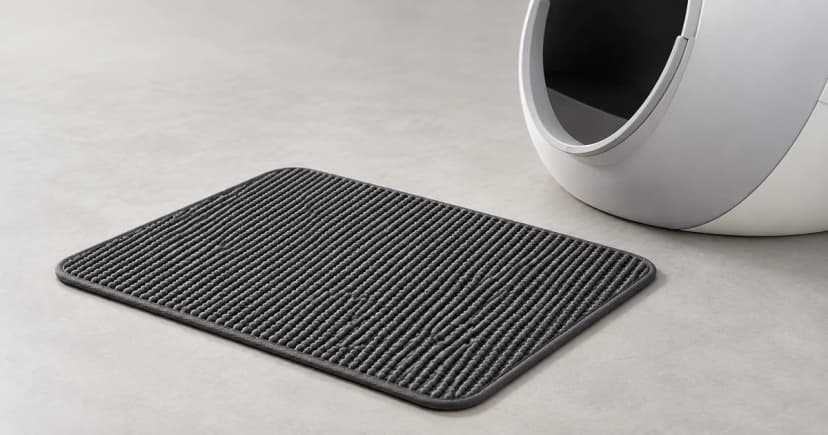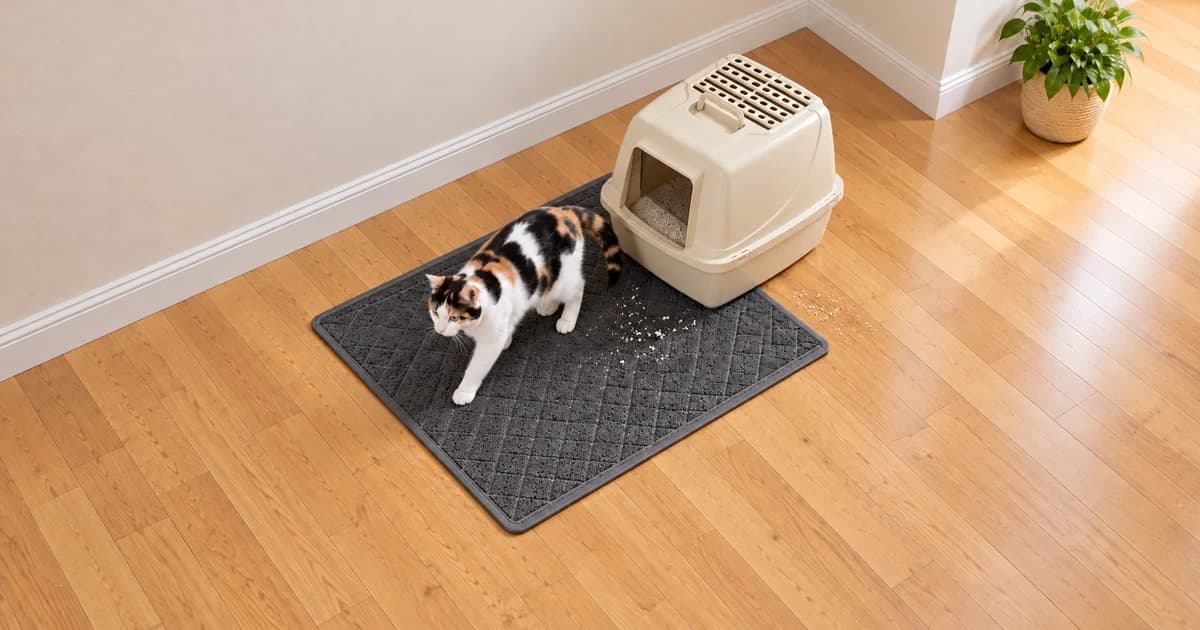
Learning how to stop litter tracking—or how to reduce litter tracking to a manageable zone right beside the tray—starts with separating two different sources of mess: granules kicked over the rim while digging versus granules carried out between your cat's paw pads. Once you know how the litter leaves the box, place a litter mat directly under your cat's actual exit footsteps and pair the mat's surface design (grooved pockets vs. dual-layer honeycomb mesh) with an emptying method that does not re-scatter the grains.
1. Separate kicked scatter from paw-carried tracking
Whisker's litter-tracking guide separates granules flung out during digging from granules clinging to paws or fur. Sweep the floor clean once, watch from a relaxed distance without interrupting your cat, and use the floor pattern to pick the right adjustment:
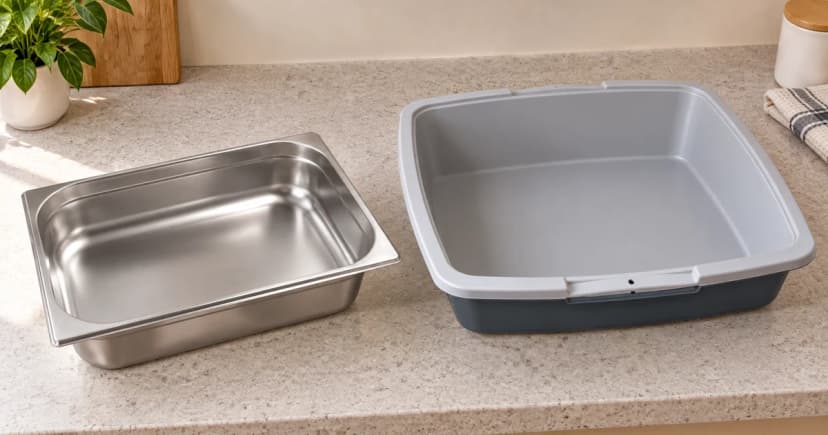
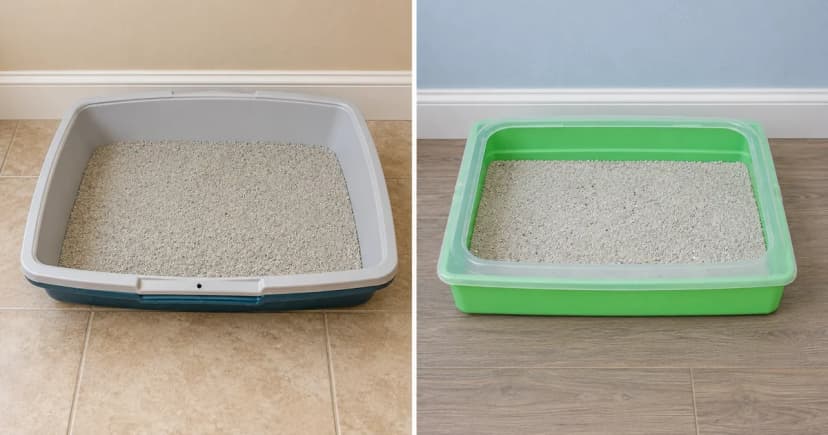
- Heaps piled right against one side or back wall: Points to vigorous digging kicking litter over a low rim—check whether a taller-sided pan in the litter-box collection still gives your cat a low, comfortable entry threshold (Cats Protection's toileting guidance emphasizes keeping box access easy and respecting whether your cat prefers an open or covered tray).
- Faint trails of granules leading away from the entrance down the hall: Points to paw carry—focus on where your cat's first three or four steps land upon exiting.
- Spills right beside the scoop holder or storage bin: Points to human refilling or scooping scatter rather than your cat's paws.
2. Match mat layout to your cat's actual exit path
A mat centered neatly for human eyes fails if your cat exits at an angle or leaps over a narrow strip. Use this room-layout guide to align the mat with real landing spots while keeping the entrance completely unobstructed:
| Box & room exit layout | Where paws actually land | How to position the litter mat | Access check for your cat |
|---|---|---|---|
| Open pan with a straight front walk-out | First two to four steps extend straight forward from the lowest entry lip. | Tuck only the back edge (1–2 inches) under the front lip so the full length of the mat stretches forward along the walking path. | Make sure the mat lies completely flat so the rim height and step-in posture do not change. |
| Box placed parallel to a wall or corner (side-turn exit) | Cat steps out of the entrance and immediately pivots 90 degrees left or right along the wall. | Orient the long side of the mat along the turned walking corridor rather than extending straight into the opposite wall. | Never wedge barriers around the tray to force a straight exit; follow the path your cat naturally chooses. |
| High-sided or covered box where the cat hops out | Front paws land several inches past the threshold rather than right against the base. | Choose a deeper footprint mat that covers the landing zone plus at least one walking stride beyond it. | If your cat jumps deliberately to avoid a mat's texture, switch to a flatter, softer weave so they never avoid the litter box. |
3. Pair mat capture features with how you empty them
Before buying a mat, check both how the surface catches granules and how you will pour or vacuum those granules out without spilling them across the room:
| Structural feature | Published product example | How trapped litter is removed | Care & maintenance check |
|---|---|---|---|
| Pocketed & mesh-textured single layer | Catit Litter Mats combine deep surface pockets with a mesh-like weave to catch granules from paws. | Vacuum the surface recesses or carry the mat flat to the bin/pan to shake and pour from the surface grooves. | Verify how deep grooves rinse clean and dry completely before laying the mat back on the floor. |
| Dual-layer honeycomb / liftable mesh lining | Whisker's Litter-Robot LitterTrap Mat uses a top mesh layer over a solid bottom tray. | Lift or separate the top mesh layer, funnel the trapped granules from the lower pocket back into the box or trash, and wipe clean. | Confirm you have space near the box to lift and tilt the two layers without dropping loose litter from the open sides. |
4. Follow a four-step adjustment and cleanup sequence
Instead of changing the box, litter formula, and mat all at once, use a simple four-step loop:
- Observe one clean cycle: Sweep around the tray and note whether fresh grains appear at the side walls (digging kick-out) or along the exit path (paw carry).
- Change one variable: Reposition or rotate the mat to cover the true exit footsteps while leaving the box entrance open.
- Empty the mat alongside daily scooping: Pour or vacuum trapped grains from the mat and sweep underneath it as part of your regular litter box cleaning routine so a saturated mat does not track granules further.
- Recheck your cat's comfort: Confirm your cat still enters and exits without hesitation; if they step around a new mat, prioritize comfortable toileting access over floor tidyness.
This guide is based on published manufacturer specifications and feline welfare guidance without hands-on mat capture scoring; see our editorial policy.