To learn how to train a cat to use an exercise wheel at a comfortable pace, separate the process into three voluntary stages—approaching the stationary wheel, stepping onto the track, and getting used to movement—while following your exact wheel brand's rule on whether your hands may ever turn an occupied wheel. Pause immediately whenever your cat steps off or walks away.
Check assembly and model instructions first
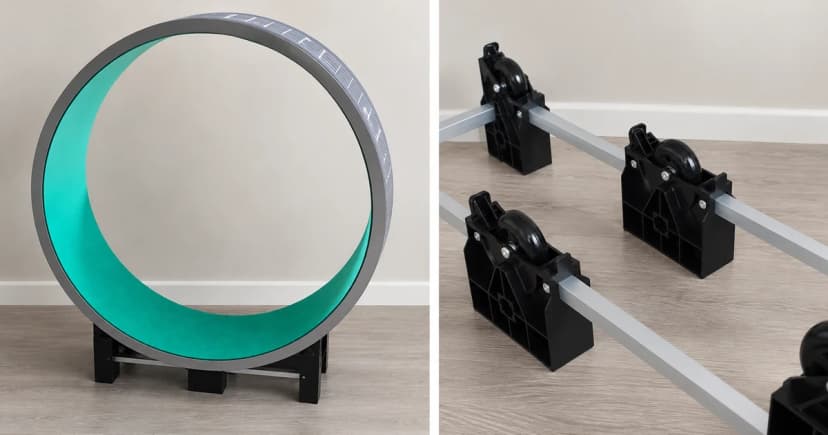
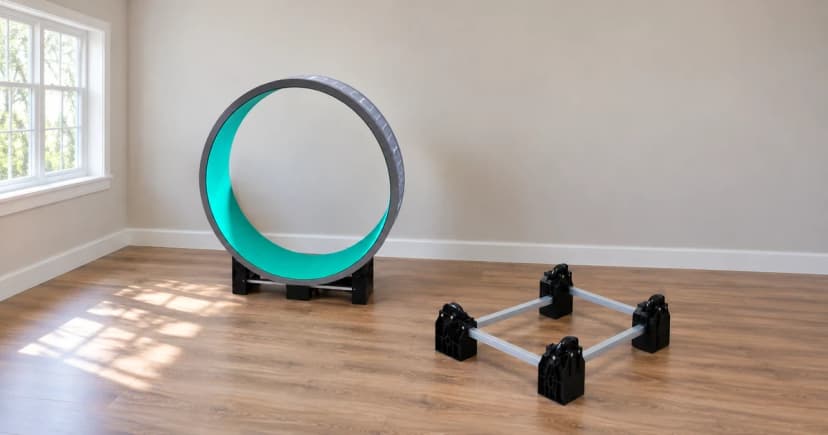
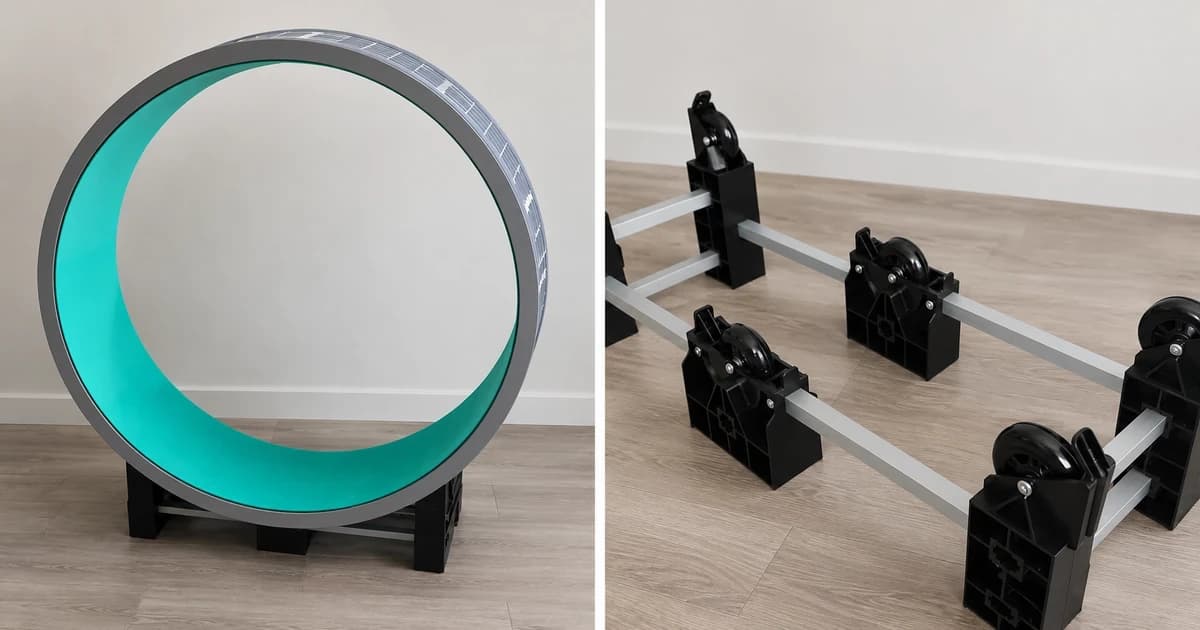
Identify your exact wheel brand and model before inviting your cat near it. Complete the full hardware build and empty-wheel spin checks first using our assembly guide so the track sits stable and level before training begins.
Compare the two brand methods: who turns the occupied wheel?
One Fast Cat and ZiggyDoo publish opposite rules on whether a person should roll the wheel by hand while the cat is standing on it. Keep their methods strictly separate:
| Wheel brand & official source | Initial approach & stationary step-on | Rule when the cat is on the wheel | Pacing & exit boundary |
|---|---|---|---|
| One Fast Cat (training FAQ & afraid-of-wheel FAQ) | Invite investigation with a favourite toy or food reward; hold the wheel steady while the cat chooses to step inside. | Describes slowly rolling the wheel by hand while the cat adjusts its footing, then letting the cat take over its own pace once walking feels manageable. | Never pick up or force a cat onto the wheel; if afraid, let sniffing and nearby investigation be enough for that session. |
| ZiggyDoo Ferris Cat Wheel (Ferris Cat Wheel initiation guide PDF) | Praise and reward voluntary touching, stepping onto the track, and small first steps. | Requires all movement of the occupied wheel to come from the cat—without your hands turning the wheel. | Treat calm walking as a complete success; running is never a required outcome, and do not copy One Fast Cat's hand-rolling step onto a Ferris wheel. |
Follow your wheel manufacturer's training sequence
One Fast Cat's training guide and fear-troubleshooting FAQ start by inviting your cat toward the wheel with a wand toy or treat, letting simple sniffing count as a session if your cat stays cautious. Next, hold the wheel still while luring a voluntary step onto the track. One Fast Cat's instructions then describe slowly turning the wheel by hand as your cat finds its footing, before releasing it so the cat controls its own walking speed. Keep that hand-assisted roll limited to One Fast Cat's instructions, and never lift or place an unwilling cat onto the track.
ZiggyDoo's Ferris Cat Wheel initiation guide instead rewards voluntary paw contact and small steps while requiring that any movement of the occupied wheel come entirely from the cat, without your hands turning it. Follow that cat-driven rule on a Ferris Cat Wheel rather than blending it with One Fast Cat's hand-rolled step. Calm walking is a worthwhile enrichment activity on its own; a cat never needs to sprint for the session to count.
Pause and reassess whenever your cat steps away
If your cat backs up, steps off the running surface, or leaves the room, end the session or return to calm stationary sniffing—never block the exit or hold the cat in place.
Note which stage your cat chose or declined so you can resume at an easy level next time, and keep varied indoor enrichment choices available around your home so exercise never depends on a single piece of equipment.