A flavored nylon chew toy is still a non-edible object, not a treat. A rigid chew can also raise a separate question about an individual dog’s teeth. “Nylon,” “long-lasting” or a familiar brand therefore cannot give a blanket answer to whether this exact chew is suitable for your dog.
Start by identifying what you have, what its package permits and what remains an individual dental question. This guide does not certify a material, recommend the hardest available toy or report a chewing or chemical test.
Flavor does not turn a non-edible chew into food
Nylabone’s own FAQ distinguishes its non-edible chew toys from its edible products and says flavor does not make a chew toy intended to be eaten. Those are manufacturer descriptions of its own range, not an independent safety trial.
The FAQ identifies nylon as the core material of its named Power Chew line while describing other formulations elsewhere in the range. A brand name alone does not identify every product’s material. Use the actual package and the maker’s product-specific size and chew-strength instructions, rather than borrowing a rating from another line.
For its non-edible chew toys, the current FAQ calls for replacement when ends are worn down, the toy is cracked or it has become too small for the dog to chew safely. It gives no fixed replacement calendar. These directions do not establish that a swallowed fragment is harmless or that the chosen product suits a particular dog’s teeth.
Keep the package long enough to identify the product and its intended use. If you have only an old loose chew and a remembered brand, resolve its identity with the maker before relying on a size or strength label you found online. A similar bone shape or a familiar smell does not restore missing instructions.
Separate resistance to chewing from the dental decision
In PetMD’s December 2018 reporting, by Maura McAndrews, interviewed veterinarian Rory Lubold warns that overly rigid toys can wear teeth or break a tooth. The article also emphasizes choosing for the individual dog. We use that scoped warning, not its dated regulatory discussion, chemical claims or product endorsements as current conclusions.
An owner seeking “something my dog cannot destroy” is asking how the object will hold up. The separate question is whether that object is appropriate for the dog doing the chewing. Success at the first does not settle the second, and a maker’s strength category is not a dental examination.
Discuss the proposed chew with your veterinarian when its rigidity or your dog’s dental needs make suitability unclear. Bring the exact product details and describe how your dog uses it. Do not use a homemade indentation test, another dog’s experience or a lack of visible damage to certify hardness as safe.
Ask two questions before offering an uncertain product
- What does this maker intend this exact object to be? Identify the non-edible product, its documented size and intended chewing use.
- Does that intended use suit this dog? Keep the individual dental question separate from the label. A longer-lasting object does not answer it for the veterinarian.
For example, imagine replacing a dog’s usual chew with a harder product solely because the earlier one wore out sooner. Reading the replacement’s exact instructions resolves what the maker intends; it does not prove that increasing rigidity is the right choice. The useful next step is to resolve both questions, rather than keep escalating toughness until an object survives.
There is no single safer alternative established by the three sources used here. A softer-looking object still needs its own identity and intended-use information.
End access when the product no longer meets its directions
Apply the identified product’s replacement instructions rather than trying to stretch its life to a target number of weeks. A familiar flavor or continuing interest does not make an already unsuitable object ready to offer again. This guide provides no sanding, heating, trimming, repair or cleaning procedure to restore a chew.
If the wider issue is an object that has come apart during play, our guide to damaged toys and observed context covers that separate task. Here, the main decision remains what the non-edible product is and whether its intended use suits the dog.
Suspected swallowing needs a veterinarian, not a size guess
If you think your dog swallowed a piece of toy, contact your veterinarian immediately. PDSA’s UK veterinary guidance on swallowed objects, published in June 2019, says not to wait for a problem to develop and never to make a dog vomit at home. This guide gives no fragment-size threshold or symptom check that can clear an ingestion concern.
When browsing chew toys, look for usable product identification and instructions. A category listing cannot establish composition, current stock, dental suitability or permission to swallow it.
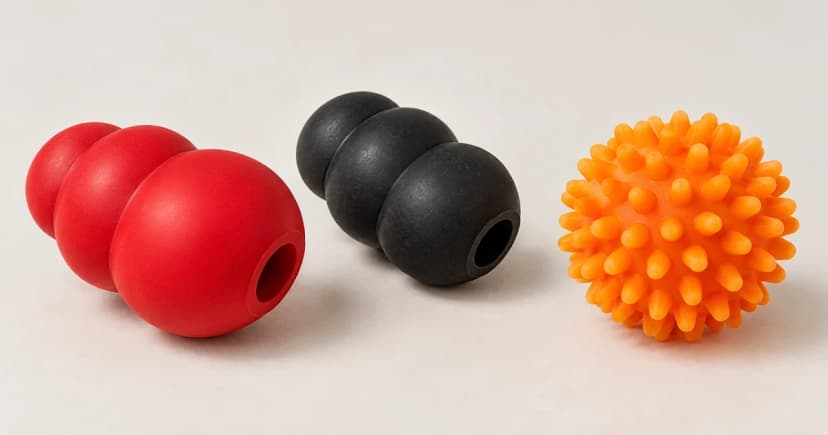
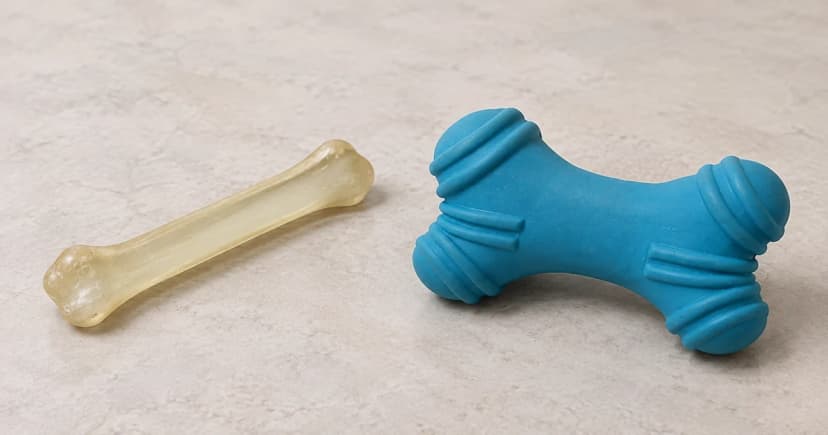
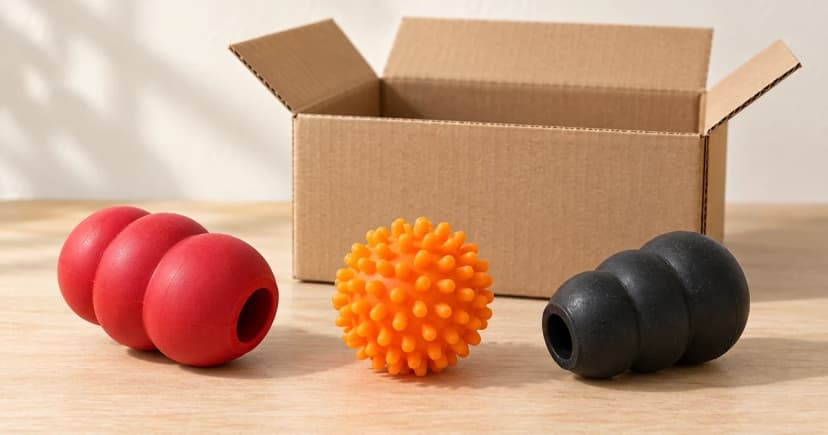
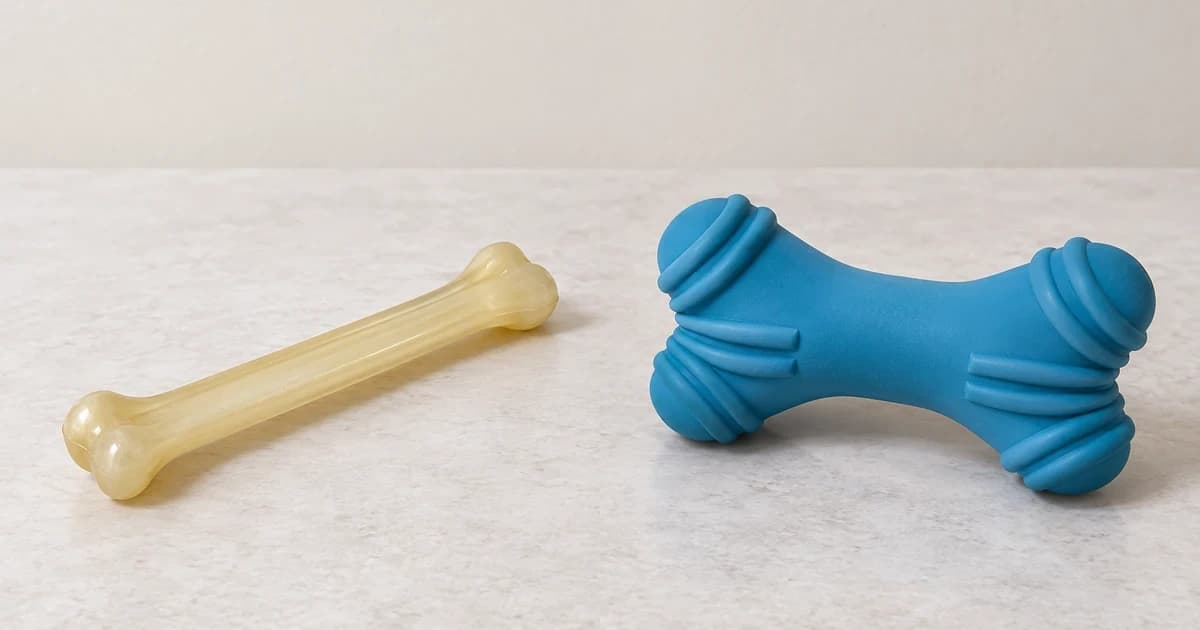
The photo-based illustration reconstructs generic chew-toy shapes away from an animal and proves no material or safety comparison. Our editorial policy explains the source-based approach.