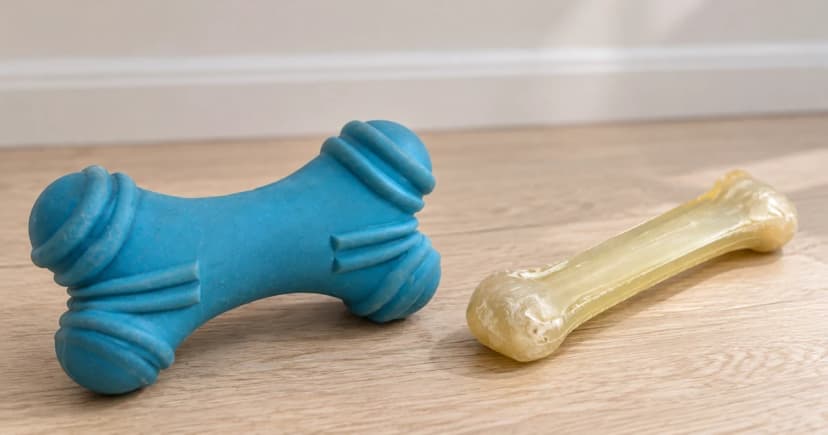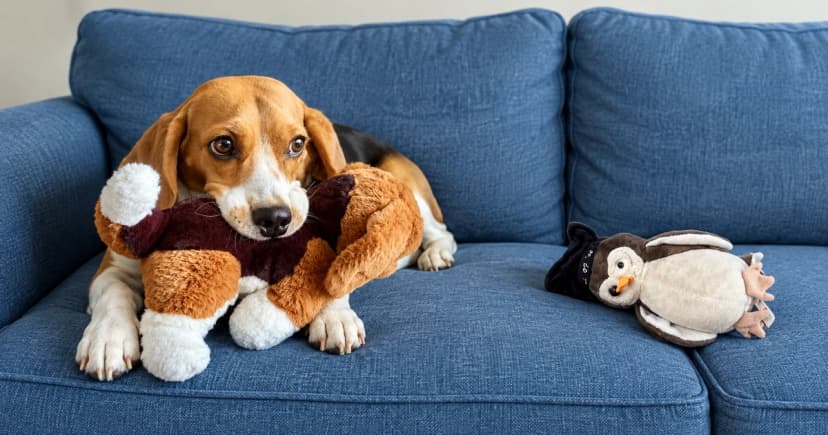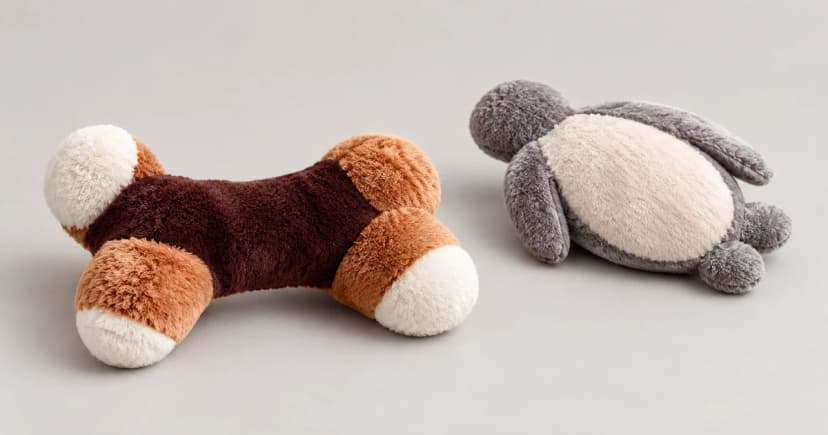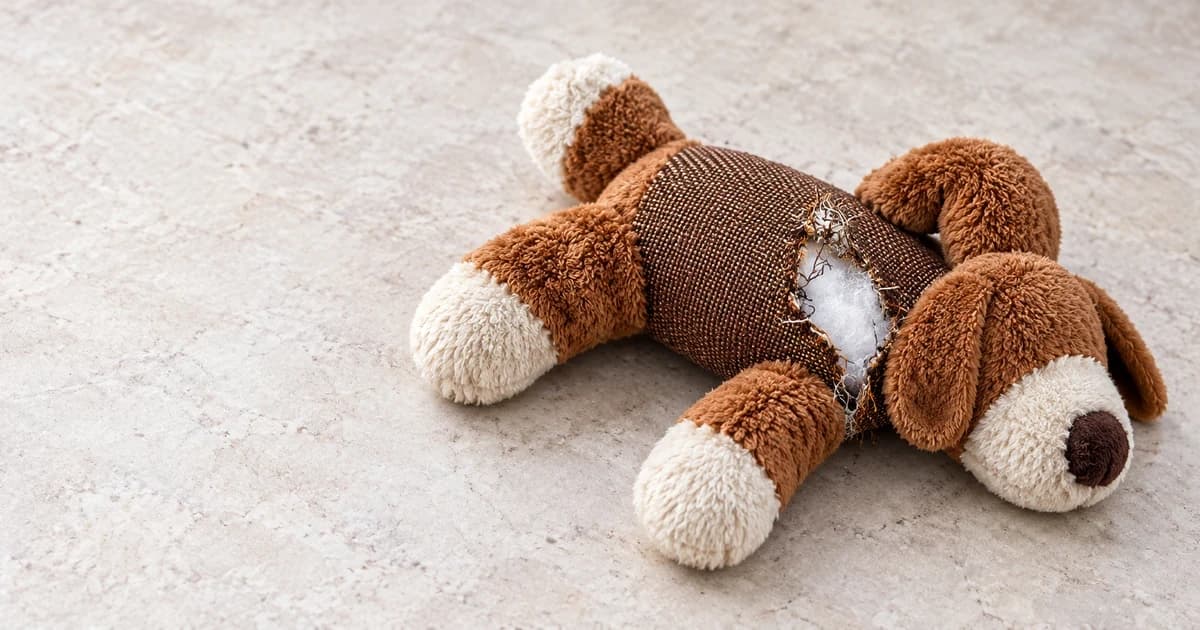
Dogs may damage toys while chewing, pulling and playing with them. Some find soft textures or parts they can pull at especially engaging. But a torn seam does not tell you why a particular dog did it, and it does not establish that the object is still suitable to use. Begin with the changed toy: withdraw it from further access and describe what you actually found.
That gives you two separate questions to resolve: what happened to the equipment, and whether the dog's wider behavior needs individual advice. Buying another “indestructible” toy cannot answer either question on its own.
Several explanations are possible; damage does not select one
Vet Help Direct's veterinarian-authored discussion describes several possible contexts for toy destruction, including chewing and play. Its author, Sarah-Jane Molier, also advises asking a veterinarian when the reason for a behavior is unclear. These are possible explanations to discuss, rather than a diagnosis you can make from a damaged object.
For example, finding a torn toy after being out tells you when you discovered the damage. Unless you observed the event, it does not tell you exactly when the tear appeared or what the dog was experiencing. Keep “found after I returned” separate from “destroyed because I left.”
The American Kennel Club explains that toy preferences differ. Soft and squeaking features can appeal to some dogs, while others prefer different play. That helps explain why an object might attract attention; it does not prove one dog's motive, temperament or emotional state.
If you observed shaking without damage, our guide to held-toy shaking addresses that action. Here, the decision starts with an object whose condition has changed.
Withdraw the damaged object before investigating its history
Vet Help Direct notes that no toy is truly indestructible and calls for removing a toy when it is breaking, splintering or developing sharp edges. Do not keep offering the damaged item to see whether the dog will repeat the action. Once it is out of the dog's access, record the visible condition without turning the inspection into another play session.
Dogs Trust's enrichment guidance calls for supervision with soft toys because pieces may be pulled off. The AKC likewise warns about access to soft toys that a dog destroys and about swallowing parts. Being present is a reason to notice changes and end access; it is not proof that an exposed filling or detached piece is harmless.
| What you find | What to record | What remains unknown |
|---|---|---|
| An open seam or exposed filling | The location and extent visible after the toy is withdrawn. | The tear alone does not establish a behavioral cause. |
| A loose attachment or separated piece | The parts you can actually account for. | A missing part is not proof that it was, or was not, swallowed. |
| An unclear change in condition | What differs from the toy's previously known condition. | Uncertainty does not establish continued suitability. |
If you suspect that a part was swallowed, notice an injury or are worried about the dog's condition, contact a veterinarian for individual guidance. A photograph or a parts count cannot rule out a problem. This equipment record does not provide a medical assessment or treatment instructions.
Separate observed actions from the explanation you add
Use ordinary descriptions: “pulled at the side seam during our game,” “carried it away, then I found filling on the floor,” or “the toy was already open when I noticed it.” Each tells a professional something different. Do not fill an unobserved interval with a guessed sequence.
Also record the type of interaction. Was someone sharing a game, was the dog holding the object quietly, or was the damage discovered later? Those details help frame a question. They do not establish that the dog needs a particular material, more intense play or a behavior label.
Dogs Trust recommends considering the individual dog's abilities and preferences and watching how they engage with an activity. Apply that observation approach to the next suitable activity without using the damaged item as a test.
Make a useful condition-and-context record
Keep the equipment details and the event in the same note. You can describe what you saw to the maker when asking about intended use or to a professional when asking about behavior. Mark unknown details as unknown.
| Record | Your note |
|---|---|
| Exact object | Maker/model if known, selected size and intended activity: ____ |
| Previously known condition | Last condition you actually checked and when: ____ |
| Event or discovery | What you directly observed; unobserved interval, if any: ____ |
| Visible change and action | Seam, filling or parts affected; item withdrawn from access: ____ |
There is no need to create another destruction episode, measure how long a toy takes to fail or compare your dog with a breed stereotype. The purpose is a clearer description of an existing observation.
Choose the next task after the damaged toy is out of use
When considering a replacement, use the separate dog toy selection guide to check a candidate's intended activity, parts and instructions. The dog toys category is a browsing route, not evidence that an item will withstand your dog's play or is currently available. A familiar shape does not establish the same construction.
A toy that is no longer intact should not return to use merely because its filling can be pushed back or its appearance can be restored. This guide does not provide home repair or restuffing instructions. Resolve equipment questions with the maker and choose an appropriate replacement rather than treating a cosmetic repair as a safety result.
If the underlying question is a loss of interest in toys, the guide to play preferences and changes addresses that separate task. Our editorial policy explains the distinction between source-based guidance and testing.