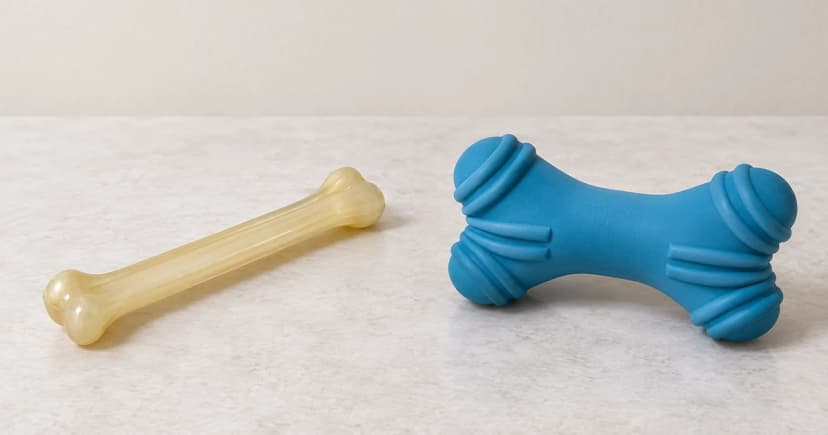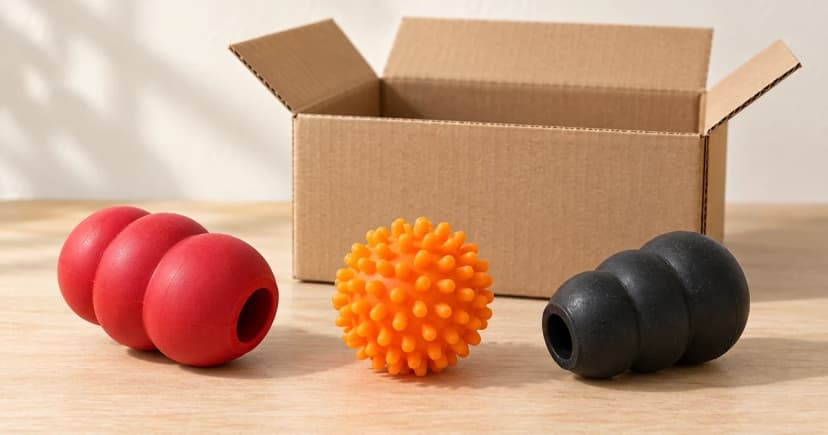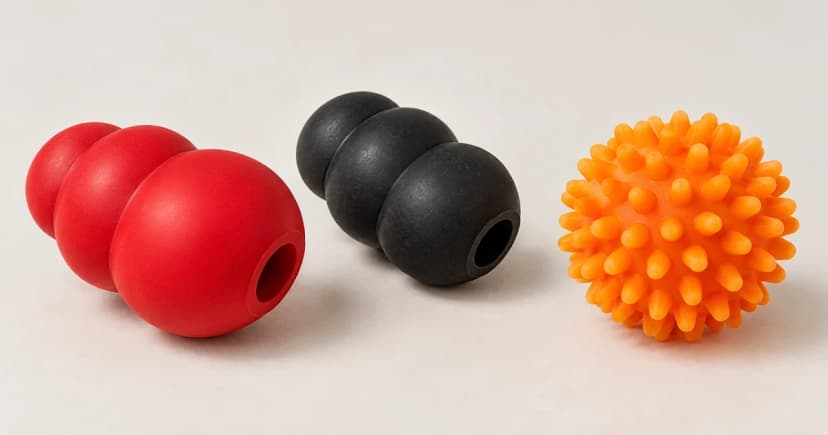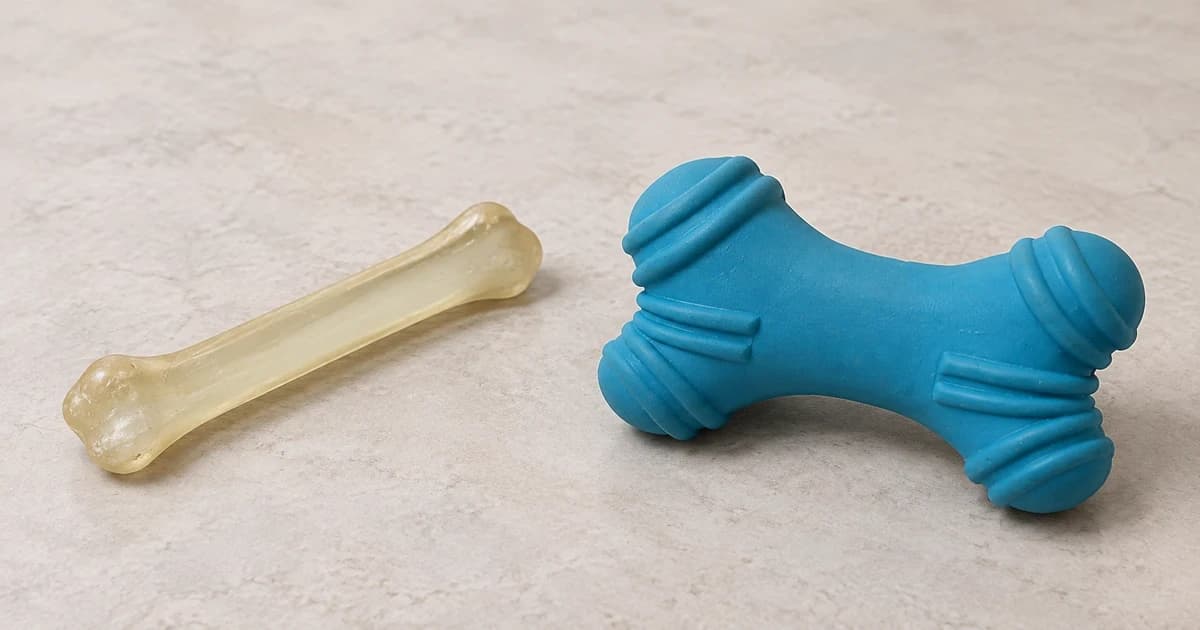
A purpose-made puppy chew toy can provide an alternative to shoes and household objects, but “puppy” on the front of a package is only the start of the choice. Match the exact product's age, size and use instructions to your puppy, and keep checking that match as the puppy grows or changes how they chew.
Separate a non-edible toy from a chew intended to be eaten. Neither a bone shape, a soft-looking surface nor a familiar brand tells you which one you have. This guide uses one welfare article and two manufacturers' instructions to explain that decision; it does not provide a dental-development timetable.
Give chewing a suitable outlet
Blue Cross's chewing guidance, reviewed in December 2024, explains that puppies explore with their mouths and need guidance toward acceptable items. It distinguishes chews from ordinary toys, many of which are not intended for prolonged hard chewing.
The practical point is to select an appropriate outlet and observe its use, especially when introducing a new kind. Keep unsuitable household objects out of reach. If the puppy starts on something you do not want chewed, Blue Cross recommends quietly redirecting attention to an acceptable chew rather than punishing them.
That does not mean every item sold as a chew is appropriate for every puppy, or that a chew will resolve all mouthing or other behavior. This article does not turn the source's example foods or broad availability suggestions into permission to leave a puppy alone with an unassessed product.
Read the puppy line, not just the brand
Nylabone's FAQ describes Puppy Chew as its softest line for young, teething puppies. It pairs chew-strength selection with weight-based sizing. That is a description of its own product range, not a general statement that any small bone-shaped toy is a puppy chew.
The FAQ also separates non-edible toys from edible chew treats. Its general edible range and separate puppy-formulated treats have different age-related wording. Do not transfer one treat's starting age to a non-edible toy, another treat or a different brand. If an edible chew is under consideration, identify that exact product and discuss its suitability with your veterinarian.
For its non-edible chew toys, Nylabone gives withdrawal conditions including worn ends, cracks and a toy that has become too small. The package identifies the candidate; the puppy's growth and the actual item's condition tell you when to reassess it.
Use an age warning as a product limit
The current KONG Puppy Pink product page provides a concrete example. It lists separate sizes and warns that this product is not recommended for puppies over nine months. Its directions require supervised use, removal of packaging and discontinuing use if damaged. It also describes moving to a larger Puppy product or another formula as the puppy grows, depending on the selected variant.
Use those as instructions for that identified product. Nine months is not a universal date on which all puppies' teeth change or every adult toy becomes suitable. Likewise, a different product's lower starting age would not cancel this item's restrictions. Check the selected size's own guidance rather than buying once for an anticipated adult size and leaving the choice unchanged.
Make the first choice easy to revisit
Keep the packaging or a clear record of the exact product and selected size. Before offering it, decide what information would make you pause. A useful note has four parts:
- Identity: the maker, line and size, and whether the item is a non-edible toy or an edible chew.
- Permission: the product's stated age or stage limits and intended use.
- Observation: what the puppy actually does with it while you supervise.
- Reassessment: a change in fit, use or condition that requires checking the directions again.
For example, a puppy may grow while an old toy still looks familiar and remains interesting. Familiarity does not settle whether the original size or product line still applies. Revisit the recorded instructions rather than automatically replacing it with the hardest option on the shelf.
If the uncertainty concerns your puppy's mouth or individual needs, ask your veterinarian. A homemade hardness test, a color comparison or another dog's experience cannot supply the missing assessment.
Keep the choice separate from other questions
Our dog-toy selection guide covers matching activities and play preferences. The separate nylon-chew guide explains why a non-edible material label does not answer an individual dental or ingestion question.
Use the chew toys category to browse, then return to the exact item's directions. Our editorial policy explains the distinction between source-based guidance and testing.