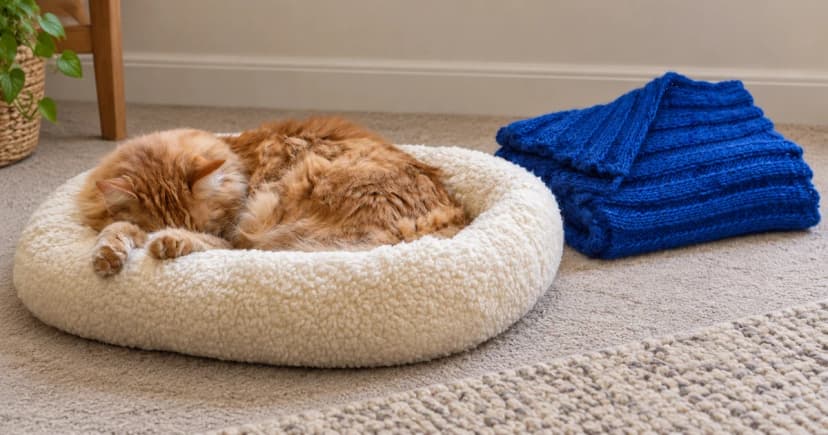
If your cat is peeing in a cat bed, contact your vet. Inability to pass urine needs immediate emergency veterinary attention; repeated straining with uncertain output needs prompt contact. Do not delay for cleaning, notes, photographs or a sample.
PDSA's UK veterinary guidance also advises contact when only small amounts are passed. Seek veterinary advice rather than diagnosing the cause at home.
Explain what you saw, and what you do not know
A wet patch found earlier and urine you have just seen the cat pass are different observations. The earlier patch does not establish what is happening now. Tell the practice which you mean rather than turning a gap in your observations into reassurance.
Use the information already available when you call:
- When: when you first noticed the change and when you last directly saw the cat pass urine, if known.
- What: an observed attempt, visible urine or a patch found later; describe what you actually noticed.
- Which cat: identify the cat only if you know. In a shared home, explain uncertainty rather than guessing.
- Other changes: describe any repeated attempts, discomfort or other changes you noticed, without giving them a diagnosis.
For example, you might explain that you found a patch in the bed after returning home but did not see which cat produced it or when. That gives the practice different information from reporting a witnessed attempt. Ask the veterinary team what to do next; do not wait to recreate the event or complete every field.
Keep the bed location separate from a diagnosis
The ASPCA's litter-box guidance discusses several possible contexts for toileting outside the box, including access, surface or location preferences, household circumstances and medical concerns. It puts veterinary assessment before a behavioural problem-resolution programme. Finding urine on bedding does not establish which explanation applies to your cat.
The same guidance warns against scolding or forcing a cat into the tray. Do not use punishment or an owner-run experiment to try to prove a theory about the bed.
You can describe a recent change without assigning it as the cause. For instance, tell the practice if a familiar resource became inaccessible or the household routine changed. Keep the timing and the interpretation separate: something happening before the patch was found does not show that it caused the urinary change.
Turn the contact into a clear next step
Give the veterinary team the observations you have, then answer the questions they ask. Make existing veterinary and care information available without delaying urgent help to assemble paperwork. Ask where and when the cat should be seen and what the practice wants you to do in the meantime.
Cats Protection's toileting advice recommends a vet check first for a sudden change and says not to punish the cat. It also says a practice can explain how to prepare a sample.
Record the actual contact, the advice received and the next action accepted. If someone else will take the cat or speak with the practice, confirm that they have the current information and know what they are taking over. Sending a message or leaving a note is different from receiving a response and agreeing the next step.
Keep ordinary care and bed cleaning in their own roles
Check that familiar resources remain accessible, and tell the veterinary team about an access problem. Use your existing cat home-care plan to locate the usual instructions and contacts. Do not force a new arrangement, withdraw familiar options or buy another product to test whether it resolves the change.
Once immediate care arrangements are in hand, treat the bed's laundry as a separate equipment task. The cat-bed washing guide starts with the actual component labels and permitted drying methods. Cleaning a cover does not establish why the cat urinated there or that the underlying problem has been resolved.
Follow the individual veterinary instructions and contact the practice again about new concerns rather than relying on an assumed cause or a successful-looking cleanup.