Check an in-cabin pet carrier against the operating airline's current requirements for every flight in your journey. Keep three things separate: the carrier's outside dimensions, the space your pet can actually use inside, and the under-seat space permitted for the aircraft, cabin and seat. A suitable number in one column does not settle the other two.
A carrier that must fit under an airplane cabin seat needs two comparisons: its outside dimensions against the operating flight’s current limits, and its usable inside space against the pet’s needs. Record the operating airline and each flight leg before relying on an allowance from another aircraft or seat. Neither an airline-approved label nor a matching outside number completes both checks.
This is an equipment comparison task. It does not decide whether a particular pet is eligible to fly, whether a route accepts pets or which travel documents are required. The policy examples below were checked on October 15, 2026; verify the rules for your actual journey before purchasing a carrier and again before travel.
Start with a record for each flight leg
Write down the airline operating each flight, rather than relying only on the airline name used to sell the ticket. Add the flight date, aircraft type, cabin and intended seat when known. Leave an unconfirmed aircraft or seat condition marked as a question. A connection can introduce a different operator or a different under-seat arrangement.
Next, identify whether the airline distinguishes hard-sided and soft-sided carriers, publishes a maximum, offers a recommendation, or asks you to confirm dimensions for the actual aircraft. Keep the wording with the figure. “Recommended for most aircraft” cannot be converted into “accepted on every flight.”
If you have not chosen a flight, use the record to identify what still needs confirmation before buying. Do not invent an under-seat height from a cabin photograph, seat pitch or another passenger's experience.
Read these three airline examples in their own scope
| Current primary source | Published carrier dimensions | Condition to retain |
|---|---|---|
| American Airlines | Soft-sided recommendation: 18 × 11 × 11 inches. Hard-sided: 19 × 13 × 9 inches on American Mainline; 16 × 12 × 8 inches on American Eagle. All figures are length × width × height. | Its non-collapsible carrier must stay within the under-seat dimensions of every aircraft in the journey; the airline directs customers to Reservations to verify the maximum. Soft carriers still need to fit without excessive collapse. |
| Delta Air Lines | A recommended soft-sided maximum of 18 × 11 × 11 inches, described as fitting most aircraft types. | The actual maximum depends on the flight's aircraft and under-seat space. Delta also specifies a leak-proof soft carrier and ventilation on three sides for domestic travel, four for international travel. |
| Southwest Airlines | Its own carrier: 15 inches long × 10 wide × 10 high. Other carriers: maximum 18 long × 10.5 wide × 10 high. | The carrier must fit under the seat. Southwest recommends a soft carrier and says space varies with seat type and location, with some aisle seats more limited. |
These examples show different kinds of limits, not a single size to apply across airlines. Southwest's own product dimensions and its maximum for other carriers are separate entries. American's Mainline hard-carrier figure is not its Eagle figure. Delta's recommendation still leaves the actual aircraft check to do.
Use the current source page rather than an undated comparison chart. Seat and cabin restrictions also matter: a permitted carrier type does not establish that every seat in that cabin has suitable stowage.
Check whether the carrier fits under the cabin seat
Identify the precise carrier model, size and version. Record its published outside dimensions in the airline's stated order, then check the actual empty carrier in the configuration you plan to use. Keep protruding features and the complete normal shape visible when discussing a measurement with the maker or airline. Do not report an interior floor measurement as the carrier's outside length.
A removable support, changed base or folded panel can describe a different setup. Follow the maker's instructions for the complete carrier; do not remove structural parts merely to create a smaller figure.
Keep units consistent when comparing records. Record length, width and height separately instead of adding them into a single total. If the available dimensions or the airline's interpretation are unclear, send the exact model information and your question to the operating airline. A rounded conversion or an assumed tolerance cannot serve as approval.
Keep usable pet space as a separate check
After the external comparison, check the carrier's usable interior with its normal bedding and support parts in place. The airline sources require the pet to fit comfortably or move inside the carrier. A small outside measurement does not establish that the pet can do so, and an open bag with a head projecting out does not demonstrate the closed configuration.
Do not compress a carrier around the pet to make an external number work. American's condition about avoiding excessive collapse is not a general invitation to squeeze soft carriers.
For cats, our guide to carrier size and usable interior space explains that separate home measurement task. It cannot confirm an airline's acceptance of the equipment.
| Record field | Entry needed for each leg |
|---|---|
| Flight conditions | Operating airline, date, aircraft, cabin and seat; mark unconfirmed details explicitly. |
| Applicable rule | Current source and check date; hard or soft carrier; maximum or recommendation; aircraft or seat conditions. |
| Actual carrier | Exact model/version and outside length, width and height in its normal permitted configuration. |
| Interior observation | Usable space with bedding and supports, kept separate from external measurements. |
| Question and confirmation | The unresolved mismatch and the operating airline's response for the actual flight conditions. |
Review the record if the operator, aircraft, cabin, seat or carrier changes. The previous comparison describes the previous combination. An equipment checklist also does not replace a pet reservation or the airline's final check.
When browsing soft-sided dog carriers, hard-sided dog carriers or cat carriers, request missing dimensions for the exact product. A seller's “airline approved” wording is a claim to investigate against the actual flight conditions, not the completed comparison itself.
Sources and limits
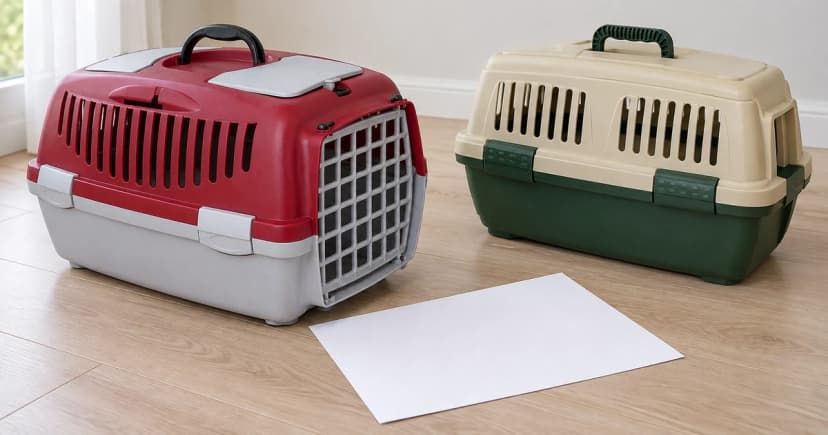
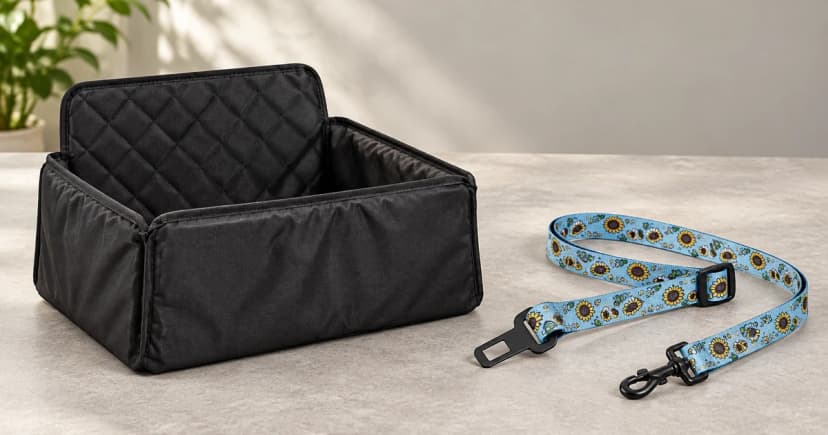
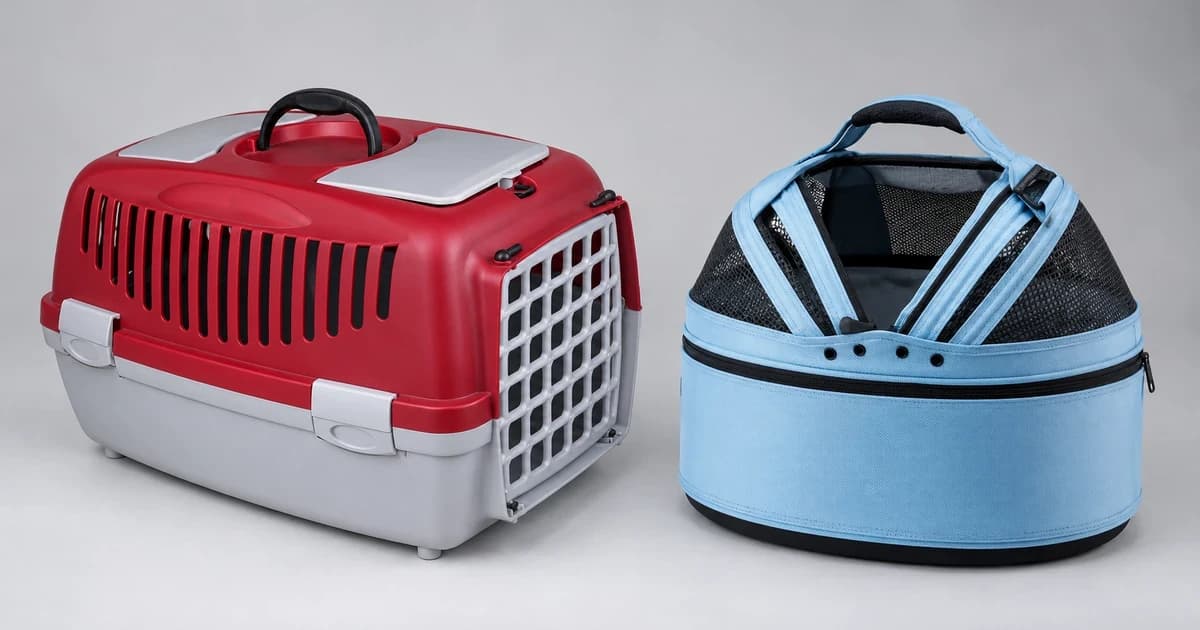
This guide uses the three airline pages linked above. The edited image shows reconstructed generic empty carriers; it supplies no scale or approval evidence. Our editorial policy explains how we distinguish source instructions from observations and illustration.