To know how to choose a cat tree that fits both your cat's body and your living room, look past overall tower height and check four concrete specifications: the net usable resting space on each perch or den after subtracting posts and rims, the complete floor-to-top outline (with height, width, and depth clearly labeled), the climbing route between levels, and the per-platform load and wall-securing rules.
Planning where to place a cat tree is part of what to look for in a cat tree before you buy: measure beyond the bottom baseplate wherever baskets or upper perches overhang, verify safe landing clearance along your room's walking path, and check whether your floor type (carpet vs. hard flooring) or household pets require wall anchoring.
Start With the Resting, Climbing, or Hiding Feature Your Cat Actually Uses
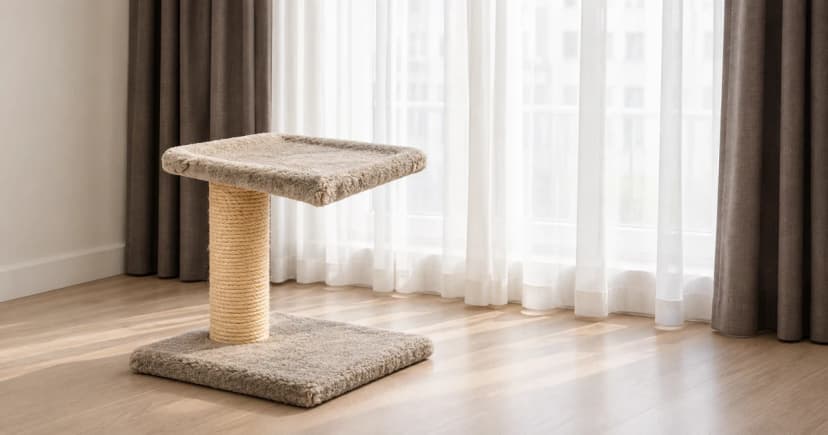
Observe where your cat prefers to nap and watch the room—curled in a round rimmed bed, stretched out flat on a wide shelf, or tucked inside an enclosed two-door cube—and measure that familiar resting footprint first. If your primary goal is vertical sisal scratching rather than multi-level lounging, see our scratching-post selection and introduction guide.
Compare Labeled Geometry, Net Perch Space, and Load Scope
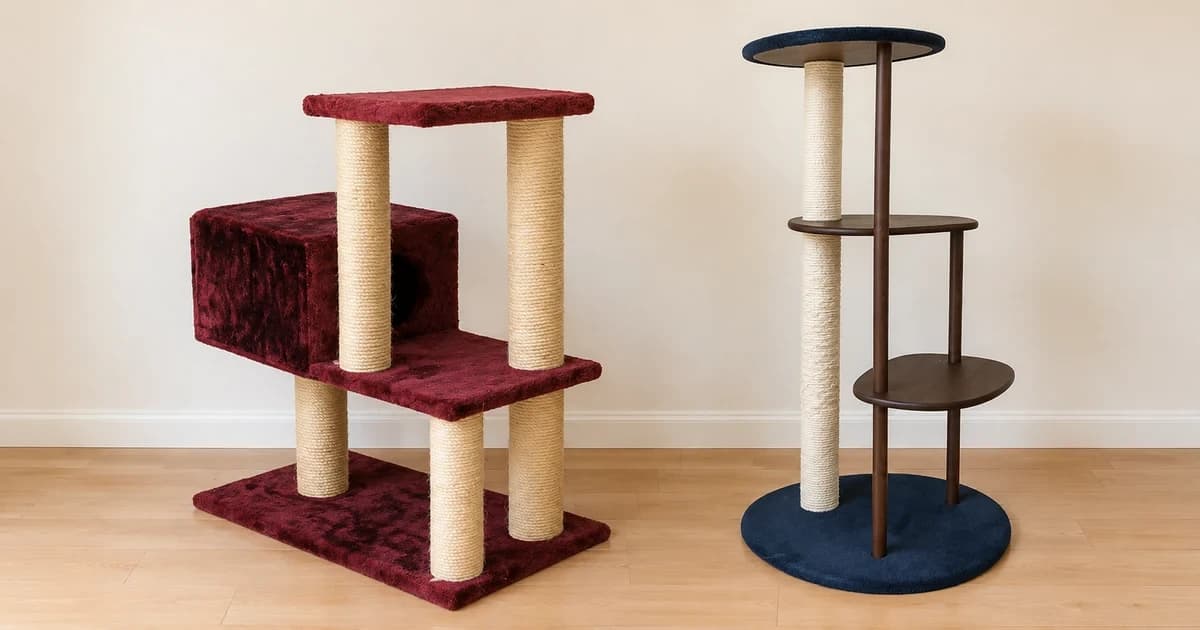
Published cat-tree specifications mix overall frame dimensions, net bed surfaces, per-platform cat weights, and shipping box weights. In the comparison table below, every confirmed measurement carries its direction/axis label, and any single-number base dimension is explicitly flagged so you never confuse shipping weight or base width with full room clearance:
| Named Cat Tree Example | Published Dimensions (With Axis Labels) & Load Scope | What to Confirm Separately Before Ordering |
|---|---|---|
| Tuft & Paw Frond Cat Tree |
|
Compare the 12.5 × 9.5 in net lower perches and 12.5 × 12.5 in top perch against your cat's resting posture; note that the 12-pound cat mentioned in model photos is an example model size, not a published maximum load limit. |
| Catit Vesper High Base (Manual) |
|
The summary spec lists overall height (47.8 in) and base width × depth (22.1 × 22.1 in), while net usable platform area, cube entrance/interior dimensions, and per-platform load limit are not stated on the overview page. |
| Mau Cento Cat Tree & Safety Guide |
|
Confirm the complete overhanging floor outline (full width and depth beyond the 23 in base figure) and inside basket diameter; keep the 38 lb shipping-box weight strictly separate from assembled weight or tipping resistance. |
Check Net Usable Perch Space and Step-by-Step Climbing Routes
A platform's outer board measurement often includes the thickness of the supporting post or a raised bolster rim—just as the Tuft & Paw Frond subtracts the post to yield a 12.5 × 9.5-inch usable lower step. When evaluating a tree for a large cat or a multi-cat home, check each resting spot's unobstructed interior dimensions and trace the step-by-step climbing and descent route on the assembly diagram so your cat is never forced to make an awkward vertical leap past an overhanging basket.
Read Per-Platform Load Limits, Floor Rules, and Wall Securing Together
Mau's Product Safety & Securing Guide illustrates three critical installation distinctions:
- Per-platform load vs. whole-tree load: Mau states that its weight ratings apply per platform on a correctly assembled unit standing on a level, stable floor, and warns that dynamic jumping or rough play can cause tipping even within stated weight limits. Never multiply per-platform ratings into an assumed multi-cat total capacity.
- Wall-anchoring rules: Mau recommends wall securing for furniture above 20 inches tall—and at every height in homes with children, dogs, or energetic pets—using wall-appropriate hardware rather than adhesive strips.
- Floor surface rules (carpet vs. hard floors): Tuft & Paw's Frond FAQ allows using its supplied leveling feet (or no feet) on hard floors, but advises removing those feet when placing the tree on carpet. Always check your specific tree's floor instructions.
Check Assembly Hardware and Cleaning Access Before Ordering
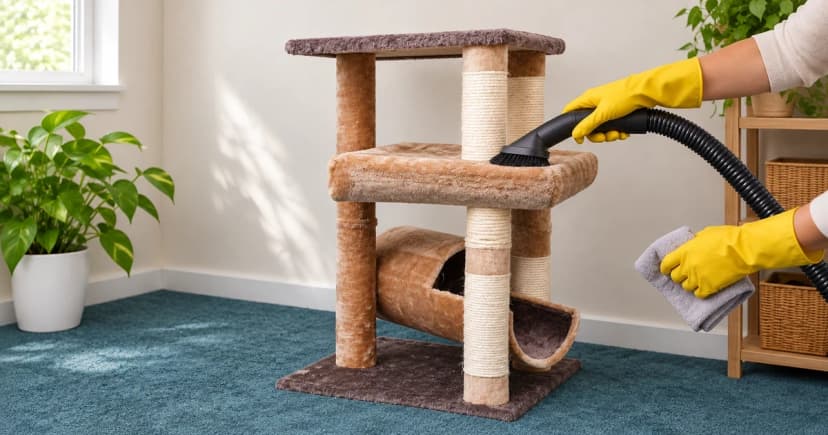
Review the downloadable PDF manual—such as the Vesper High Base assembly sheet—to see how posts bolt together and whether cushions and scratching mats detach for replacement or washing. Our cat-tree cleaning guide explains how to care for laminated panels, removable pads, and dry-only sisal posts.
Buyer Specification Card: Compare Candidates Side by Side
Fill out these five fields for each candidate before ordering from our cat trees and climbing furniture category:
| Decision Item | What to Record (With Axis & Scope Labels) | When to Pause and Verify |
|---|---|---|
| 1. Model & layout version | Brand, exact model name, manual PDF link, and approved platform orientation | The listing shows multiple heights or layouts without identifying which specification row applies |
| 2. Net usable perch & den space | Clear interior bed length × width (excluding posts/rims) and den door + interior height × width × depth | Only overall tower height or a generic "for large cats" badge is given |
| 3. Labeled room outline & climbing route | Overall height × full width × full depth (including overhanging baskets) plus step-to-step climbing path | Only a single base number is listed and overhanging basket clearance in your room is tight |
| 4. Per-platform load & floor/wall rules | Per-platform weight rating, carpet vs. hard-floor foot rules, and required wall-securing hardware | Shipping weight is confused with stability, or required wall anchoring cannot be installed at your spot |
| 5. Removable care & replacement parts | Which cushions/mats detach for washing and whether exact-fit replacement scratching posts are sold | Fixed upholstery cannot be maintained under your household cleaning routine |
See our editorial policy for how we document manufacturer specifications.