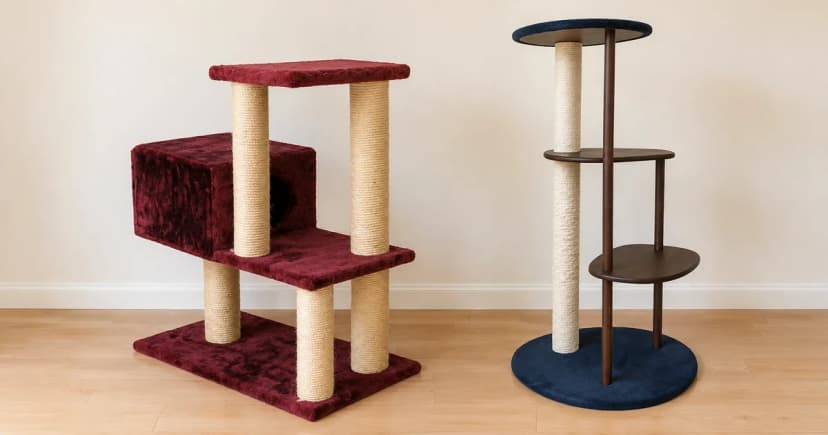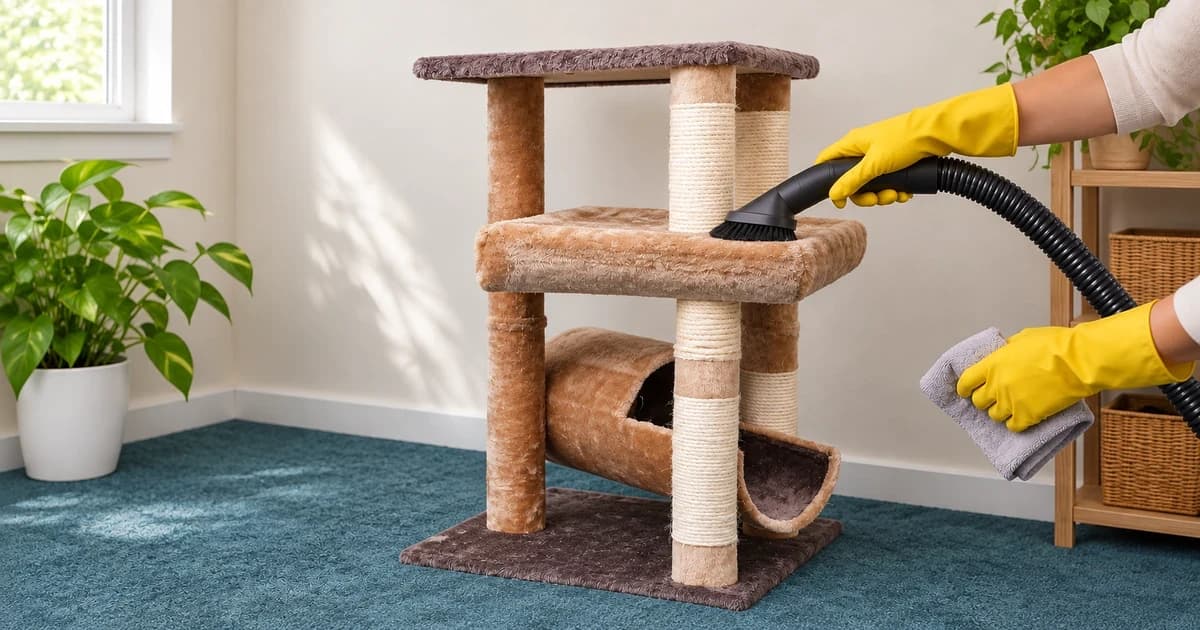
To understand how to clean a cat tree without damaging its structure, divide the furniture into four distinct zones—hard laminated or wooden panels, fixed upholstery, removable cushions or mats, and sisal or seagrass scratching surfaces—and follow the care instructions for each component before adding water, soap, or heat. A machine-washable basket cushion never makes the assembled cat tree washable, and a damp-cloth panel wipe never authorizes wetting rope-wrapped scratching posts.
Compare Manufacturer Care Rules Across Cat-Tree Components
With your cat out of the work area, inspect the tree's construction and check care tags on removable pads or hammocks. Compare how three documented cat-tree manufacturers separate their panel, fabric, and scratching-surface permissions:
| Named Furniture & Component | What the Maker Permits | Boundary to Keep |
|---|---|---|
| Catit Vesper laminated MDF panels | Dust with a microfiber cloth; for spots, use a damp non-abrasive sponge with an allowed cleaner such as dish soap, then wipe dry. | Keep adjacent sisal or seagrass scratching posts and mats completely dry while wiping panels. |
| Catit Vesper removable fabric cushions/mats | Hand wash with warm water and laundry detergent (checking the sewn label), then dry completely before reattaching. | Hand-wash permission for Vesper removable pads does not authorize machine washing or soaking fixed parts. |
| Catit Vesper sisal or seagrass posts & mats | Vacuum dust and loose hair; do not clean scratching surfaces with water (if accidentally wetted, dry promptly with a hairdryer on the cold setting). | Panel damp-wiping permission stops at the scratching material; cold-air drying is an accidental-wetting response, not a wash method. |
| Mau Uni removable basket cushion | Machine wash on the coldest setting with no detergent; if using a dryer, check every minute and stretch filling back into shape afterward. | The product page does not state a specific dryer heat temperature—verify the cushion's label before using heat. |
| Mau Uni main tree & basket structure | Wipe with a damp cloth, vacuum with a brush attachment, and use the maker's specified dry-foam approach. | Mau explicitly prohibits liquid detergents on the main tree structure; keep cushion washing rules separate. |
| Tuft & Paw Frond cat tree | Wipe clean with a damp cloth. | This brief direction covers damp-cloth surface wiping only; it does not authorize soaking, steam cleaning, machine washing, or detaching fixed parts. |
Step 1: Vacuum Loose Hair Before Introducing Any Moisture
Start with dry hair and dust removal across platforms, baskets, and scratching posts. Both Catit (for Vesper sisal/seagrass surfaces) and Mau (using a brush vacuum attachment on the Uni tree) begin with dry vacuuming. Clear loose fur and litter granules first so a damp sponge on a hard panel does not turn dry dust into muddy streaks.
Step 2: Wipe Hard Panels and Clean Detachable Fabric Separately
Detach only cushions, memory-foam pads, or hammocks that are designed to unfasten (such as hook-and-loop or tied pads), and never peel fixed carpet from particleboard:
- Hard panels and frames: When wiping laminated MDF panels on a Catit Vesper with a damp sponge and mild dish soap, follow immediately with a dry cloth and keep moisture off neighboring rope posts. On a Mau Uni tree, follow its no-liquid-detergent rule on the tree structure even while washing the removable basket cushion separately.
- Removable cushions: Keep hand-wash cushions (Catit Vesper warm water + laundry detergent) distinct from detergent-free cold machine-wash cushions (Mau Uni basket cushion), and never assume washer permission settles how a cushion should be dried.
Step 3: Keep Scratching Posts Dry and Check Replacement Parts
Sisal rope and seagrass mats trap moisture against their inner cardboard or wood cores if soaked. Follow Catit's rule to vacuum scratching surfaces dry rather than washing them with water. When a scratching post or mat wears through, check whether your furniture brand sells exact-fit replacement posts or mats; standalone scratching posts and scratching pads serve as separate scratching outlets rather than universal replacement parts for an existing tree.
Step 4: Reassemble and Log Your Four-Field Cat-Tree Care Record
Wait until every washed cushion and wiped panel is completely dry before pressing hook-and-loop pads or ties back onto the platforms. Use this copyable four-field record table—shown with concrete examples from the documented trees above—to separate dry vacuuming, panel wiping, and fabric washing on your own cat tree:
| 1. Tree Part & Zone | 2. Attachment Type | 3. Permitted Cleaning Method Used | 4. Drying & Reattachment Rule |
|---|---|---|---|
| Scratching post / sisal mat (e.g., Vesper sisal post) | Fixed post or removable mat fastener | Vacuumed dry dust and shed hair only; kept water and soap off the fibers | Keep dry at all times (if accidentally dampened on Vesper, dry immediately on cold air setting) |
| Hard platform panel (e.g., Vesper laminated MDF / Frond surface) | Fixed structural board | Dusted with microfiber cloth, wiped spots with damp sponge/cloth, kept off rope seams | Wiped dry immediately with a clean cloth before cat re-entry |
| Removable fabric cushion (e.g., Vesper pad / Mau Uni basket cushion) | Hook-and-loop strips or basket insert | Washed off the tree per model rule (Vesper hand wash with detergent vs. Mau Uni coldest cycle with no detergent) | Dried completely and reshaped per label before reattaching to the platform or basket |
When comparing models in our cat trees category, check whether cushions detach for washing and whether replacement scratching parts are available. For placement and height tips, see the scratching-post selection and introduction guide, and review our editorial policy for how we document manufacturer care guides.