To figure out how to stop a cat from climbing curtains, start by observing the exact furniture route your cat uses to reach the fabric, move or adjust that launch route while keeping essential resources and retreats accessible, and place a stable climbing or perching alternative where it does not act as a new stepping stone to the curtain or an unsafe window. Never punish, spray, or startle your cat; watch what your cat voluntarily chooses and review the original route again.
In PetMD's 2018 article by Carol McCarthy, veterinarians Carlo Siracusa and Brian Collins discuss providing acceptable vertical climbing outlets and reducing access to long hanging drapes. Use those suggestions alongside UK welfare guidance to manage your room layout without treating a single new cat tree as an automatic cure.
Describe the launch route before changing the room
Observe quietly without encouraging a climb and note where your cat launches from: the floor, an armchair arm, a radiator cover, or a bookcase. Record which part of the curtain they target and what they actually do next—scaling to the curtain rod, scratching the lower hem, batting a swaying hem or cord, or trying to reach a high resting ledge above the window.
Those details tell you which practical problem to solve without diagnosing boredom or illness at home. A cat jumping from a dining chair halfway up a drape is using a furniture bridge, whereas a cat raking claws at floor level is looking for a scratching surface.
Inspect the entire window zone for hazards at the same time. Cats Protection's home-safety guidance flags blind cords, dangling strings, and unguarded window openings (including tilted windows) as serious entanglement and fall hazards. Never place a new perch where it invites your cat closer to looped cords or an unsecured window.
Change curtain access while keeping essential resources open
Modify the specific launch path you observed—for example, sliding a movable armchair away from the window edge—while making sure your cat's food, water, litter trays, and quiet hiding places remain untouched and easy to reach. If a room with floor-length drapes must be closed temporarily while you reorganize, verify first that none of your cat's core resources are locked inside that room.
Battersea's cat-friendly home guidance stresses predictable territory, consistent resource stations, and giving cats a sense of choice. Avoid improvised fabric knots that create hanging loops, and never use water sprays, citrus oils, or noise traps to scare a cat away from a window.
Offer an alternative without creating a new stepping stone to the curtain
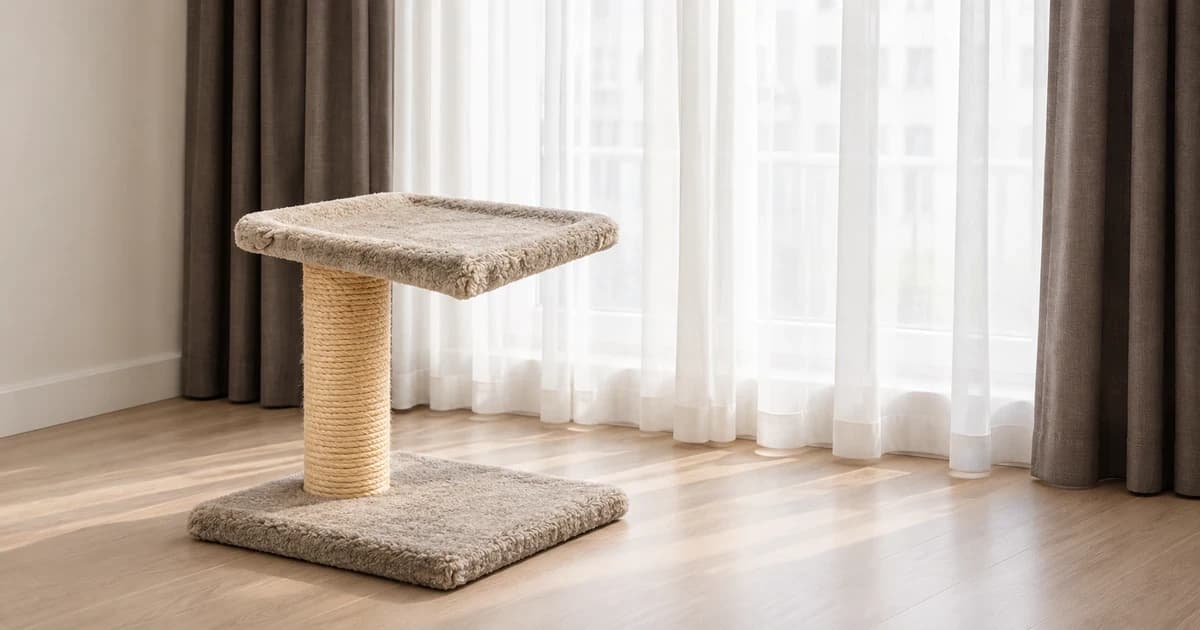
The RSPCA's cat environment guidance highlights that cats need safe places to climb, view their surroundings from above, and hide. Blocking a curtain route works best when paired with a stable, well-positioned vertical alternative.
Compare the two room layouts below before placing a cat tree or high perch so your new furniture does not simply replace the chair as a launchpad onto the curtain:
| Room Feature | Layout A: Stepping-Stone Route to Curtain (Avoid) | Layout B: Separated Climbing Route & Safe Window Zone (Preferred) |
|---|---|---|
| Movable chair or new cat tree position | Placed right beside the curtain edge, letting the cat step or leap straight from the backrest/platform onto the fabric or curtain pole. | Chair shifted out of launch range; cat tree placed along a stable wall or safe closed-window vantage point well clear of curtain fabric. |
| Window opening & blind cords | Dangling blind cords or an unguarded open/tilted window sit within paw's reach of the perch (Cats Protection hazard). | No loose cords or loops reachable; window kept safely closed or fitted with appropriate cat-safe protection before offering any nearby view. |
| Path to everyday resources & retreats | Room door shut abruptly, cutting off a familiar hiding box, water bowl, or litter route. | Unobstructed two-way paths maintained to water, food, litter trays, and quiet retreats (Battersea & RSPCA). |
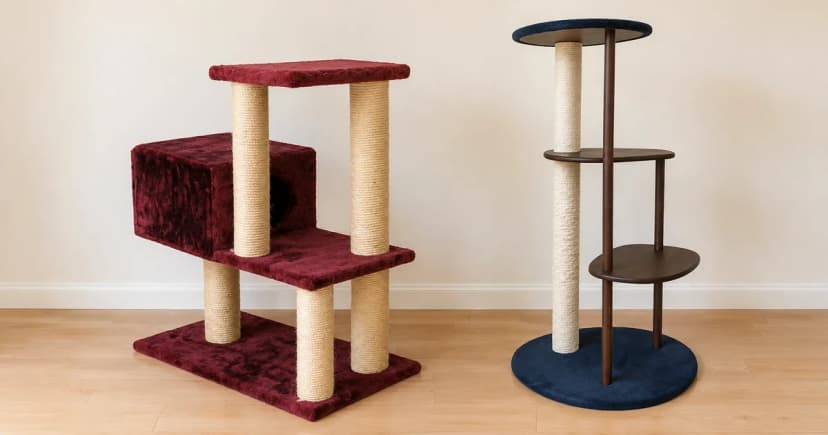
When comparing freestanding options, use our cat-tree buying guide to check base footprint, platform spacing, and assembly instructions. In a multi-cat household, provide multiple separate high spots and retreats so one cat cannot block another.
Observe voluntary use and address scratching or play separately
Let your cat discover and climb the new perch on their own schedule—never lift a cat onto a high platform or hold their paws against a post. Remember that seeing your cat sit on the cat tree once is a positive start, not proof that the curtain route is forgotten.
If your cat was clawing the lower hem horizontally or vertically without climbing, use our scratching-post selection and introduction guide to place a tall, sturdy scratching post near that spot. For energetic chasing and pouncing, schedule daily sessions using our supervised cat-play guide and put wand toys away afterward.
Keep a short adjustment record and know when to seek help
Track one layout change at a time so you can see what actually helps:
- Starting route: Which floor spot, chair, or shelf gave access to which curtain, cord, or window.
- Observed action: Climbing up the drape, scratching the hem, batting a cord, or seeking a high resting perch.
- Access change & resource check: How the launch furniture was moved and confirmation that water, litter, and retreats stayed open.
- Alternative offered: Exact perch or tree location, assembly check, and distance from curtains/cords.
- Cat's voluntary response: Whether the cat used the alternative, ignored it, or found another path to the curtain.
If a cat falls from a curtain rail, limps, or shows a sudden change in behaviour or energy, contact your veterinarian promptly.