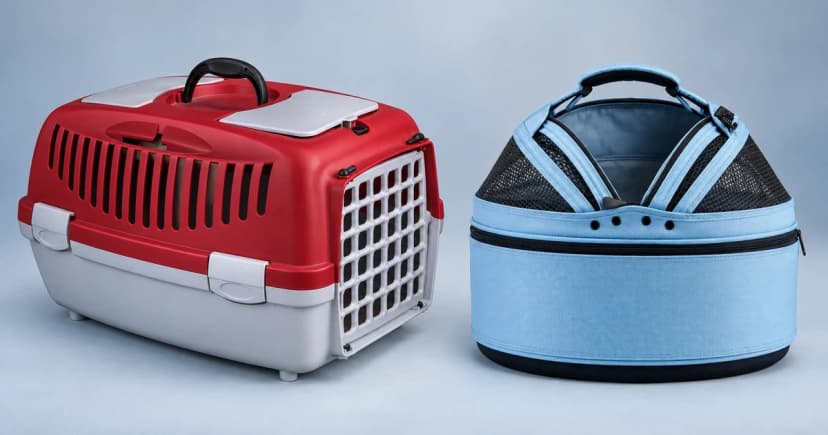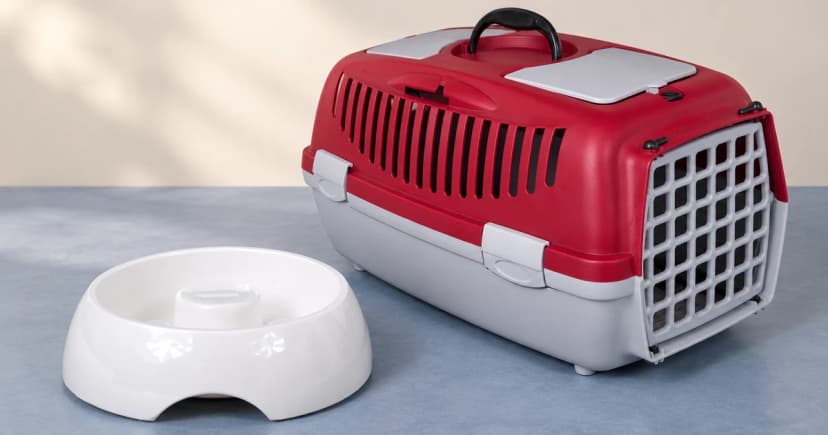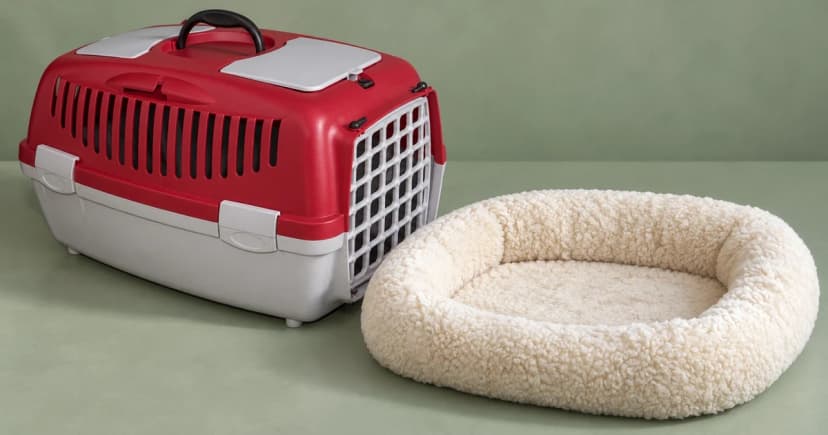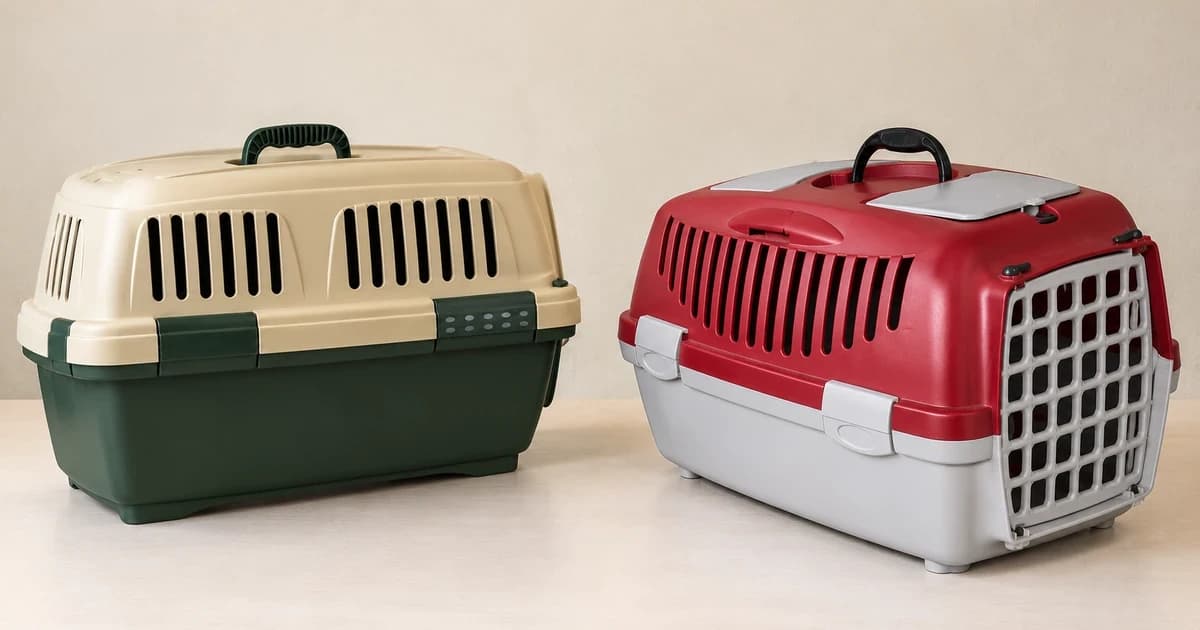
Clean a hard-shell cat carrier by matching the actual model and each component to its own care instructions. A plastic shell, clear window and padded cushion need not share a wash method. Start with an empty carrier and keep the cat elsewhere while the equipment is being cleaned.
Identify the carrier and the part
Find the maker, model or product code before choosing a cleaner. List the shell, front panel, door, cushion and any separate bedding. Then write down which parts the maker allows you to remove. A visible join is not an invitation to pull a panel apart.
Keep the component's name beside its instruction: cleaning the carrier and spot-cleaning its cushion are different permissions. If yours is a fabric bag with a board, rods or foam insert, use the separate fabric-carrier care guide rather than transferring a hard-shell example.
Use the route documented for your model
Savic Trotter 1 Happy Planet
The Trotter 1 care FAQ says to open the carrier, clean it using warm water and mild detergent, and let it dry before the pet goes inside. It does not supply a numerical temperature, detergent dilution or soaking time. Keep those missing details as questions for Savic instead of selecting figures from another product's instructions.
Catit PIXI Mio, product 41390
Catit's PIXI Mio FAQs permit mild soap and water for the carrier, while specifying spot-cleaning the cushion with mild soap and water. That cushion instruction does not authorize soaking it or putting it in a washing machine.
The page identifies a detachable front and top, distinct from the cushion. Follow the matching removal instructions for this model.
Catit Cabrio, codes 41370, 41371 and 41372
Page 6 of the Cabrio manual specifies a non-abrasive cloth and cleanser. It does not give a soap mixture, soak, rinse or drying method. Do not replace that instruction with the PIXI Mio's soap-and-water permission merely because both are Catit carriers.
Resolve a missing permission before proceeding
For an unclear component, record the model, part and exact question: whether it may get wet, which cleaning product is permitted, and what drying method applies. The useful answer identifies that component; a general claim that a carrier is easy to clean leaves the method unresolved.
This is routine equipment care, not a disinfection procedure. The named instructions do not provide a common chemical recipe, dishwasher cycle or heated-drying setting. Do not make a more intensive treatment by combining their separate permissions.
Record completion separately from assembly
Keep cleaned parts and their care notes identifiable while completing the applicable method. Record what you actually did and any unfinished drying or component question. A clean-looking surface does not answer an unresolved care instruction.
Once the cleaning questions are resolved, use the matching maker's assembly instructions. Our hard-carrier hardware guide explains why shell connections, hinges and latches need their own model checks; cleaning does not prove they are correctly assembled.
Similar-looking equipment and a category listing do not establish washing permissions, current stock or a tested cleaning result.