To clean a fabric pet carrier, identify the outer bag, bedding and support parts before choosing a wash method. Remove only the parts its instructions allow, clear loose hair, and clean each component by its own permission. A washable liner does not make the surrounding mesh, foam, board or frame machine washable.
This guide compares documented fabric-carrier examples from Sherpa, Sleepypod and Sturdi. It covers ordinary equipment care, not a disinfection protocol or a promise about containment, airline acceptance or transport performance.
Make a parts list while the carrier is empty
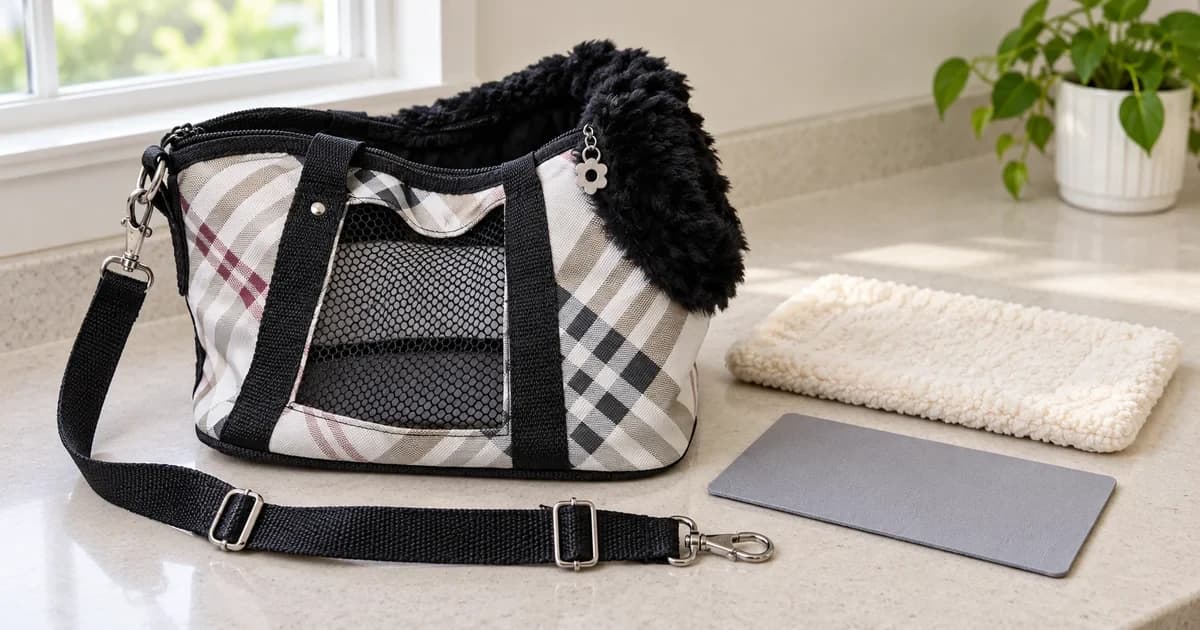
Keep the pet out of the carrier during cleaning. Find the maker, model and care label, then note what you can actually separate. Look for a bedding cover, foam insert, stiff support board, removable rods, shoulder strap and mesh panels. A sewn-in pocket or lining is different from an intended opening; do not pull it apart because another carrier has a removable part.
Write a separate method beside each part. For example, the Sherpa FAQ distinguishes its carrier, faux-lambskin liner and stability board. The Sleepypod product page separately lists washable Ultra Plush bedding and a foam insert. The word “washable” needs an identified object.
| Documented equipment | Permitted treatment | Keep separate |
|---|---|---|
| Sherpa FAQ: carrier and faux-lambskin liner | Carrier: hot soapy soak and air drying. Liner: cold gentle machine cycle and air drying. | The stability board is spot-clean only. The FAQ does not give a numerical soak temperature or duration. |
| Sleepypod Mobile Pet Bed, 2024 manual | Outer surface: damp cloth. Ultra Plush bedding: cold gentle machine wash with like colors, then hang or lie flat to dry. | No bleach or iron for that bedding. Its foam insert has a separate hand-wash instruction. |
| SturdiBag Pro 2.0 guide | Prepared, inside-out carrier: machine wash with non-bleach detergent and line dry. | Remove the listed supports and accessories first; wash the pad separately. Low machine-drying heat is specified for the pad, not the bag. |
These are different permissions, not three interchangeable cleaning recipes. Match your instructions before starting, including the drying method and parts that must stay out of water.
Remove loose hair without turning every surface into a brush target
The Sleepypod 2024 manual allows a lint roller, vacuum or tape to collect light hair from the bedding. That is bedding guidance, not permission to tape every mesh window or coated panel.
The Sturdi FAQ calls for vacuuming loose hair and debris and using a stiff brush on hook-and-loop fasteners. Keep the brush instruction on those fasteners; do not transfer it to delicate mesh. Its Pro 2.0 guide also describes shaking out soil or using a vacuum with a brush while preparing the inside-out carrier.
Separate loose toys and spare blankets from structural parts. If something stays attached, check whether the maker intends it to be removed before washing. Record uncertain components instead of choosing a method from their appearance.
Give the outer bag, liner and foam their own cleaning jobs
A damp wipe and a whole-bag soak are different operations. Sleepypod's current product FAQ says to wipe exterior dirt in the direction of the fabric with a damp cloth, repeating as needed. Its manual likewise specifies a damp cloth for the outer surface. Neither instruction turns its mesh dome or complete assembled carrier into a machine-washable item.
Sherpa's hot-soapy-water instruction belongs to the carrier in its FAQ. Its board remains spot-clean only, and its liner uses a cold gentle cycle. Do not combine those components in one soak or invent a hot-water setting for the liner.
Sleepypod's 2024 manual expressly permits hand washing its foam insert with mild detergent, followed by hanging or laying it flat to dry. That documented foam permission is useful precisely because other foam or stiffened inserts may have different instructions. It does not authorize machine washing an unidentified filling or support board.
For the SturdiBag Pro 2.0 guide, preparation includes removing the baseboard, arched and roof rods, zipper clips and pulls, tether, shoulder strap and pad. The fabric body then washes inside out. Follow the listed parts for that model; a carrier without removable rods does not acquire this procedure.
Keep the drying instruction with the cleaned part
Label the drying plan before wet cleaning. Sherpa specifies air drying for its carrier and liner. Sleepypod specifies hanging or laying flat for its bedding and foam. Sturdi's Pro 2.0 guide separates line drying the bag from low-heat machine drying the pad. A pad's dryer permission must not become permission to tumble the complete carrier.
The current Sturdi FAQ also calls for complete air drying away from direct sunlight or heat. Do not pack the components together while checking whether they have finished drying. Keep them separate until their documented method is complete, including areas hidden beneath pads or within folds.
Resolve the reassembly instructions before reconnecting supports
Sturdi's Pro 2.0 guide puts the arched rods at the final reassembly stage. Its current general FAQ says to reinsert the arch rods first. We could not establish which wording applies to an unidentified version, and we are not assigning either page a newer publication date.
For Sleepypod's zipper-attached dome, the 2024 manual says to unzip fully and release the zipper pin when removing the lid; it warns against leaving the dome dangling from a partial zip. Its reattachment instructions require the pin to seat in the zipper box before closing. This mechanism does not describe every zippered bag.
With the carrier empty, check the assembled parts against its guide. Note a catching zipper, damaged mesh or missing support instead of treating an ordinary inspection as proof of secure containment. Cleaning does not establish a weight rating or approve a changed component.
Keep a component record for next time
Record the exact model, each removed part, its cleaning and drying permissions, and any unresolved assembly question.
After reassembly, carrier size checks and voluntary entry practice are separate tasks. Pawlivy's editorial policy explains our source-based guidance. This article records maker permissions; it is not a cleaning experiment or a product certification.