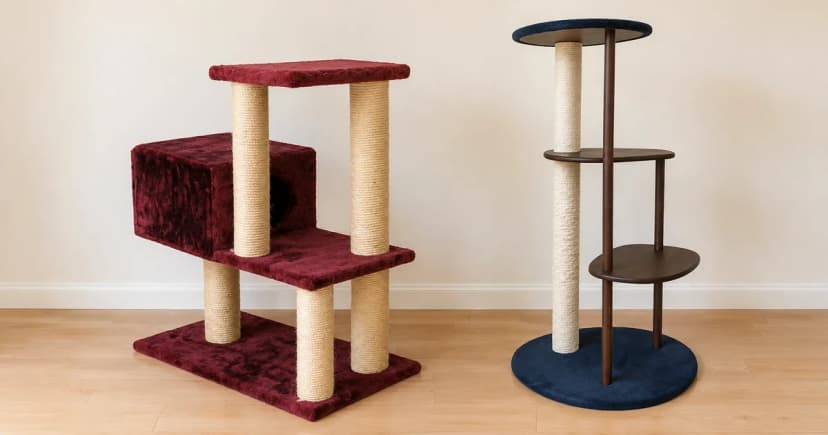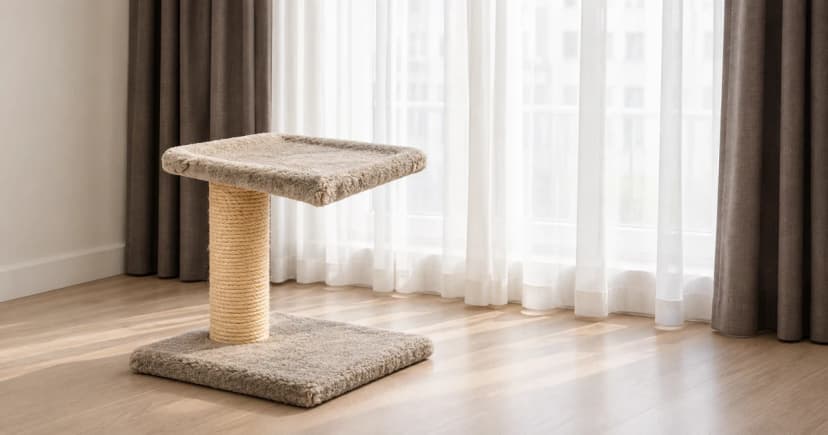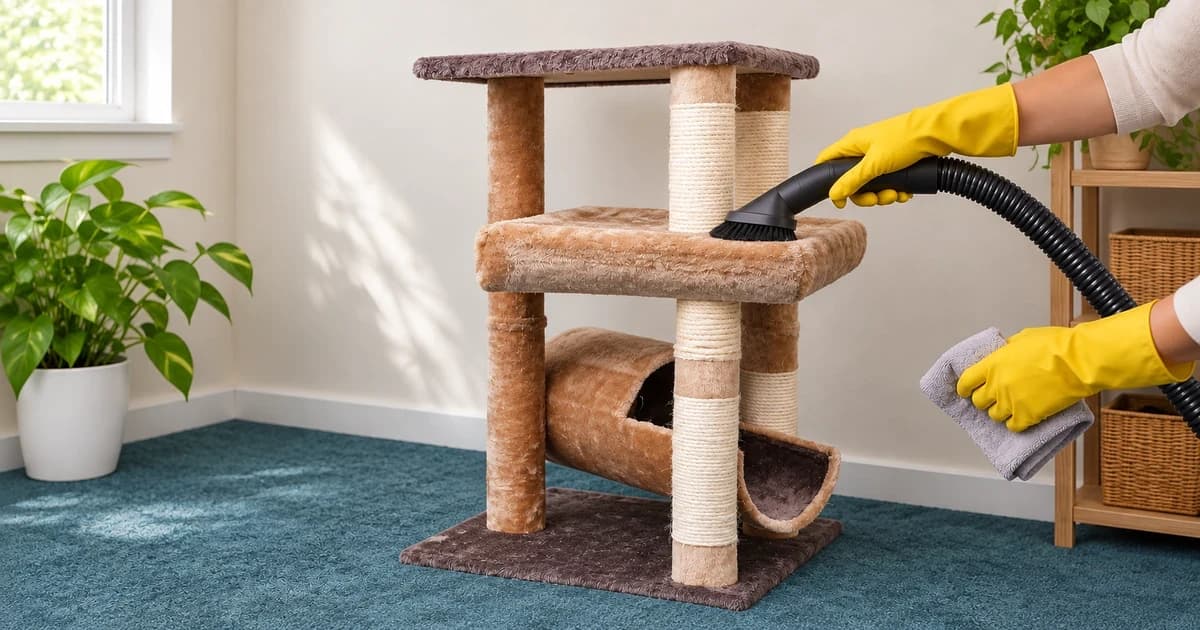
To clean a cat tree, separate the job into hard panels, fixed upholstery, removable fabric and scratching surfaces. Find the instructions for the exact furniture and each detachable part before adding water, detergent or heat. A washable cushion does not make the assembled tree washable, and a damp-cloth instruction does not authorize soaking its rope-wrapped posts.
Start with the construction you have, then decide what can stay on the tree and what needs a separate cleaning method. The manufacturer examples below show why one recipe cannot cover every cat tree.
Make a component list before choosing a cleaner
With your cat away from the work area, identify the model and look for care labels on cushions, hammock covers and other soft parts. Note whether the platforms are laminated boards, finished wood or permanently upholstered. Locate sisal or seagrass scratching surfaces separately from the resting fabric.
A useful cleaning record has four entries: the part, its attachment, the permitted cleaning method and its drying instructions. Appearance alone does not establish that a cushion is removable or machine washable.
| Named furniture and part | What the maker permits | Boundary to keep |
|---|---|---|
| Catit Vesper laminated MDF panels | Dust with a microfiber cloth; for further cleaning, use a damp, non-abrasive sponge with an allowed cleaning agent such as dish soap, then wipe dry. | Keep the scratching posts and mats from getting wet. |
| Catit Vesper removable fabric | Hand wash with warm water and laundry detergent, checking the label; dry completely before reattaching. | This is not permission to machine wash every cushion or the whole tree. |
| Catit Vesper sisal or seagrass posts and mats | Vacuum dust and dirt; do not clean these surfaces with water. | Panel-washing permission stops at the scratching material. |
| Mau Uni basket cushion | Machine wash on the coldest setting with no detergent. The page allows a dryer with checks every minute and reshaping the filling afterward. | The page does not specify dryer temperature; confirm the cushion's complete drying instructions. |
| The rest of the Mau Uni tree | Damp-cloth wiping, vacuuming with a brush attachment and the maker's specified dry-foam approach. | Mau says not to use liquid detergents; the cushion instructions are separate. |
| Tuft & Paw Frond | Wipe with a damp cloth. |
These are instructions for Catit Vesper furniture, the Mau Uni and the Tuft & Paw Frond. They are not evidence that an unidentified catalog item uses the same finish, filling or attachment.
Remove loose debris without turning it into a wet-cleaning job
Check the permitted dry method first. Catit recommends vacuuming its Vesper scratching surfaces, while Mau specifies a brush vacuum for the Uni's main assembly. Work where you can see the surface and its seams. Keep dangling toys and cords out of the work area rather than treating them as part of an upholstered platform.
Loose hair on a perch and a marked hard panel can require different next steps. After dry debris removal, identify the remaining spot and the material underneath it. Do not move straight from vacuuming to spraying the entire structure.
For a Vesper panel, Catit's damp-sponge method includes a final dry wipe. Apply that instruction to the named panel, keeping neighboring rope and mats dry. On a Uni, the no-liquid-detergent restriction still applies even though its separate cushion has machine-washing permission. A cleaner permitted by another brand is not an automatic substitute.
Clean detachable fabric as a separate item
Detach only parts that the assembly instructions identify as removable. Keep track of the attachments so you can restore them correctly. Do not peel fixed carpet from a board because another tree has hook-and-loop cushions.
Read washing and drying instructions independently. Catit calls for hand washing the removable Vesper fabric and complete drying before it goes back on the furniture. Mau's Uni cushion has a different washing method: the coldest machine setting with no detergent. Its page says to check the cushion every minute in the dryer and stretch the filling back into shape afterward, but does not name a heat setting. That missing detail should be checked on the label or with Mau before copying the process.
If a label allows washing but leaves drying unclear, do not guess from another cushion's instructions. A cleaning record that only says “machine washable” leaves half the job unspecified.
Keep scratching surfaces out of the panel wash
Catit explicitly separates its Vesper sisal and seagrass from the washable parts: vacuum them instead of using water. If one becomes damp or wet, its guide calls for prompt drying with a hairdryer on the cold setting. That is a named-product response, not a general invitation to wet every scratching post.
For worn mats, posts or upholstery, identify the compatible replacement part and its attachment instructions. Catit offers replacements for its removable fabric and scratching components.
Reassemble and record what you actually cleaned
Before returning the furniture to use, confirm that the parts you washed have reached the drying condition in their instructions and that the removable attachments are restored as directed. Check for unresolved damage or a missing attachment; cleaning is not a repair method.
Record the date and the actual work: for example, “vacuumed scratching surfaces, wiped permitted hard panels, hand-washed removable cushion.” This distinguishes a quick hair removal from a complete fabric wash. The compared care pages do not establish one universal weekly schedule, so use your model's guidance and the condition of its components rather than inventing a shared interval.
When comparing cat trees, look for accessible care labels and identified replacement parts as well as the layout. For choosing scratching reach and location, see the scratching-post selection and introduction guide. Those setup decisions are separate from permission to wash a material.
This guide compares documented manufacturer care instructions. It does not report a hands-on product test, verify catalog compatibility or make a disinfection claim. Our editorial policy explains how sources are handled.