To reduce curtain climbing, start with the route your cat actually uses, make that fabric less accessible, and offer an appropriate alternative place to climb or rest. Keep basic resources and a quiet retreat available. Observe whether your cat chooses the alternative; buying a tall tree or blocking one curtain does not promise a permanent result.
Do not punish, spray or frighten your cat for climbing. In PetMD's 2018 report by Carol McCarthy, veterinarians Carlo Siracusa and Brian Collins discuss providing acceptable climbing opportunities and limiting access to long curtains. Their reported advice is an explanation and suggestion, not a controlled trial or a veterinary review of this guide.
Describe the route before changing the room
From a position where you can observe without prompting a climb, note where your cat starts: the floor, a chair, a nearby shelf or another surface. Record which fabric is reached and whether the cat then climbs, scratches, plays with a dangling part or settles somewhere above it.
These observations help you choose what to change. They do not diagnose boredom, stress or illness. A cat reaching the curtain from furniture presents a different practical access question from a cat scratching the bottom edge without climbing.
Look at the whole window area, including cords, loose string and accessible openings. Cats Protection's home-hazard guidance identifies cables and string as hazards and warns about falls and entrapment at windows. An alternative perch should not turn an unsafe window route into a new attraction. A screen or a closed-looking curtain is not proof that the window arrangement is suitable.
Change access while preserving the rest of the home
Begin with the particular route you have observed. For example, consider whether a nearby movable chair is making the fabric reachable. Review a room-layout change without moving your cat's essential resources or creating another path to the same curtain.
If the window area cannot be made appropriate immediately, temporarily limiting access to that area is an option discussed in the PetMD report. Before restricting a room, check that your cat still has accessible water, a toilet area, resting places and a quiet retreat elsewhere. Do not use loss of those resources as a deterrent.
Battersea's cat-friendly-home guidance emphasizes predictable room access, consistent resource locations and choice. Keep the household arrangement understandable rather than repeatedly allowing and excluding your cat from the same area without a plan.
Review window treatments according to their own instructions. This guide does not supply a tieback, blind-cord fastening or mounting design. Do not improvise accessible loops or dangling string to gather fabric, and do not substitute a repellent spray, essential oil or a startling device for resolving the route.
Offer an alternative for the activity you saw
The RSPCA's home-environment advice includes opportunities to climb and rest high, as well as places to hide. Removing one fabric route should not mean removing every opportunity for climbing or retreat.
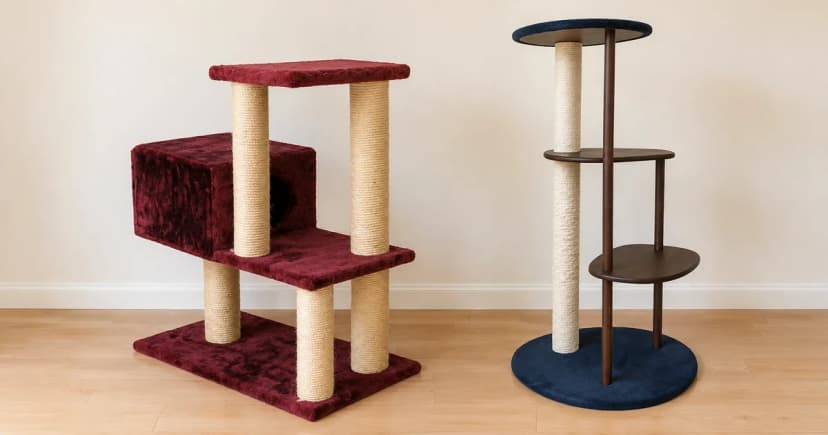
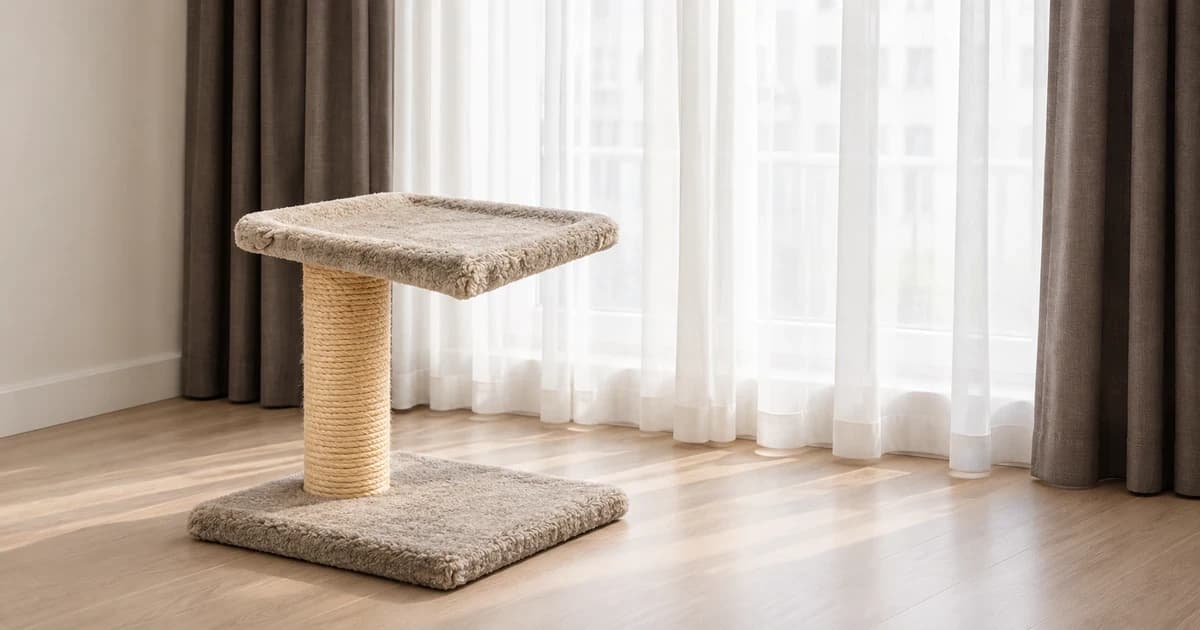
Start with a documented, appropriate climbing or resting place your cat can approach and leave voluntarily. Check the exact item's assembly, placement and use instructions before offering it. A photograph's apparent height or a “heavy duty” title cannot establish a load allowance, fixing method or suitability for your room.
If you need to compare equipment, the separate cat-tree buying guide covers usable platforms, the complete outline and model-specific setup information. Here the question is whether the alternative is accessible and whether this cat chooses it, rather than which model has the longest feature list.
Keep the route to the alternative clear without using it as a step toward reachable curtains or an unsafe opening. This guide does not prescribe DIY shelves, suction-mounted perches or a universal climbing height.
For several cats, consider separate accessible options and quiet retreats rather than expecting one crowded location to serve everyone. RSPCA and Battersea both discuss multiple resources and opportunities to get away from one another. That guidance does not establish how any individual cat will use a particular perch.
Notice voluntary use without forcing an introduction
Let your cat investigate the prepared alternative. Record whether it approaches, steps onto an accessible part, climbs, rests, leaves or ignores it. Do not place the cat on a high platform, move its paws against a post or prevent it from leaving to demonstrate the intended activity.
Compare the observation with the starting problem. A cat using a perch once has shown one voluntary choice; it has not shown that curtain climbing has stopped. Keep checking the original access route rather than treating the new furniture as a completed training program.
If the cat continues scratching fabric without climbing, reassess that separate activity. Our scratching-post selection and introduction guide addresses surface, posture and location. If you want to offer play, use the separate supervised cat-play guide; leave string toys put away afterward.
Keep a useful record and decide the next change
A short written record can prevent several unrelated changes from being mistaken for one solution:
- Starting route: where the cat began and which curtain, cord or opening was reachable.
- Observed activity: climbing, scratching, playing, resting or something else you actually saw.
- Access change: what changed and which essential resources and retreat remain accessible.
- Alternative: the exact item or place, its applicable instructions and the route to it.
- Voluntary response: what the cat chose, including no use or a return to the curtain.
- Next question: another reachable route, an unsuitable alternative or an unresolved concern.
Use the record to change one relevant part of the arrangement, then observe again. There is no fixed number of sessions, required minutes on a perch or guaranteed success date. Do not infer a medical cause from curtain climbing alone. If behavior changes markedly, seek veterinary advice; if your cat is injured or unwell, Cats Protection advises calling a vet.
The useful outcome is a better-managed curtain route with suitable choices still available, assessed from your own observations rather than a promised behavioral result.