Installing a cat door starts with matching three things: the exact unit, the material you plan to mount it in, and the instructions for that combination. A wood-door method cannot automatically be used on glass, a metal-cored panel or a wall. Confirm the correct route and any required professional work before making a permanent opening.
Use this guide to choose the right documented fitting route and prepare questions for the manufacturer or installer. The examples come from named cat-door instructions. Their dimensions, parts and procedures are not interchangeable, and the guide does not establish that a particular door, window or wall can accept a flap.
Identify the unit before choosing an installation guide
Write down the product name, model and serial number, then get the matching manufacturer's manual. A similar-looking frame or a generic product category is not enough to select instructions.
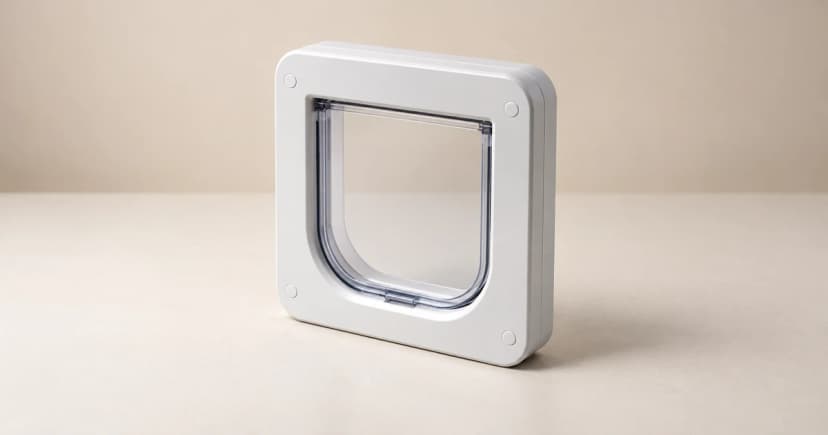
For example, the older SureFlap Microchip Cat Flap manual used here is supplied for serial numbers 1–1999999. Its English section separates door, glass, metal-door and wall installations. Do not assume its steps or accessories apply to a newer SureFlap unit or another brand.
Use the manufacturer's checks that apply before fitting. PetSafe's glass-installation instructions, for its named Microchip Cat Door, tell the owner to program and check the cat's chip before installation. That is a pre-installation condition for that unit, not a general rule that all equipment uses the same learning process. Keep detailed enrollment and access-mode instructions in the matching manual.
Confirm the mounting material
Describe the complete mounting surface, including anything you do not know. A panel that looks like wood may have a different core; a glass unit may be single-pane, tempered or double-glazed. Do not choose a cutting method from the visible finish alone.
| Material question | Why it changes the route | Information to obtain |
|---|---|---|
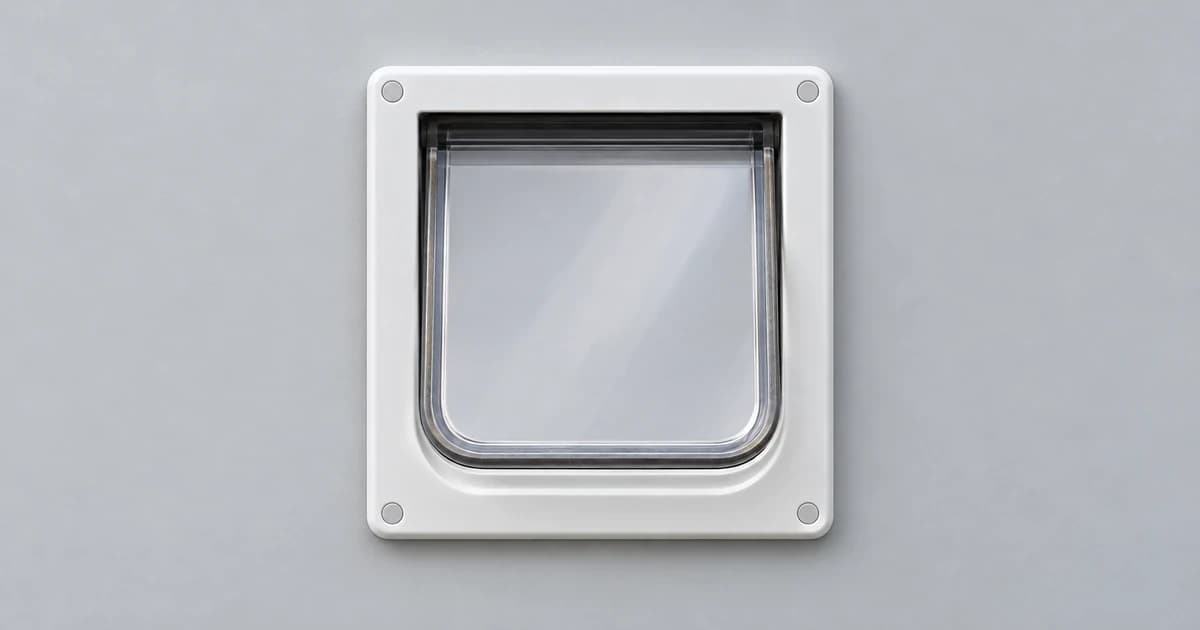
| Wood, PVC or uPVC? | PetSafe publishes a separate named-model route for these door materials. | The panel's construction and whether a metal core changes the required instructions. |
| Metal or metal-cored panel? | The named manuals give material-specific provisions rather than a generic wood-door method. | The exact model's adapter requirements and the applicable complete section. |
| Glass? | The named glass routes call for a qualified glazier and distinguish glazing types. | Glass construction, the matching installation adapter and what must be prepared by the professional. |
| Wall? | The older SureFlap manual gives a separate wall route with model-specific extension requirements. | The wall construction and the complete documented installation plan. |
The purpose is to resolve what you have, not to get a generic hole size from an unrelated guide.
Keep orientation and parts tied to the named model
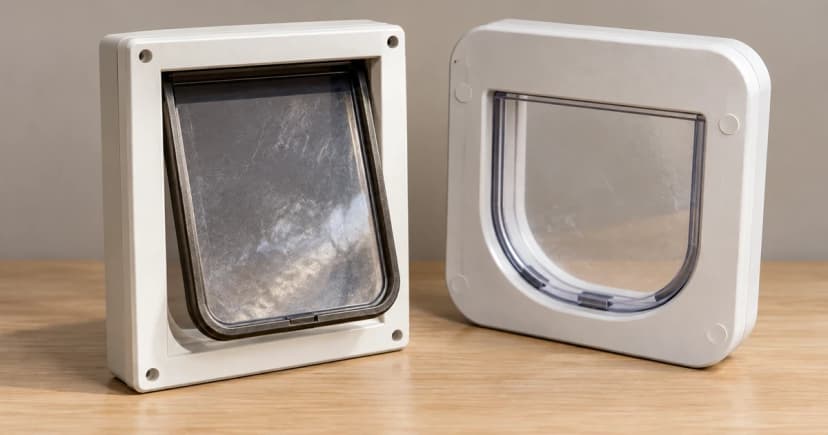
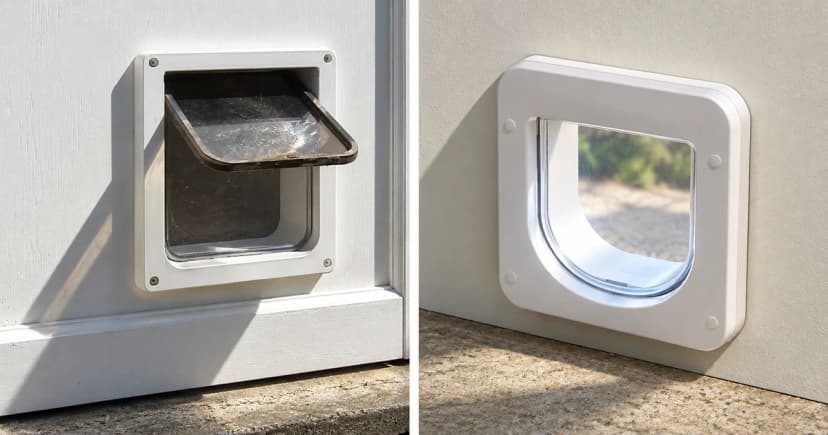
PetSafe's wood, PVC and uPVC instructions distinguish the interior flap assembly from the exterior frame, address a metal core separately and tell the owner to retain the cardboard template. Those distinctions belong to the specified Microchip Cat Door.
Before fitting your own unit, identify its inside and outside assemblies, the permitted fixings and the template or adapter that belongs to it. Do not borrow another model's screw lengths, accessory names or assembly sequence because the fronts look similar.
The older SureFlap manual also distinguishes its inside assembly from its exterior frame. It specifically prohibits cutting or drilling the reader tunnel. That restriction is a reason to use the prescribed material route and accessories, rather than to shorten the tunnel to make an unfamiliar opening work.
Use the glass route with a qualified glazier
PetSafe's glass instructions distinguish single-pane glass from tempered and double-pane glass. They place the latter preparation at manufacture and call for a professional glazier. For the named unit, the installation adapter is required with double-pane glass and recommended with single-pane glass.
The page contains conflicting-looking cut-size units, so this guide does not reproduce either cut-size procedure or silently change a unit. Have PetSafe and the glazier confirm the specification for the exact unit and glazing before proceeding. A nearby number in another model's manual cannot resolve that question.
Discuss the complete glass configuration with the glazier. This article gives no DIY glass-cutting method and makes no claim that a finished opening preserves glazing performance, security or weather resistance.
Treat a wall installation as its own job
For the older SureFlap unit, the wall section tells the owner to consult a qualified builder and describes its own tunnel-extension arrangement. A wall is not simply a thicker door. The relevant wall instructions, actual construction and access for the unit need to be considered together.
Give the installer the complete matching manual. Keep the intended route, model and proposed parts in one written plan. This guide supplies no wall opening dimensions, structural fixings, fire-door approval or sealing-performance specification.
Take one complete information record to the installer
Write the following together before requesting an installation quote or choosing parts. An unanswered item should stay a question for the person supplying or fitting the equipment.
- Unit: exact product name, model, serial number and matching manual.
- Mounting surface: confirmed construction, including a metal core or glazing type; note what remains unknown.
- Material route: the complete relevant manual section, required adapter or extension and the unit's inside/outside orientation.
- Pre-fitting checks: the exact manufacturer's fit and function checks, with unresolved results recorded.
- Installer questions: who will prepare the opening and confirm the specified parts and mounting arrangement?
The older SureFlap manual expressly says not to install its flap in a fire door and says its catch and manual lock are not security devices. Do not treat a successful fitting as approval for a security or fire-rated location.
Keep fitting and the cat's learning separate
A fitted frame is not evidence that a cat will voluntarily use the flap or that every access mode works as intended. Once the documented fitting and equipment checks are complete, use a separate approach for helping a cat learn to use a cat flap without rushing.
A category name or a similar frame cannot confirm mounting compatibility. Resolve the model and material questions first, then follow the complete matching instructions with the appropriate installer.