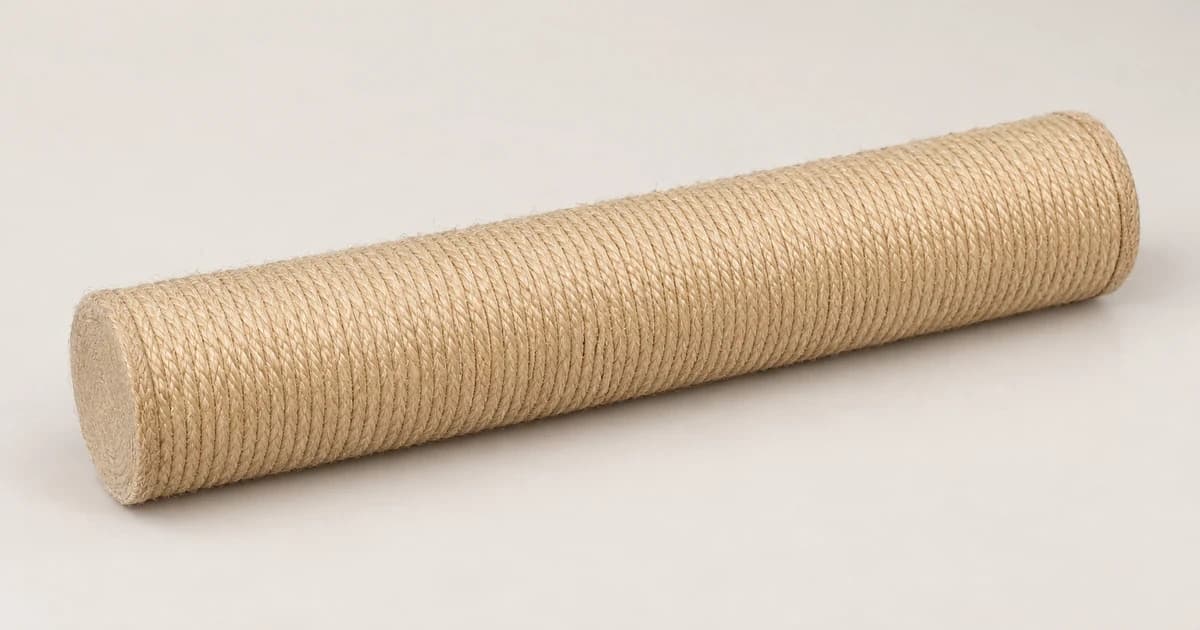
Replacing worn sisal on a cat tree starts with a choice: renew the covering only where the furniture's construction and instructions permit it, or obtain the exact complete replacement post. New rope cannot establish that a damaged supporting component is sound. Identify the furniture and the affected part before removing anything.
The useful distinction is between the scratchable surface and the component supporting it. Keep the model, post position and attachment details together so that a rope purchase does not become an improvised change to the tree.
Identify which component needs replacing
Find the furniture's model label and complete instructions. Photograph the affected post in its original position, showing the connections and neighboring platforms. A measurement is a comparison aid; it does not identify an unseen thread or authorize disassembly.
Look for a complete post in the manufacturer's parts information before selecting loose rope. A post that looks similar may be a different length, use a different attachment or belong to another configuration.
| What you have | Route to investigate | Information still needed |
|---|---|---|
| Documented complete replacement post | Match the exact part and furniture model. | Replacement instructions and required original hardware. |
| Maker-permitted covering replacement | Follow its specified rope and attachment method. | Removal method, core condition, finishing and any curing requirements. |
| Unknown construction or attachment | Whether either replacement route is permitted. |
Use exact post identifiers rather than a visual match
Catit's Vesper High Base parts page separates two scratching tubes: #52180 measures 8 × 44.5 cm, while #52208 measures 8 × 35.5 cm. The shared diameter does not make their lengths interchangeable. Use the unique product number when asking for the correct replacement.
The original High Base assembly sheet also distinguishes its columns and connections. It is an assembly drawing, not a verified removal or repair procedure. Do not reverse its arrows and assume that provides all the instructions for replacing a loaded component.
A different example, Cat Tree King's named 4-inch-long, 5-inch-diameter post, specifies an M8 hole at each end. Its stated replacement condition concerns Cat Tree King furniture with the same original thickness and screw size. That is not evidence that every M8-marked post fits another brand, or that thread pitch and assembly details can be assumed.
Keep the original tree configuration. A longer replacement changes more than the amount of scratching surface: it changes where connected parts would sit.
Follow a conditional re-roping workflow only when permitted
Cat Tree UK's captured re-roping guide gives a conditional workflow for sound construction. Keep the cat away throughout the work and curing.
- Document permitted disassembly. Photograph the attachments and retain the hardware.
- Remove covering as instructed. Avoid damaging the core; use only a removal method suitable for that construction.
- Inspect before continuing. Abandon re-roping if the core is damaged, damp or has loose connections.
- Use the approved attachment method. Keep turns even, without loose loops, detachable ends or accessible sharp fixings.
- Complete curing and reassembly. Follow the adhesive's full curing and ventilation instructions, then the furniture's assembly checks. No universal waiting time applies.
For permitted cylindrical wrapping, its rough rope estimate is covered height ÷ rope diameter × circumference, using common units. This estimates length before extra allowance; compression and finishing change the amount. It does not select the rope diameter or guarantee a purchase quantity.
If your maker has not identified the removal method or adhesive, stop at that unanswered item. This guide supplies no hot-glue, staple, solvent or curing recipe for an unknown post. The source workflow also does not authorize re-roping the named Catit or Cat Tree King components above.
Choose loose rope by the permitted specification
TRIXIE's product 44086 is a sisal roll listed as 50 m with a diameter of 4–6 mm. Those figures describe that named product. They are not a universal replacement diameter, a specification for the photographed furniture or evidence that its adhesive is compatible with your post.
Take the maker's required material and size to the rope comparison. The word “natural,” the color of the fibers and the size of a roll do not answer those questions.
Use the same care with an apparently convenient complete component. A catalog category can help locate candidates, but it cannot confirm that a loose rope or post is suitable for this repair. Compare replacement scratching materials using the documented requirement, leaving compatibility unresolved where evidence is missing.
Keep a short replacement record
| Record | Why it matters |
|---|---|
| Furniture model, post position and exact part | Distinguishes a replacement from a similar-looking component. |
| Permitted route and complete instructions | Separates covering renewal from complete-post replacement. |
| Required material, attachment and curing details | Keeps unanswered specifications visible before work begins. |
| Actual work and remaining questions | Avoids recording a parts purchase as a completed repair or test. |
For dirt and hair removal, use the separate cat-tree cleaning guide. For scratcher position and voluntary introduction, see the scratching-post setup guide. If replacing the whole structure is the appropriate route, our cat-tree buying guide addresses usable layout and model information.
This article compares documented replacement routes; it reports no physical repair, fit or load test. Our editorial policy explains sourcing.