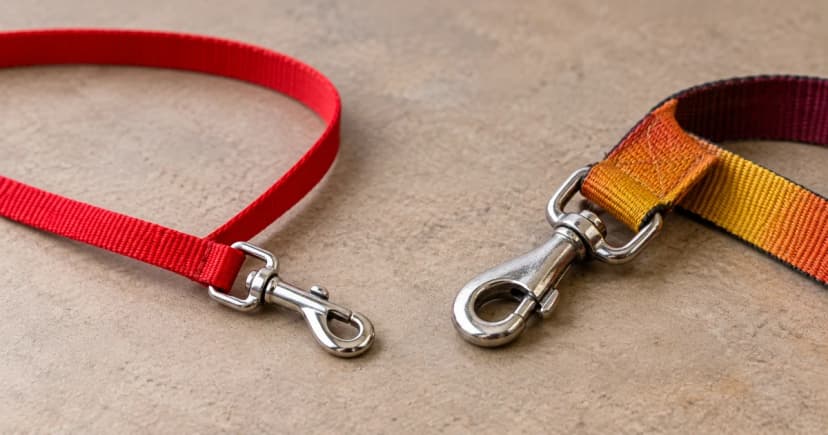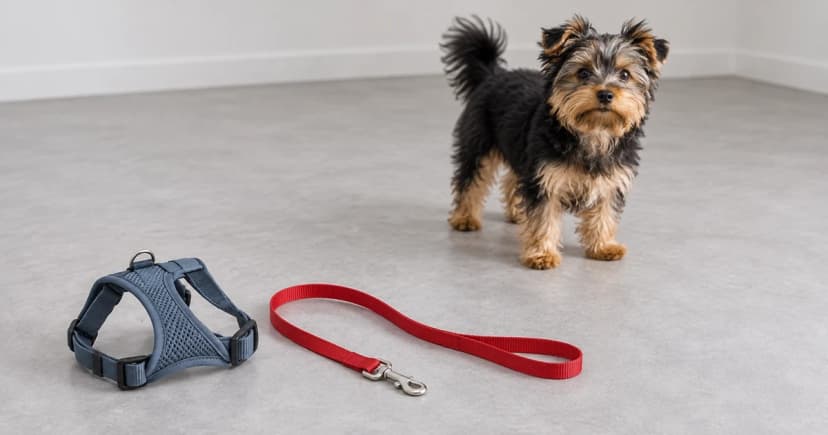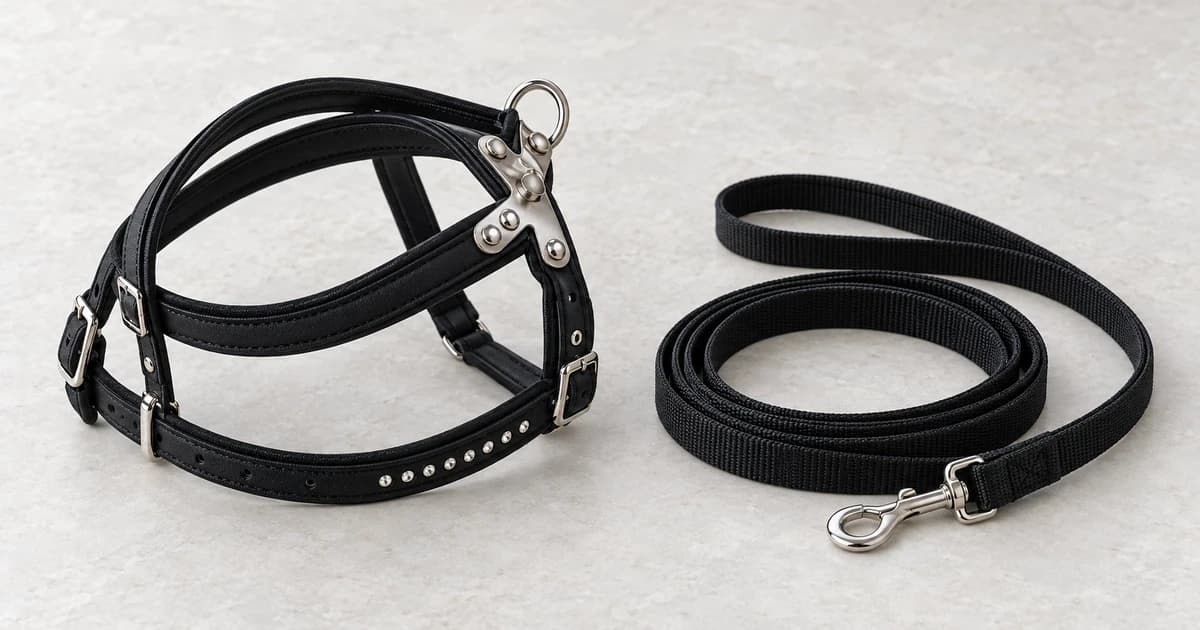
To reduce leash pulling, teach your dog that walking with a loose leash earns rewards and lets the walk continue. Begin somewhere quiet, reward nearby walking before the leash tightens, and pause calmly when tension appears. Avoid jerking the leash or telling your dog off. Progress depends on practice at a difficulty your dog can manage.
Loose-leash walking allows some movement and exploration without sustained tension. It does not require your dog to stare at you or remain in a formal heel position throughout every outing.
Teach a useful position before adding distance
Dogs Trust's walking guidance begins with rewarding a dog for being near you in a calm place, such as home or a secure garden. Choose a side for early practice and reward the dog for standing or sitting there. Then add a little movement.
Keep the first attempts small. Take a step with your dog and reward nearby movement while the leash remains loose. You are making it easier to repeat the wanted action, rather than waiting for a long stretch of pulling before giving feedback.
If coordinating the leash and rewards is difficult, practise your own hand movements first. Battersea suggests practising the walking position without a leash in a secure space when appropriate, then adding it back gradually. That is preparation in a contained setting, not a reason to release a dog on a road or in an unsecured area.
Reward the slack before pulling becomes the routine
Battersea's lead-walking guide describes short repetitions, reward placement by your chosen side and gradually increasing the steps between rewards. Reward while the dog is already moving with you and the leash is slack.
Notice where you deliver the reward. Feeding directly in front of your body can draw the dog across your path. When practising a nearby position, deliver it beside you, facing the direction you intend to walk.
Try not to make pulling away and returning the only sequence that earns food. If that pattern repeats, shorten the distance and reward earlier during loose walking. The aim is to make the useful moment easy to recognize and repeat.
Pause or reset without pulling back
PDSA recommends stopping forward movement when the dog pulls, without yanking the leash back. Once the leash becomes slack, the walk can continue. Expect frequent pauses at first, rather than treating a slow outing as disobedience.
Use the situation to decide whether the next attempt should be easier:
| What you observe | A manageable next step | What to notice |
|---|---|---|
| The leash stays loose for one or two steps | Repeat a short attempt and reward by your chosen side | Loose movement before tension appears |
| The dog surges ahead and the leash tightens | Pause calmly; resume when tension eases or reset to a shorter attempt | Whether you can reward earlier next time |
| A new distraction dominates the dog’s attention | Return to a quieter place or increase distance when you can do so safely | A difficulty the dog can manage without being dragged |
| Pulling and returning repeat between every reward | Use fewer steps and more frequent rewards during nearby loose walking | The wanted action, rather than only the return |
A pause should not become a prolonged struggle in a place where you cannot manage the dog safely. Battersea recommends qualified support when you lack the strength or confidence to handle walks, or when behaviour is escalating. Change the plan and seek help rather than relying on harder leash corrections.
Make room for sniffing and easier outdoor practice
Move from a quiet setting to outdoor practice gradually. A skill that is easy indoors may become difficult near traffic, people or other dogs. Reduce the number of steps, increase reward frequency and choose a quieter location when needed.
Include opportunities to sniff and explore. Battersea describes using a clear release cue to distinguish those breaks from nearby walking practice. PDSA also emphasizes allowing dogs to investigate their surroundings. The lesson concerns leash tension, not preventing every natural pause or interest.
Keep practice short enough to remain manageable. If several people walk your dog, agree on the same reward placement, response to tension and sniff-break cue. Consistency is something the household can organize; it does not establish a deadline by which the dog must stop pulling.
Track progress separately from equipment changes
Look for longer loose stretches, more frequent check-ins and easier recovery after distractions. Compare similar settings rather than expecting a busy street to look like the quiet practice area. A setback can be a reason to simplify the task.
Check that the walking equipment fits and allows comfortable movement before practising. Use the separate harness measurement guide and harness dressing guide for those tasks. Our front-clip harness explanation covers the attachment mechanism.
When comparing standard leashes, consider the handling and instructions for the actual item. Replacing equipment does not teach the reward pattern described here. If pulling persists despite consistent, manageable practice, ask a qualified trainer to observe what happens on your particular walks.