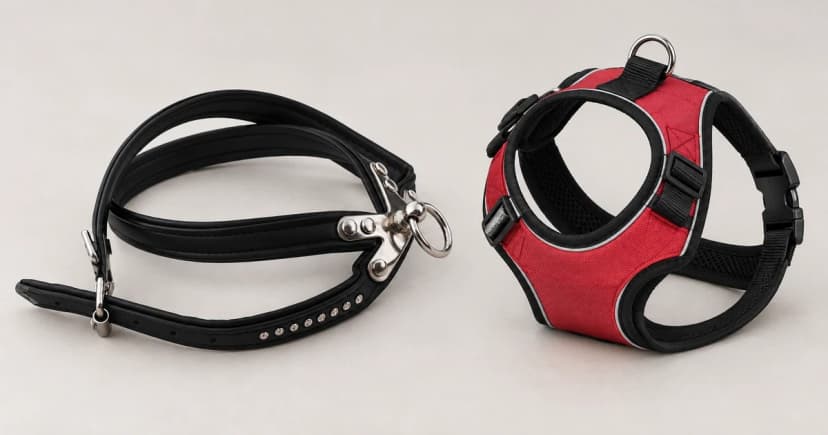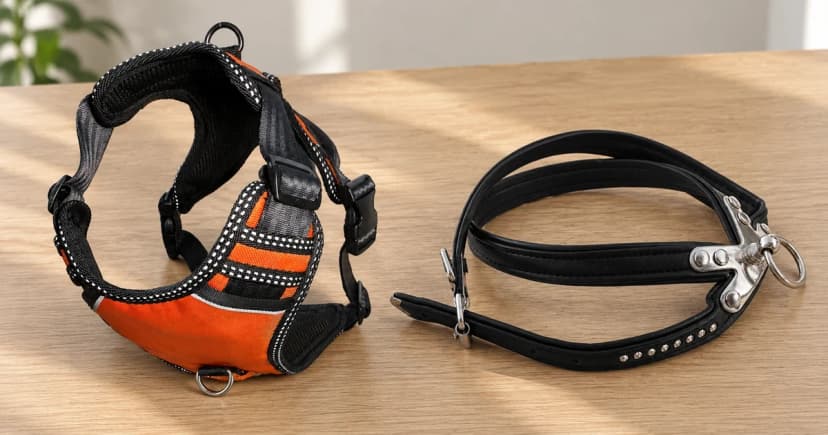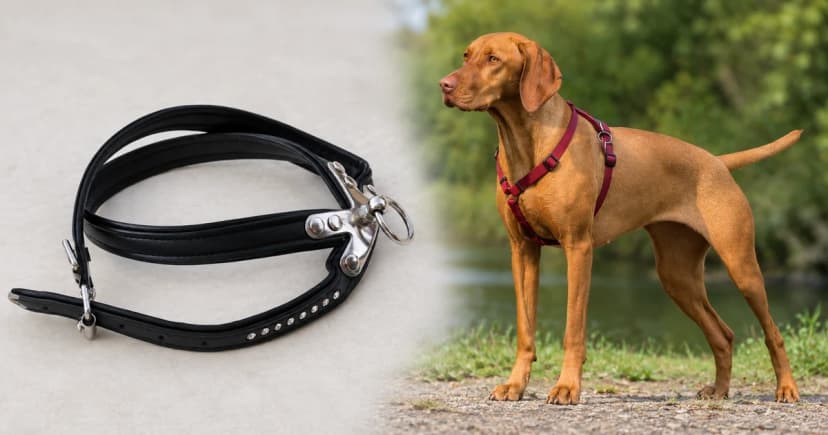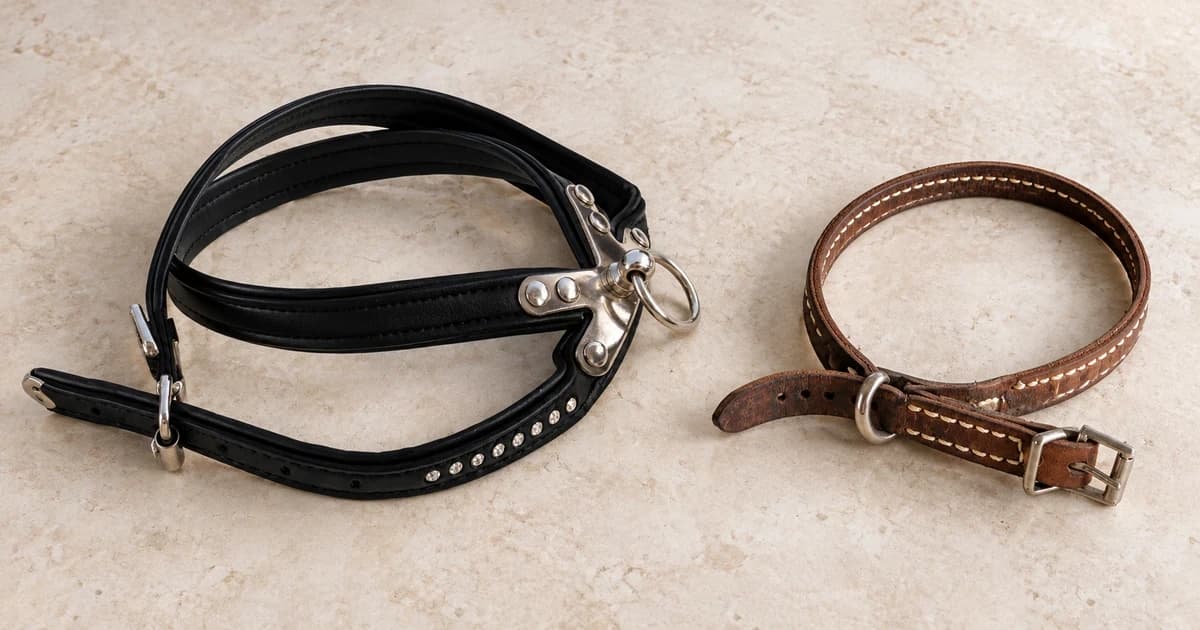
A body harness can be a useful choice for a dog that pulls against a neck collar, but there is no single winner for every dog and every walk. A harness also needs to fit, leave movement comfortable and suit the way you put equipment on. Changing the attachment alone does not teach loose-leash walking.
The disadvantages of a dog harness depend on the actual fit and handling arrangement. An overly tight fit can be uncomfortable, a loose arrangement can permit slipping, and an overhead or step-in shape may create a separate handling difficulty. Check the authorized connection, movement and the way the harness goes on. The comparison below does not make a harness a treatment or a substitute for learning to walk on a loose lead.
Start with the job you need the equipment to do. Carrying an identification tag, attaching a walking leash and helping a dog learn to walk without pulling are related tasks, but they are not the same task.
Compare a neck attachment with a body attachment
A flat collar sits around the neck; a body harness has straps around the body. That changes where the walking leash connects. The American Kennel Club's comparison describes both options and notes that equipment that is too loose can allow a dog to slip out, while an overly tight harness can be uncomfortable.
The comparison is useful for identifying differences, but a category name cannot tell you whether a particular item fits your dog. A collar that carries a tag can remain part of the arrangement when the walking leash is attached to a harness. That does not mean attaching the leash to any ring you can find: use the connection the item's instructions identify for walking.
This guide concerns ordinary flat collars and body harnesses. A headcollar, tightening design or other specialized device needs its own assessment and instructions; it is not simply another version of the two objects in this comparison.
When pulling is the reason for reconsidering a collar
PDSA recommends a harness for dogs that pull and advises avoiding equipment that causes pain or restricts movement. Its guidance also treats walking without pulling as a reward-based training task that takes time, rather than something a new purchase completes.
That is a reason to consider a suitable harness, not proof that any harness prevents every neck injury or stops pulling. Do not respond to continued pulling by jerking the leash or using discomfort to make the equipment appear effective.
If neck contact seems painful, or your dog shows discomfort when wearing either option, discuss the individual situation with your veterinarian. The comparison should not become a way to diagnose a neck problem or select equipment as a treatment.
A harness has its own fit and handling questions
Battersea's equipment guidance advises choosing a harness that avoids neck pressure and allows shoulder movement. It distinguishes styles that go over the head, require stepping in or clip around the body. How an item goes on can matter to a dog that dislikes that part of handling.
Moving away from a harness does not tell you, by itself, whether the cause is unfamiliarity, handling, fit or pain. Avoid forcing the dog into it to settle the question. Battersea advises pausing and seeking appropriate support when pain or fear is involved.
For measurements and checking a worn harness, use the separate dog-harness size and fit guide and the instructions for the exact item. Neither the outside dimensions of a package nor another dog's size label establishes a match.
Use the observation to choose the next question
| What you are trying to resolve | What to check next |
|---|---|
| The dog pulls against a flat collar. | Consider an appropriately fitted body harness and a reward-based walking plan, rather than expecting equipment alone to teach the skill. |
| The dog backs away when equipment approaches. | Separate the way it goes on from the item's fit; seek advice if fear or possible pain persists. |
| Straps shift or movement looks restricted. | Return to the exact item's fitting instructions and check the arrangement before continuing. |
| You need a place for identification as well as a walking attachment. | Consider the two roles separately and identify the authorized leash connection. |
These are decision prompts, not tests that certify comfort, restraint strength or escape resistance. Write down what you observed and the exact item involved; that is more useful than concluding that all collars or all harnesses are unsuitable.
Condition and learning still matter after the choice
Dogs Trust's harness guidance emphasizes unrestricted movement, gradual introduction and regular checks of the harness, collar and lead for wear. It also says a dog still needs to learn to walk comfortably on a lead.
A worn strap or damaged fastening is a condition problem, whichever category you chose. An unfamiliar item is a learning and handling question. A changed response accompanied by possible pain is a reason for veterinary advice. Keeping those questions separate helps you avoid buying another item while leaving the original problem unresolved.
Compare walking harnesses and everyday collars through their actual instructions and your dog's use. The useful choice is a suitable arrangement for this dog, with appropriate fit, handling and training—not a promise that one product type is always better.