Choose a dog harness by comparing how it goes on, where the walking leash attaches, and whether the maker explains its size and use clearly. A label such as “comfortable” or “no-pull” does not answer those questions. Two harnesses that look similar can have different openings, adjustment points and permitted activities.
This guide helps you narrow the choice for ordinary walking. It compares published guidance and visible design features; it does not rank tested products or certify fit, restraint strength or escape resistance. Start with the dog and the handling you can manage, then check the exact harness's instructions.
Describe the walking job before comparing styles
Write down what you need: an everyday leash connection, an item your dog can accept being put on, and a documented size range that matches the measurements the maker requests. Keep special activities separate. A walking attachment does not establish permission for running, tethering, lifting or vehicle restraint.
If the first question is whether to use a body harness at all, our harness versus collar comparison covers that decision. Here, the next task is choosing among harness structures. Equipment also cannot replace teaching a dog to walk on a loose leash.
Compare how the harness opens
The American Kennel Club's selection guide distinguishes over-the-head and step-in designs. Battersea's equipment guidance also describes harnesses that clip around the body. These are handling choices: look at the actual openings rather than assuming the product name tells you how it goes on.
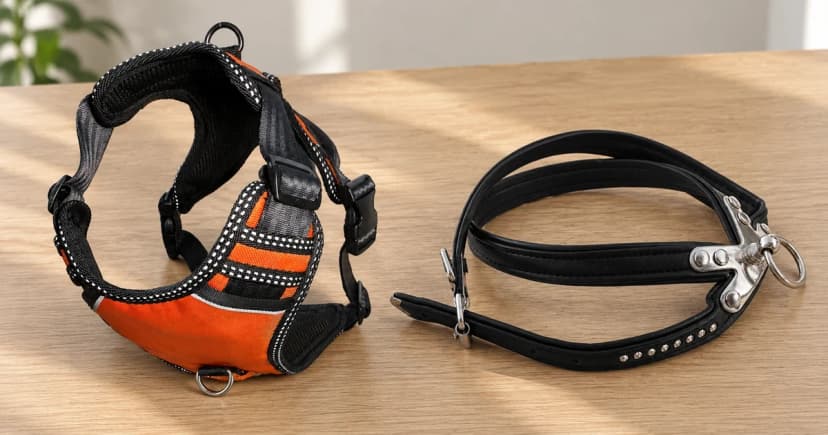
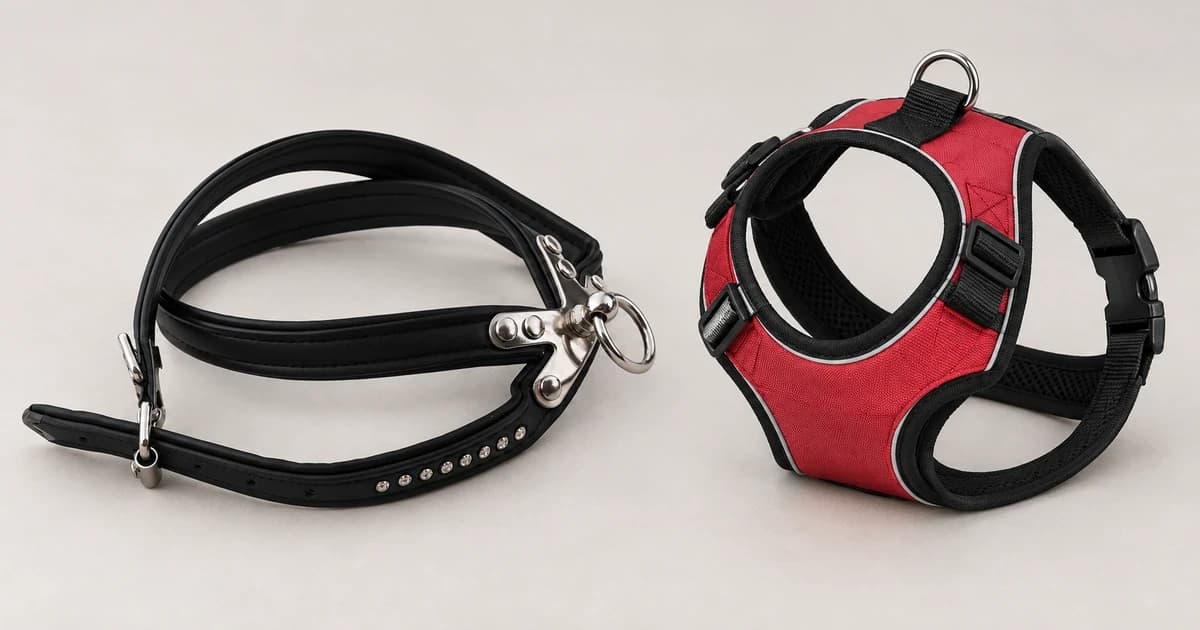
An overhead opening asks the dog to accept the harness passing over the head. A step-in arrangement involves positioning the legs in its openings. A clip-around design may offer an alternative when either motion is difficult. Check the diagram: a harness may combine an overhead section with a separate body fastening, and “adjustable” does not mean every loop opens.
Dogs Trust recommends considering clip-around options when a dog finds head handling uncomfortable. Do not turn that into a promise that a different closure will solve the problem. Persistent discomfort needs individual advice, and a dog retreating from an item is a reason to pause rather than force the purchase into use.
Look at the strap route and room to move
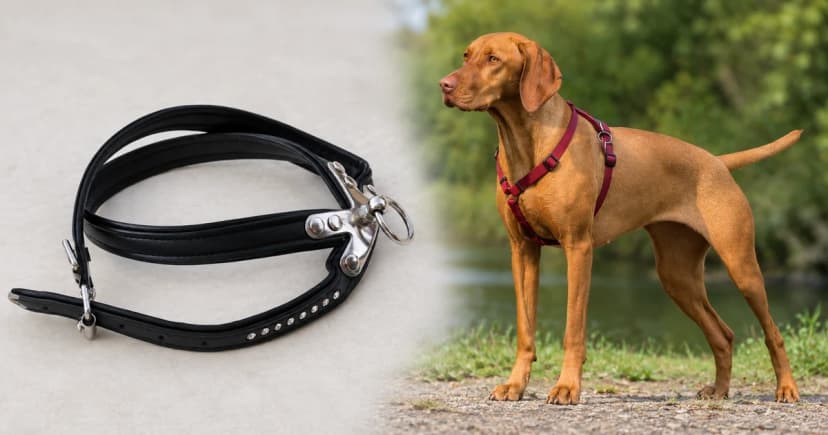
Dogs Trust's harness guidance advises choosing a design that allows unrestricted movement and avoids a bar across the front of the shoulders. Battersea recommends avoiding neck pressure and favors a Y-shaped front that leaves shoulder movement free. Keep those recommendations attributed; a shape name alone cannot verify what a particular harness does on your dog.
Inspect the maker's worn-position drawing alongside the item. Where should the front section sit? Which straps pass behind the legs? What adjusts, and what remains fixed? If the supplied drawing and the harness in the package disagree, resolve that difference before trying to make the straps fit.
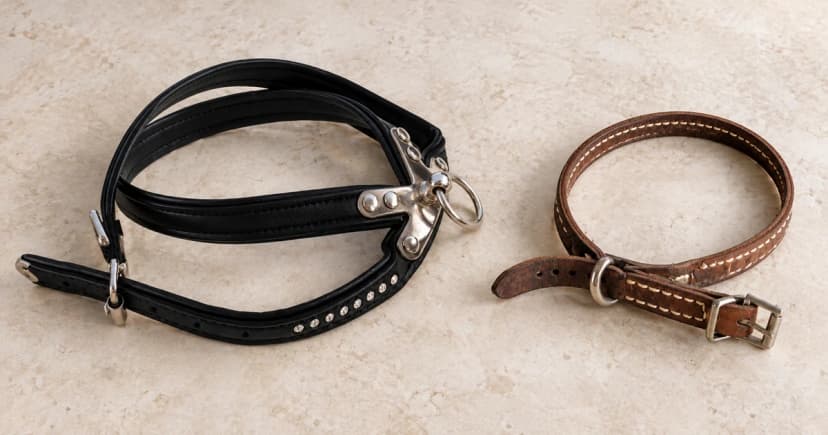
Photographs can help you identify openings and hardware, but they do not demonstrate pressure, comfortable movement or long-term rubbing. A padded panel or a soft-looking mesh is a visible feature, not evidence that the harness will suit every dog or every temperature.
Identify the authorized walking connection
Find the leash point in the exact instructions. A chest connection and a back connection put the attachment in different places, while some harnesses provide both. A handle, light loop or identification attachment should not be treated as a walking point merely because a clasp fits through it.
Front attachment also does not describe one tightening mechanism. Our front- and back-clip harness guide explains documented examples. Do not assume a D-ring guarantees that straps tighten or pulling stops.
Use measurements and instructions to narrow the options
Compare your dog's measurements with the size chart for that exact harness. Use the locations the maker requests; a breed name, body weight or another brand's size label is not a substitute. Our dog-harness measurement and fit guide covers measuring and the separate worn-fit check.
Published fit advice needs its original context. Dogs Trust describes room for a finger when discussing a harness, while the AKC harness guide includes its veterinarian's more snug interpretation. Battersea's two-finger advice appears in its collar section, so it should not be treated as a harness measurement. Those sources do not establish one universal numerical gap for harnesses. Follow the exact item's fitting instructions, check movement and rubbing, and seek help when the result remains uncertain.
Consider whether the available adjustments actually cover the requested dimensions. After growth, weight change or grooming, revisit the fit rather than assuming an earlier setting remains suitable. Buying a larger label alone does not resolve a strap route that is wrong for this dog's shape.
Check the evidence before making the choice
| Selection question | Useful information to find |
|---|---|
| How does it go on? | A diagram showing every opening and fastening, including whether the head or legs must pass through. |
| Where does the leash connect? | The point the maker authorizes for walking, with any leash or activity conditions. |
| Which size applies? | Measurement locations, size ranges and the adjustment points for this exact model. |
| What needs ongoing care? | Material-specific cleaning instructions, inspection advice and what to do with damaged straps or fastenings. |
Include care and introduction in the decision
Check straps and fastenings for wear, fraying or damage, as the AKC and Dogs Trust guidance advise. Choose with the actual care instructions available: materials, closures and attached accessories may need different treatment. The harness cleaning and reuse guide addresses that separate task; a generic soap or soaking recipe should not replace the item's directions.
Battersea and Dogs Trust both recommend gradual introduction. A new purchase does not require immediate full use. Allow time for the dog to become comfortable with the equipment and pause if the handling is difficult. Our putting-on guide helps identify the openings without turning selection into a forced fitting session.
Use Pawlivy's walking-harness category to compare structures and available descriptions. That record makes your choice easier to reassess; it is not a product test. Our editorial policy explains how we distinguish documentation from hands-on testing.