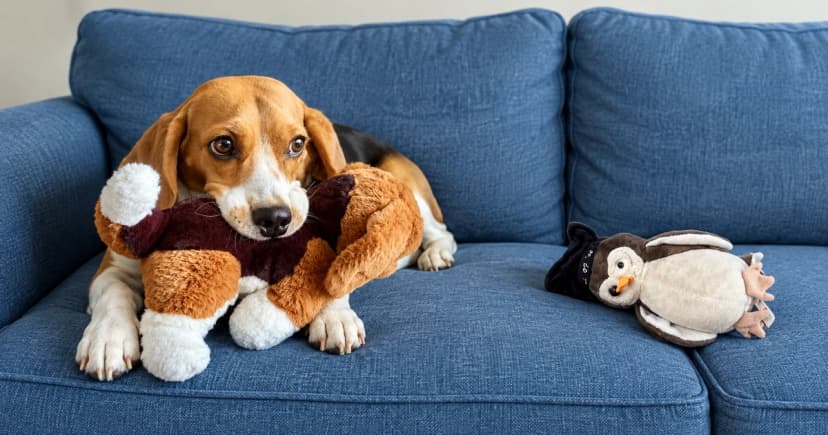
Dogs may lick a toy because of its taste or because interacting with a familiar object is comforting. Those are possible explanations, not a way to identify one dog's motive from a wet toy. First distinguish licking or sucking the object from chewing and pulling it apart. Then consider whether this is an ordinary, limited interaction or a persistent pattern that concerns you.
You do not need to make the toy tastier, harder or more exciting to find out why. The useful next step depends on the action you actually see and whether it has changed.
Taste and familiarity are possibilities, not a diagnosis
In PetMD's discussion of licking, veterinarian Stephanie Betbeze specifically addresses toys. She notes that some have an appealing covering and that some dogs may find licking a familiar toy soothing, including when reunited with a favorite object. The article treats moderate toy licking as something that need not indicate a deeper problem.
That does not give every toy a calming effect or tell us what a particular dog tastes or feels. The same article advises veterinary help when licking becomes concerning or uncontrollable. A possible everyday explanation should not be used to dismiss a marked change.
For example, “licked the familiar toy after it came back out of storage” describes an event. “Needed it to relieve anxiety” adds an explanation you have not established. Keep those separate when deciding what to ask a professional.
A toy's smell, color or material label cannot select between these explanations either. This is not a reason to add food, flavoring or a coating as an experiment.
Licking, sucking and destructive chewing are different uses
Veterinarian Beth Turner's chew-selection article for Preventive Vet includes licking or sucking toys among the ways dogs interact with them, distinct from more destructive chewing. It also emphasizes monitoring actual use and recognizing that dogs differ.
Use that distinction to describe the current interaction, rather than assigning a permanent “gentle chewer” identity. Licking a toy on one occasion does not establish that the dog will never bite or tear it, or that every soft object is an appropriate toy.
Watch what the mouth is doing without provoking another demonstration. Is the tongue moving over the surface, is the object held in the mouth, or are the jaws pulling at a seam? If you cannot see the action, leave it uncertain. A damp patch alone does not reconstruct the sequence.
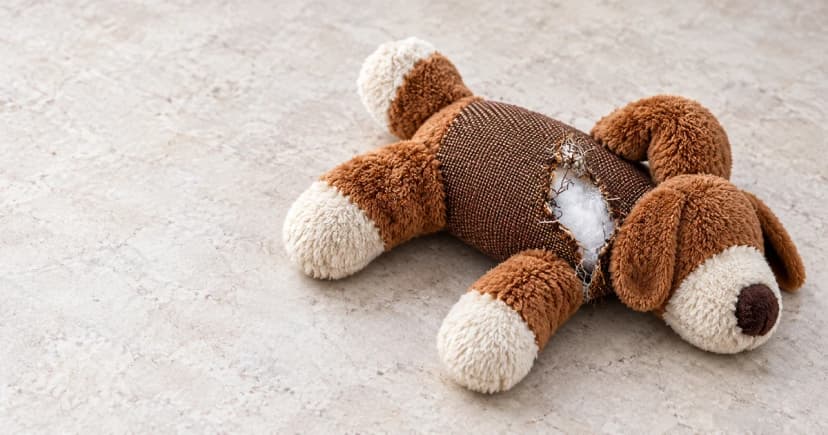
If the object is already damaged, the next task changes: use the separate guide to toy damage and withdrawal. There is no need to keep presenting a changed object to decide whether licking or chewing caused it.
When the pattern deserves professional advice
The American Kennel Club's general licking article, written by AKC Staff, advises speaking with a veterinarian about obsessive licking of an object, a person or the dog's own body. A veterinarian may recommend a behavior specialist. This supports seeking help; it does not diagnose the reason for licking a toy.
If licking repeatedly occupies your dog's attention, seems difficult to leave behind, or represents an unexplained change that worries you, describe that pattern to your veterinarian. You do not need to identify a disorder before asking. Nor should a familiar toy's presence persuade you that nothing else could be happening.
A short description is enough to start the conversation: what object was involved, when the pattern began, what you directly saw and what ordinary activities were interrupted, if any. Avoid creating another episode or withholding another activity to test how long the licking will continue.
Choose the next step without buying a supposed cure
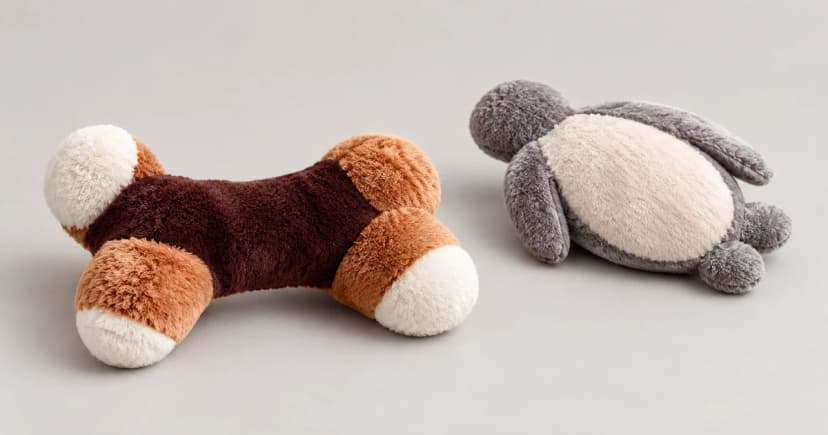
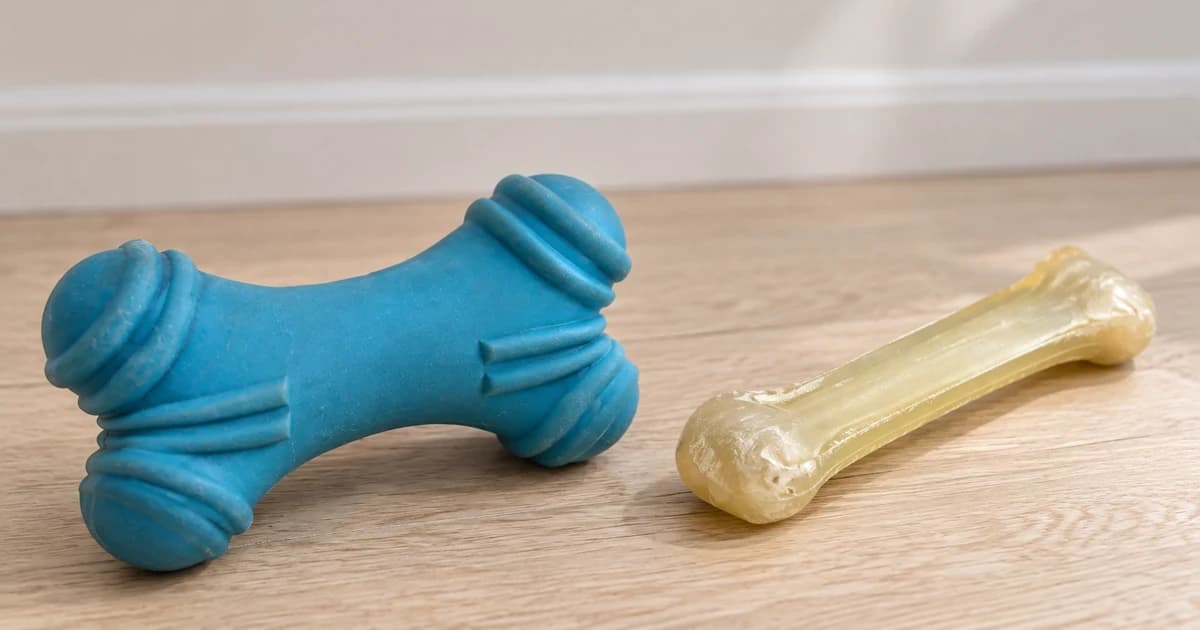
If the interaction is brief and your dog moves on, there may be no new equipment question to solve. Continue checking the actual toy's intended use and condition. If you are unsure whether the object suits the way it is being used, our dog toy selection guide addresses that separate decision.
The dog toys category offers browsing options, not evidence that a texture, flavor or shape will settle licking. A new “calming” object cannot identify the cause of a persistent pattern. Our editorial policy distinguishes source-based explanations from product tests; the article does not measure what an individual dog tastes or feels.