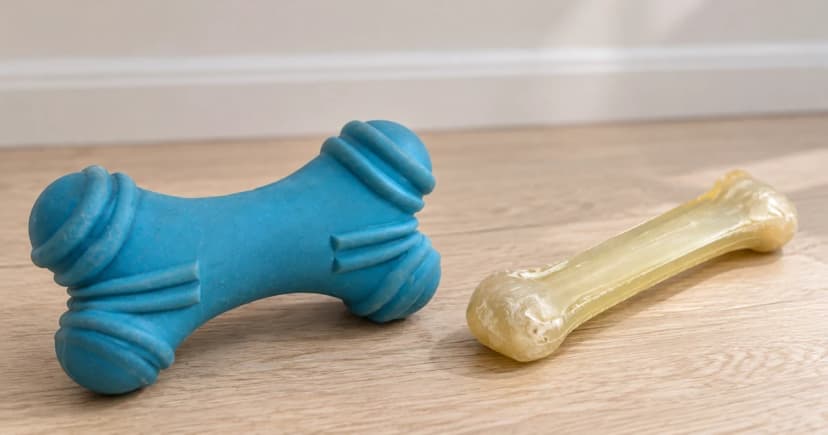
Toys can give dogs something to hold, carry, chase or use in a game with a person. For some dogs, the attraction includes the object's texture or movement; for others, the interaction is a large part of the appeal. That means “likes toys” can describe several different activities, rather than one preference shared by every dog.
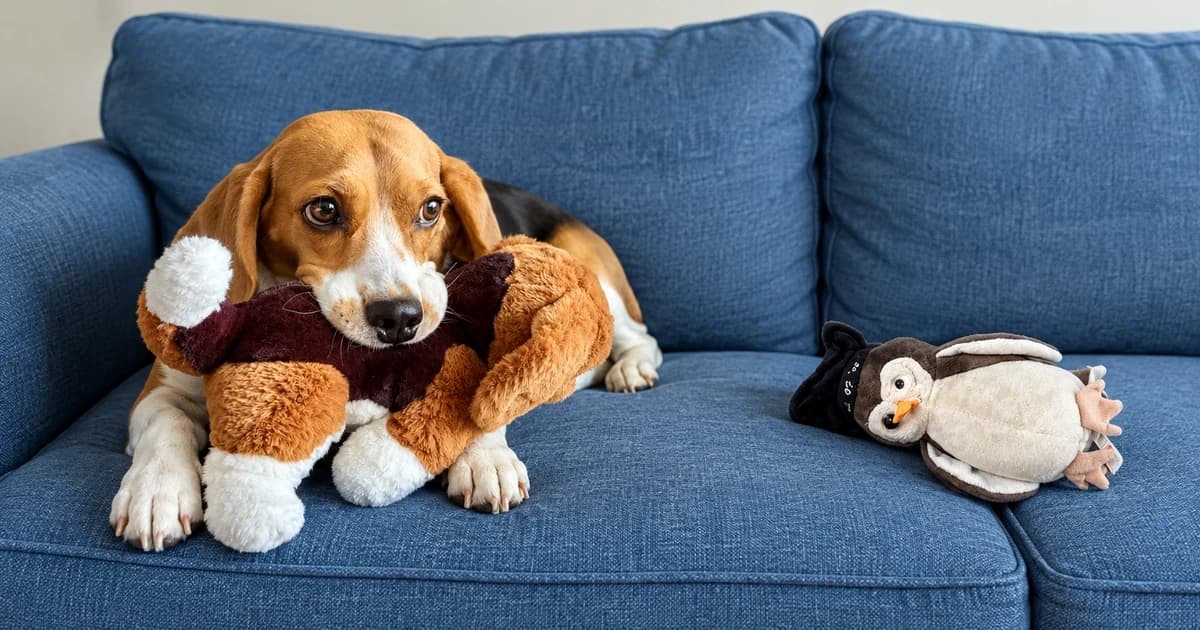
It helps to separate three things: the object, what the dog can do with it, and who is taking part. A dog carrying a soft toy and a dog joining a familiar shared game may both be engaging with toys, but they are not doing the same thing.
The object offers particular ways to play
The American Kennel Club's toy-preference article, by Breanne Long, discusses the appeal of prey-like features such as softness or squeaking. It also describes differences between dogs that prefer chewing, chasing and retrieving, or playing with their owner. This is a general explanation of possible appeal, not evidence that every dog wants the same texture or that an individual dog has a particular hunting intention.
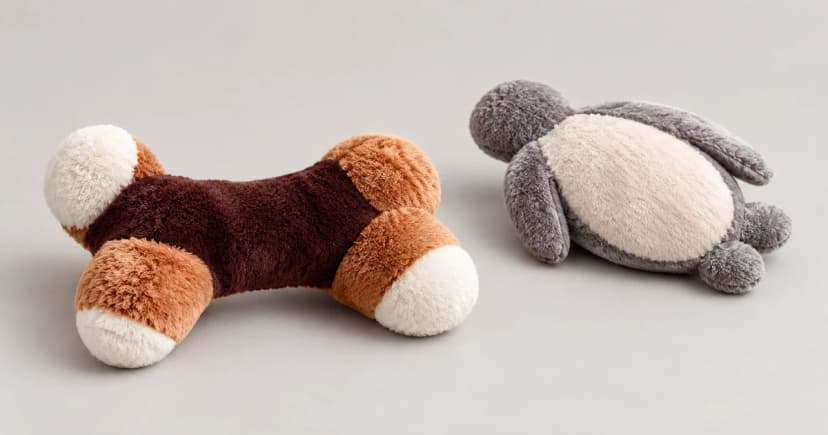
Look at the activity an object makes possible rather than its label alone. A ball can be an object to carry or part of a return game. A fabric toy can be held quietly or used in a shared interaction when it is intended for that purpose. Its appearance does not tell you which activity your dog will choose.
Nor does one enthusiastic response establish a permanent favorite. The useful question is what the dog is engaging with on that occasion, without turning it into a ranking of breeds, toy materials or “best” products.
The game can matter as much as the toy
Blue Cross's play guidance distinguishes tug, chase-and-retrieve, and search games. It notes that some dogs prefer games with people, while others also play with objects on their own. How an item is used therefore matters alongside the item itself.
A dog may enjoy chasing without having learned to bring the object back. Interest in one part of a game does not establish the next skill. Blue Cross also advises never forcing play: participation should remain an invitation, rather than something a dog must demonstrate.
| What you see | Which part is visible? | What it does not establish |
|---|---|---|
| Holding or carrying a toy | Interaction with the object itself | A request for you to take it away or start a game |
| Following a moving toy | Interest in that movement | A learned pickup, return and release sequence |
| Joining a familiar game with you | Participation in a shared interaction | A preference for the same item in every setting |
For example, the same suitable fabric toy might be carried around on one occasion and used in a familiar shared game on another. You do not have to decide that one use is the “real” reason the dog likes it. Leave those as different ways of engaging with the object.
Enjoyment does not answer the equipment question
Dogs Trust's enrichment guidance describes holding, tugging and shaking toys as natural mouth-based actions. It also asks owners to consider individual preferences and abilities when choosing an activity. For soft toys, it emphasizes supervision and avoiding swallowed parts. An action being part of play does not establish that the particular object can withstand it.
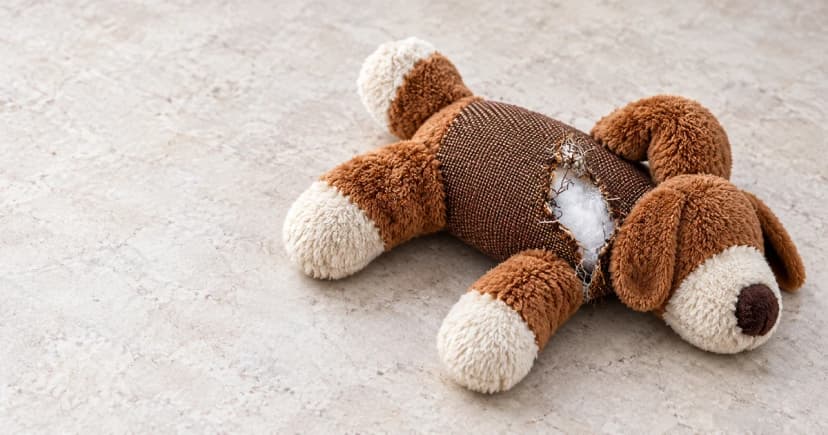
Separate “my dog wants to engage” from “this item is appropriate for that use.” Check the manufacturer's intended use, the object's condition and any detachable parts before offering it. Strong interest does not make a damaged toy intact or turn a supervised-play item into equipment for unattended access.
Pawlivy's dog toys category groups different kinds of equipment. Plush toys and rope and tug toys describe categories, not interchangeable uses or a guarantee that a particular dog will like an item. Check the actual product information rather than inferring suitability from a photograph or category name.
Choose an opportunity, not a required response
Start with a familiar activity your dog already joins and an existing item intended for that use. Decide whether you are offering object play or taking part in a shared game. There is no need to make the activity louder, faster or longer to prove that the toy is appealing.
If the question is how to provide variety through the day, use the separate daily activity planning guide. If your dog usually declines toys or interest has changed, the guide to play preferences and changes addresses that different question. Understanding why a toy may appeal helps you offer an appropriate activity; it does not require every dog to become a toy enthusiast.