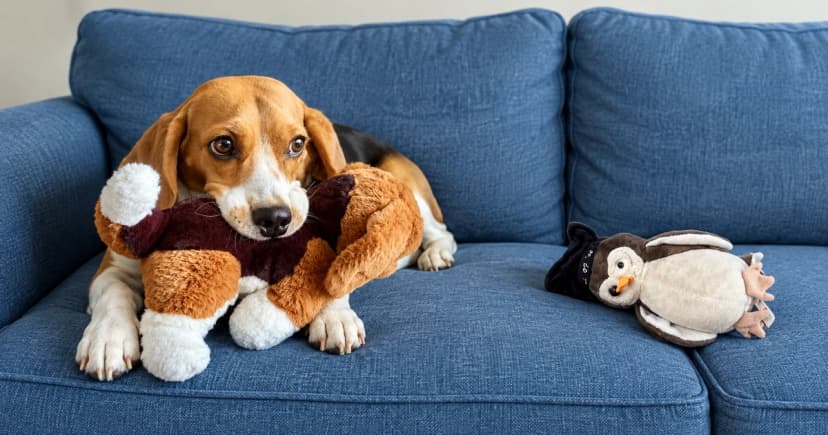
Dogs can shake a toy as part of play that involves holding, grabbing and tugging objects. The movement can fit an activity the dog finds engaging, including play with prey-like toy features. It does not reveal one certain motive or establish how the dog will behave toward a person or another animal.
Start with what you can observe: the dog is holding a particular toy, moving it from side to side and then doing something next. The context and next action are more useful than describing the dog as aggressive, dominant or intent on killing. This guide concerns a held toy during play, rather than head or body shaking without a toy.
Toy shaking belongs to a wider set of play actions
Dogs Trust's enrichment guidance describes holding, tugging and shaking toys with the mouth as natural actions. It also notes that some dogs rip soft toys during play. An action being part of play does not establish that every toy can withstand it or that detached parts can be swallowed safely.
Watch the sequence around the shake. Did your dog pick up a resting toy, catch it after movement, pause during a shared game or carry it away afterward? Record the sequence without trying to make the dog repeat it for a demonstration.
A shake is one part of that sequence. A dog may hold the same object quietly on another occasion or leave it alone. One episode does not establish a permanent play preference, a behavior problem or a requirement to make the next game more intense.
Prey-like features are context, not a certain individual motive
The American Kennel Club's toy-preference guidance discusses the appeal of toys that resemble aspects of prey, including soft textures and squeaking. It also emphasizes that individual dogs differ. Some prefer chasing an object, some chewing and others a game with a person.
That context can help explain why grabbing and moving a toy may be engaging. It does not prove that this particular dog is imagining a specific outcome. Avoid turning a general explanation about play into a claim that every shaking dog is rehearsing a kill.
Dogs Trust's behavior-team guide to chasing similarly distinguishes individual motivations and describes toy play as an outlet for grabbing and shaking moving things. Its broader discussion includes several reasons for chasing. Those reasons should not be assigned to a dog merely because you saw a toy move.
Separate the situations before choosing a response
| What is happening? | What to record | Keep the conclusion limited |
|---|---|---|
| The dog holds a toy and shakes it | The object, setting, preceding play and what follows. | This describes a toy-play action, not a temperament assessment. |
| You and the dog are holding the same toy | Your movement, the dog's participation and whether the interaction can pause. | A firm grip does not invite stronger resistance or sharper shaking. |
| The dog shakes its head or body without holding a toy | The separate action and any concern you need to describe to a professional. | The held-toy explanation does not answer a different behavior or health question. |
If your question is how to conduct a shared game, use the separate tug-play guide. This article does not supply a new tug technique or ask you to test the dog's response by increasing force.
Likewise, a toy-carrying approach may be a different interaction. The toy greeting and response guide addresses that sequence. Carrying an object toward you does not automatically make it an invitation to take the toy and start another game.
Keep the object and interaction under observation
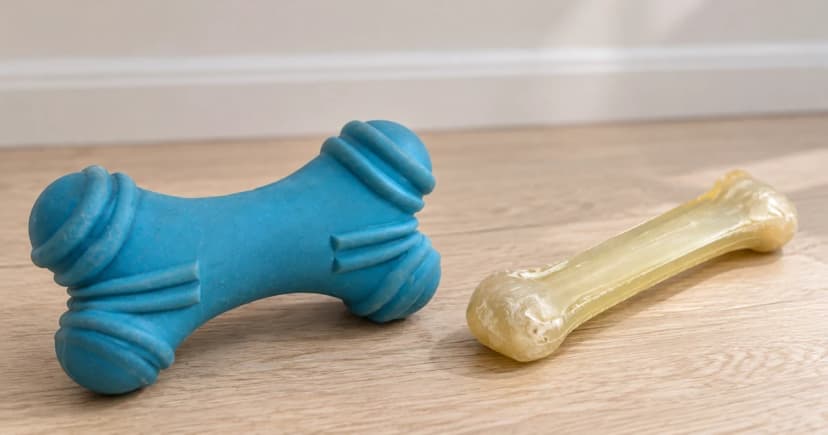
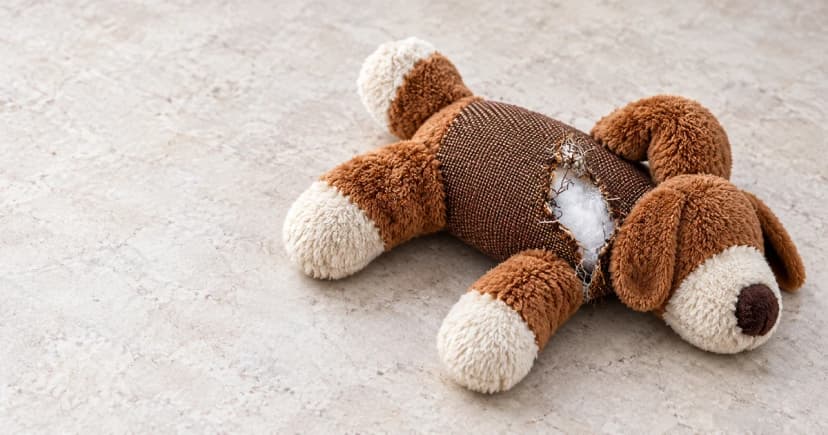
Remain present while your dog uses a soft toy. Dogs Trust and the AKC both discuss supervision and the possibility of small parts being detached. Inspect the object and follow its intended-use instructions; enthusiastic shaking does not establish that its seams, filling or attachments remain intact.
If a toy is coming apart, stop using it while you assess replacement needs. Use a familiar voluntary exchange where appropriate instead of prying open the dog's mouth or wrestling for the item. Do not deliberately provoke another shake to find out how much the object can take.
Pause an interaction that becomes unclear or uncomfortable. If you are concerned about the dog's behavior, ask an appropriate professional for individual guidance. A toy-shaking observation alone neither diagnoses aggression nor certifies that every interaction is harmless. Keep play with objects separate from predictions about interactions with other animals.
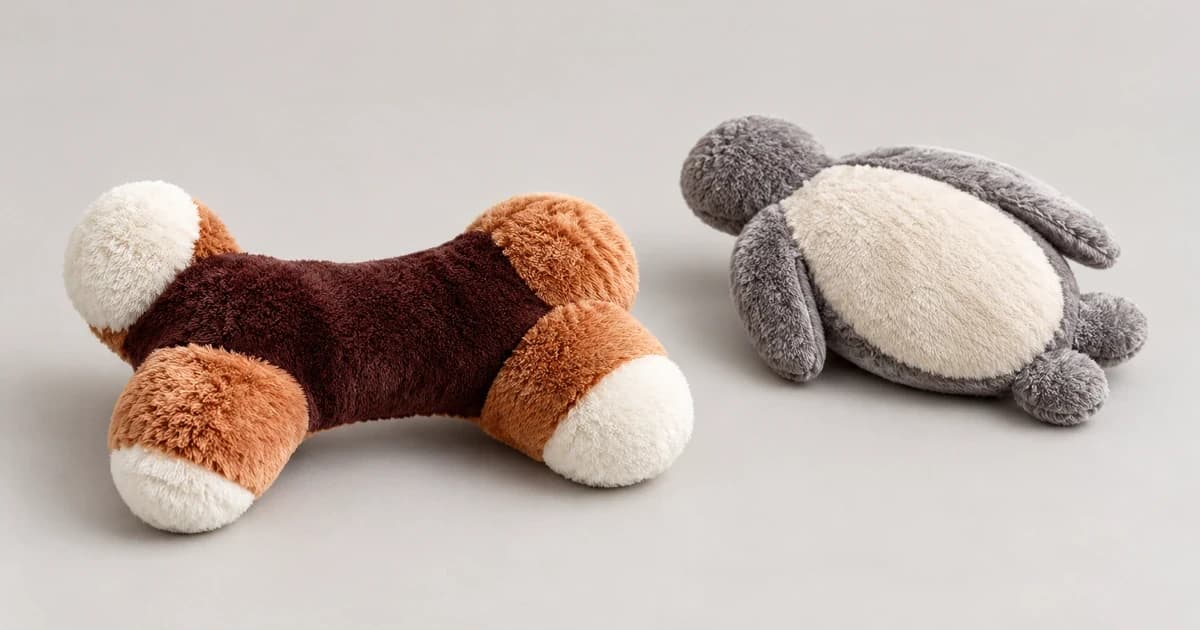
For choosing a replacement, the dog toy selection guide covers the exact item's intended use, parts and condition. Browse dog toys by the task you want to offer, then check the individual item. A category cannot establish suitable size, durable construction or current stock.
Use a short context-and-response record
A brief note can help you describe what happened without turning it into a behavior score. Use an ordinary observed episode; there is no need to create a test or meet a shaking-frequency threshold.
| Record | Your note |
|---|---|
| Context and object | Where: ____ Toy and condition: ____ What happened immediately before: ____ |
| Visible action | Held, shook, tugged, carried or released: ____ |
| Response and ending | What I did: ____ What the dog did next: ____ |
| Next step | Continue a familiar manageable activity / pause / replace damaged equipment / seek individual advice: ____ |
For example, “picked up the soft toy after our game, shook it, then lay down with it” is a description. Calling the same event a dominance display adds an explanation the observation has not established. Keep the description available if you later need help interpreting a change.
Let the next task stay specific
If you want to teach pickup and return, use the fetch guide. If your dog generally declines toys, the guide to play preferences and changes addresses that broader question. Neither task needs to be inferred from one shaking episode.
Notice the actual play, preserve room for it to end and keep conclusions proportional to what you saw.