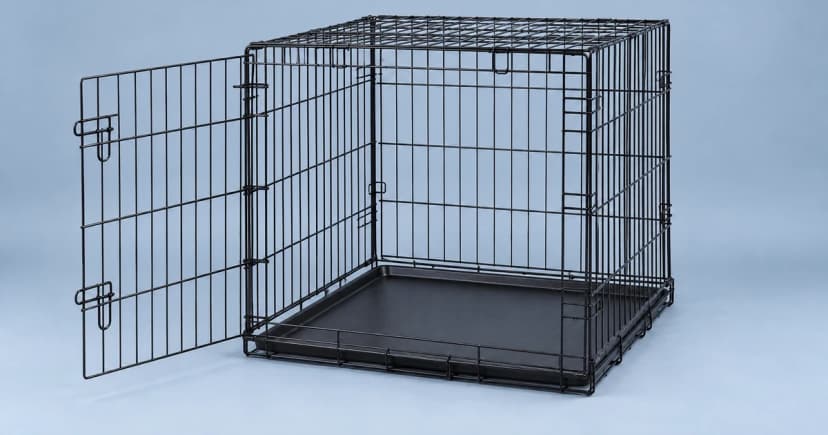
PDSA's crate guidance says not to leave a dog crated for more than three hours, and explicitly says some dogs may not tolerate even that long. Keep those statements together. The upper limit is not permission to leave your particular dog for three hours or a target to build toward.
PDSA also calls for bathroom, activity and play needs to be met before an absence, water access and other resting places. It advises seeking a vet or qualified behaviour professional's help with difficulty coping, and cautions against using a crate to manage separation anxiety without professional guidance. This article does not diagnose that condition.
The practical decision is whether the intended temporary stay fits this dog and the care available during it. Start with their needs and a specific care arrangement, rather than selecting an age-based hour allowance and trying to make the day fit it.
Identify which kind of crate time you mean
A dog choosing to lie in a crate with an accessible, secured-open doorway is in a different situation from a dog behind a fastened door. Being crated while someone is nearby also differs from being confined while everyone is away. Write down the situation you actually need to arrange.
Keep the planned closed-door interval separate from observations of voluntary resting. “The dog often naps there” leaves unanswered whether they can leave, whether someone is present and how their other needs are met. It does not document an appropriate absence.
Accepting entry, a moving door and your departure are training questions. Our crate-training guide addresses those stages. This guide helps organize the care around a proposed stay; completing one task does not settle the other.
Plan around the individual dog's needs
The Dogs Trust crate and playpen guide stresses individual needs and says dogs should not be left alone longer than they can cope with. Even a dog that enjoys its crate should not spend too much time inside: movement and toileting needs still matter. It also calls for fresh water and opportunities outside a pen.
That guidance supports an individual arrangement, rather than a universal age-to-hours formula. Dogs Trust recommends veterinary advice on an appropriate absence. If worry appears, its training guidance returns to an easier stage instead of pushing onward.
Use a needs record to make the planned care visible. It is a planning aid, not a test of how long the dog will endure being confined.
| Need to account for | What to resolve in the plan |
|---|---|
| Toileting | Who will provide the necessary opportunity, and when they can actually attend. |
| Movement and activity | How the day provides time outside the crate instead of treating containment as the whole routine. |
| Water | How access will be maintained in the intended arrangement. |
| Company and contact | Which person is responsible during the period you cannot be there. |
| Undisturbed rest | Where the dog can rest as part of the wider care arrangement. |
Confirm the person who will provide care
Put an actual person's name beside each planned visit or handover. Confirm that they are available for the needed arrangement, rather than treating “someone can check in” as completed coverage. Give them the relevant access details and the plan for the dog.
Record the intended start and end of the absence, the periods that would involve a closed crate and any care you have arranged between them. Keep unknown times visible. A pencilled-in visit is a different item from a person confirming that they can attend.
| Care record | Detail to confirm |
|---|---|
| Proposed absence | Start, expected return and the actual situation being planned. |
| Named caregiver | Who has agreed to provide care and how to contact them. |
| Opportunities during the absence | The agreed toileting, activity, contact and rest arrangement. |
| Unresolved gap | What still lacks a confirmed person or suitable arrangement. |
| Change of plans | Who will act if a return or handover changes. |
If the needed care cannot be provided, change the arrangement before relying on the crate. A suitable alternative needs its own assessment; a larger enclosure or a different room is not automatically an answer for every dog.
Include both rest and social contact
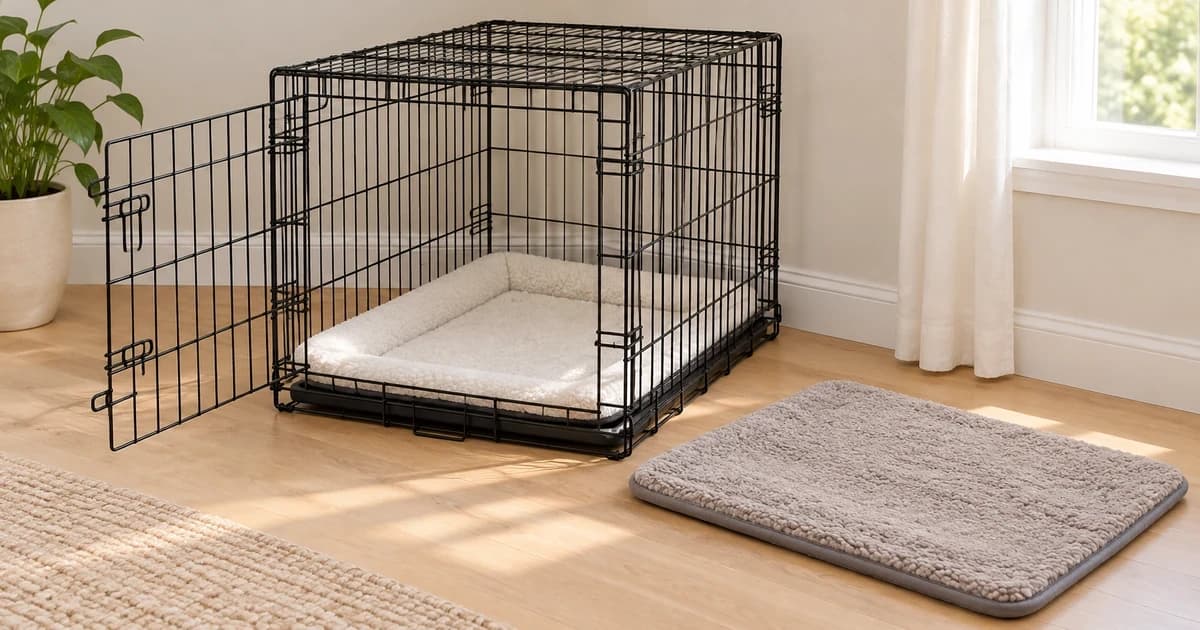
Blue Cross's written puppy-crate guide describes a positive place for undisturbed rest and emphasizes that downtime and socialisation both matter. It supplies no hour allowance. That context helps keep a quiet retreat within a wider routine, rather than making the crate the entire care plan.
Revisit the plan when an absence changes, a caregiver becomes unavailable or your dog's response raises a concern. Retain a simple account of the actual circumstances for an individual advice discussion. A previously workable arrangement does not settle a different day's needs.
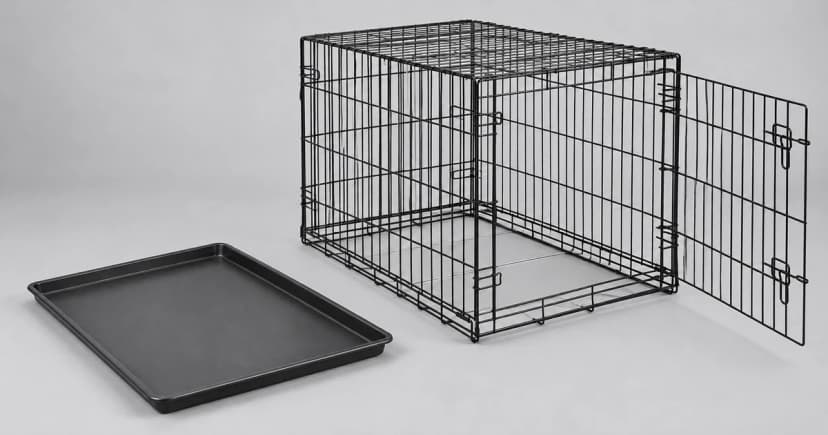
Interior room is another separate question: our crate-size guide covers usable space and belongings. When browsing wire crates, treat a product description as equipment information, not evidence of permitted confinement time. Our editorial policy explains source-based guidance.