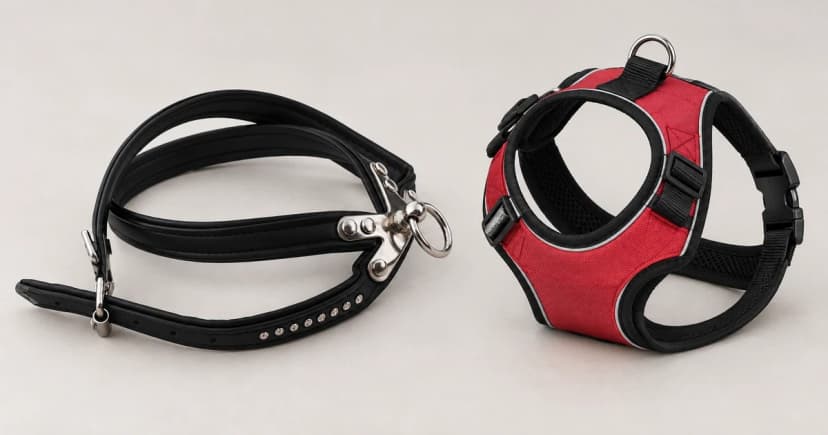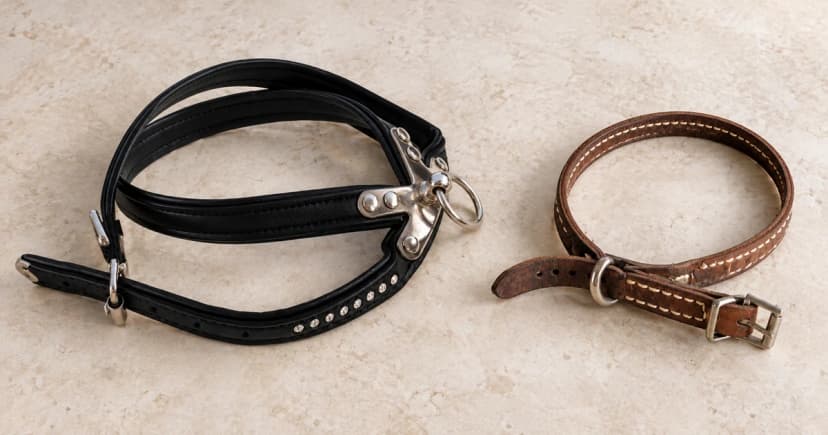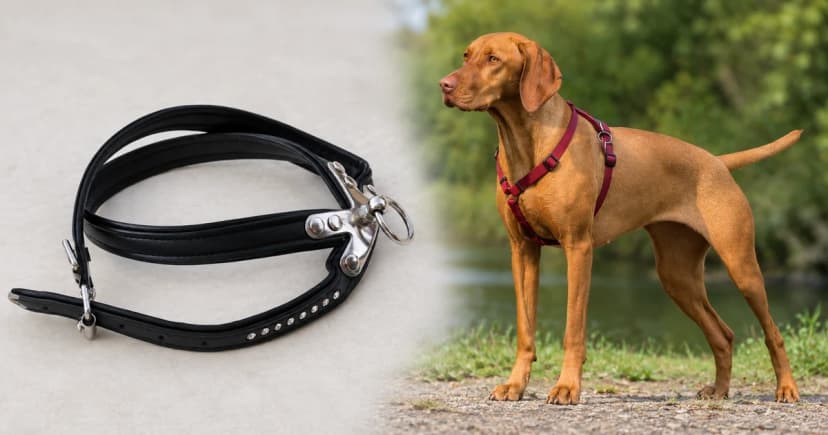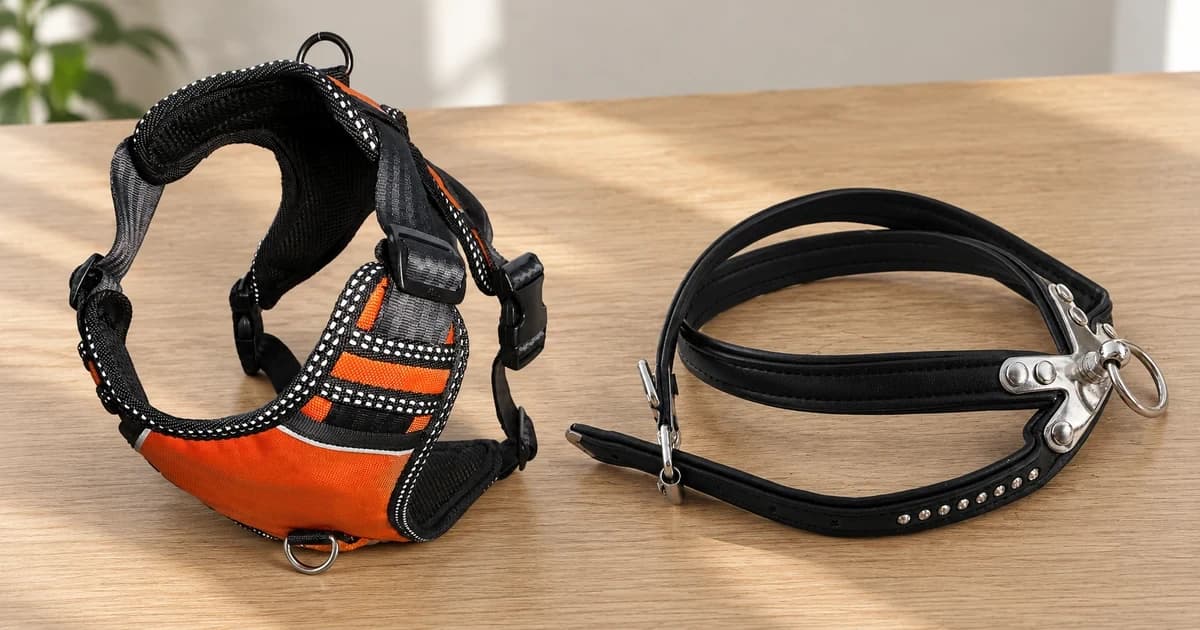
Understanding how does a no pull harness work comes down to three separate elements working together: where the leash clips (a chest attachment in front of the breastbone rather than only on the back), how the chest strap is built (a tightening martingale loop versus a fixed reinforced webbing point), and how you handle the leash (gently guiding to the side and immediately releasing tension once your dog turns). Because a front clip dog harness is a mechanical steering aid rather than an automatic training fix, the label "no-pull" never guarantees pulling will stop on its own.
1. Front clip vs. back clip and martingale vs. fixed chest straps
When you examine how does a front clip no pull harness work compared with a standard back-clip setup, two mechanical differences stand out:
- Connection point leverage (Front vs. Back): A rear D-ring sits between the shoulder blades for relaxed everyday walking (or running, where permitted). A front chest clip sits over the sternum; as the PetSafe Easy Walk Harness manual explains, when a dog surges ahead, gentle sideward guidance on a chest-connected leash pivots the dog's shoulders back toward you instead of letting them lean straight forward into the pull.
- Chest strap action (Martingale loop vs. Fixed webbing): Not all front-clip harnesses tighten. The PetSafe Easy Walk places its front D-ring on a martingale chest loop that tensions slightly during redirection, whereas the Ruffwear Front Range Harness uses a stationary reinforced webbing loop at the chest paired with an aluminum V-ring on the back.
2. Compare documented walking connections and limits across four models
Always check the parts diagram for your exact model so you never clip a leash onto a thin ID tag ring, beacon light loop, or lifting handle:
| Harness model & official source | Front chest connection & strap design | Rear back connection | Leash rules & activity boundaries |
|---|---|---|---|
| PetSafe Easy Walk Harness | Metal D-ring on a chest martingale loop centered horizontally across the breastbone | None (front-connection walking harness only) | Use a 4–6 ft standard leash design with a light, sturdy clasp (heavy clasps pull the chest strap down; retractable leads are discouraged). |
| Ruffwear Front Range Harness | Reinforced webbing loop at the chest (fixed non-martingale strap; keep distinct from the separate light loop and ID pocket) | Anodized aluminum V-ring centered on the back panel | Front webbing point redirects pulling; rear V-ring provides everyday walking attachment. |
| Kurgo Tru-Fit Smart Walking Harness (K01174) | Front chest D-ring for pull-redirection walking | Rear back D-ring for standard walking | Quick-release walking version; Kurgo notes the included seat-belt tether is for passenger restraint only and is not crash-tested. |
| PetSafe 3 in 1 Harness (2016 guide) | Chest D-ring designated for no-pull walking mode | Rear D-ring designated for everyday walking and running | Use a 4–6 ft leash on the chest ring; never use the front clip for running (can trip the dog on the lead); not crash-tested. |
3. Check fit, guide gently, and release tension promptly
A chest attachment works only when the straps stay in their intended position on your dog's body. Before heading outside, use our harness measurement and fit guide to verify strap snugness and check three details indoors:
- Verify full clasp closure and clear routing: Confirm the leash clasp closes completely around the authorized chest ring or webbing loop and that the lead hangs clear of your dog's front legs.
- Guide to the side, then release: Both the Easy Walk manual and the PetSafe 3 in 1 guide emphasize gentle redirection followed immediately by slackening the leash as soon as your dog turns or slows down—never jerk, yank, or hold constant tight tension on a front clip.
- Reward the loose-leash moment: Praise or reward your dog when they walk beside you with a slack line so they learn where to walk once redirected.
4. Keep walking permissions separate from running, tethering, or car travel
Choosing between a harness versus collar or selecting a no pull dog harness for neighborhood walks does not cover every activity. As the PetSafe 3 in 1 guide highlights, a front chest leash can tangle around a running dog's forelegs—switch to an approved rear ring for jogging. Likewise, discontinue use immediately if you spot frayed webbing, chewed buckles, or underarm chafing, and never treat a walking chest ring or uncertified tether as a crash-tested car restraint. See our editorial policy for how product manuals are referenced.