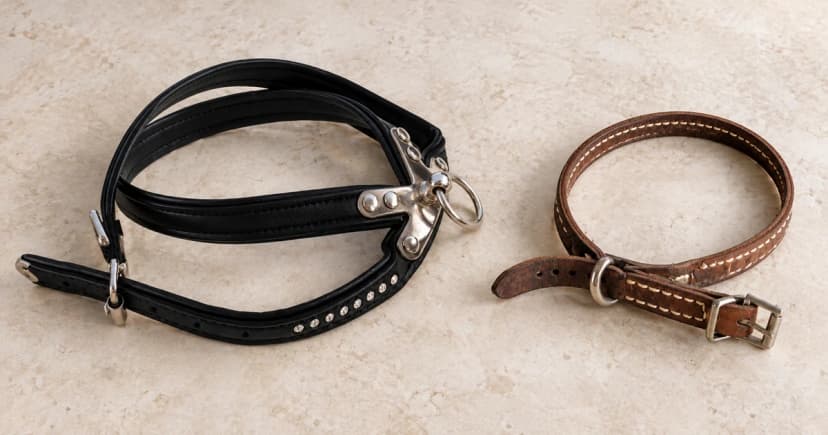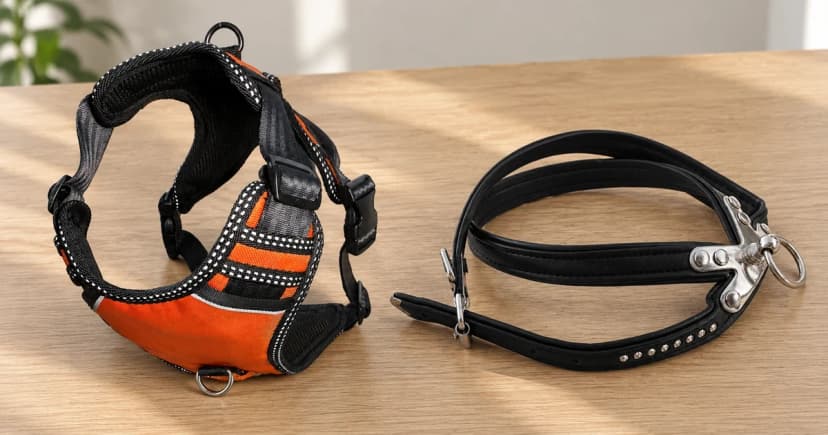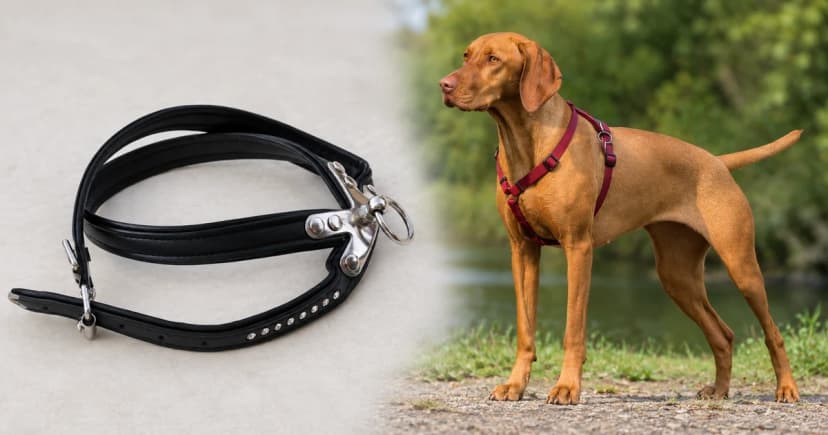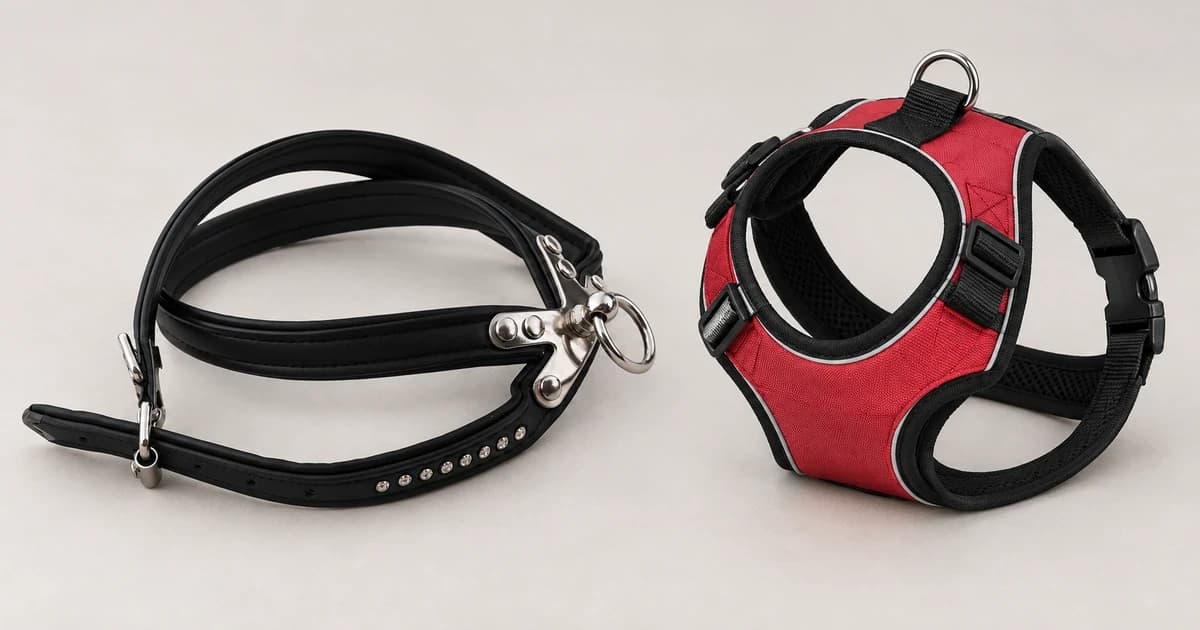
Choose a dog harness by comparing how its loops open to go on your dog, how the straps route around the neck and shoulders, which ring the maker authorizes for a walking leash, and how your dog's exact body measurements match that model's size chart. Marketing labels such as “best dog harness,” “comfortable,” or “no-pull” never answer those structural questions—two harnesses that look nearly identical in catalog photos can require completely different handling to put on.
This guide explains how to choose a dog harness for everyday walking using published welfare guidance and observable hardware features; it does not rank tested winners or certify fit, restraint strength, or escape prevention.
Describe the Walking Job Before Comparing Styles
Start with your practical walking requirements: a daily leash attachment point, a putting-on motion your dog accepts calmly, and a documented adjustment range that covers every measurement requested by the brand. Keep specialized activities separate—an everyday walking ring does not establish approval for car crash restraint, running canicross, lifting aid use, or unattended tethering.
If you are still deciding between neck and body equipment, see our harness versus collar comparison first. Once you decide on a harness, remember that hardware selection works alongside—rather than replacing—loose-leash walking training.
Compare How the Harness Opens (Over-the-Head, Step-In, and Clip-Around)
The American Kennel Club's harness selection guide distinguishes over-the-head and step-in designs, while Battersea's equipment guidance also highlights harnesses that clip around the body. Because product titles rarely state which loops unbuckle, check the structural diagram for the exact model (`Figure 1` below):
- Over-the-head (fixed neck loop): A closed neck ring slides over the dog's head first, while one or both chest/girth straps buckle behind the front legs.
- Step-in (dual leg openings): The harness lies open so both front paws step into two side-by-side triangles or loops before the straps pull up and clip above the shoulders.
- Clip-around (neck and girth buckles): Both the neck loop and the body loop include buckles so the harness can wrap and fasten without sliding a closed ring over the head or lifting paws through small loops.
- Combination designs: Many harnesses pair an adjustable over-the-head neck loop with a single clip-around girth buckle—remember that “adjustable” means a slider changes strap length, not that every loop unbuckles.
Dogs Trust notes that a clip-around harness can help when a dog dislikes having equipment slipped over the head. Treat that as a handling option to explore rather than an automatic fix: if a dog backs away or shows discomfort, pause and seek qualified behavioral or veterinary advice rather than forcing the harness on.
Look at the Strap Route and Room for Shoulder Movement
Dogs Trust's harness guidance recommends choosing a design that allows unrestricted movement and avoids a horizontal strap running straight across the front of the shoulders. Battersea likewise advises avoiding throat pressure and favors a Y-shaped front that leaves the shoulders free. Keep those welfare principles attributed to their sources—a “Y-front” or “padded vest” label in a store title still requires checking where the straps actually sit on your dog's chest and behind the elbows.
Compare the brand's worn-position diagram against the physical straps in the package so you know which webbing goes over the sternum, which passes behind the forelegs, and which sliders adjust.
Identify the Authorized Walking Connection
Check the exact model instructions to confirm which ring or loop is rated for leash attachment. Some harnesses provide a back D-ring, a front chest ring, or both, while also carrying top handles, ID-tag loops, or beacon-light loops that must never be clipped to a walking lead.
Front-clip connections also differ in whether the chest strap stays fixed or tightens slightly when pulled; our front- and back-clip harness guide compares documented designs.
Use Exact Measurements Rather Than Breed Labels
Always measure your dog at the exact anatomical points requested by the harness maker's chart. Searching for the “best dog harness” by breed name alone—whether for a Cavalier King Charles Spaniel, Cockapoo, Shiba Inu, or Doberman—cannot replace tape-measure numbers, because chest depth, neck circumference, and ribcage girth vary widely within every breed. Follow our dog-harness measurement and fit guide to record neck and girth figures and perform a worn-fit check.
Keep published finger-gap guidelines in their original context: Dogs Trust mentions room for a finger under a harness, the AKC harness guide quotes a veterinarian's snugger preference, and Battersea's two-finger rule appears in its collar section rather than as a universal harness formula. Follow the exact harness's fitting instructions and recheck fit after growth, weight changes, or coat clipping.
Check the Evidence Before Making Your Choice
Use this four-row checklist to compare candidate harnesses before buying:
| Selection Question | What to Verify in the Product Documentation |
|---|---|
| How does it go on? (See Figure 1) | A clear diagram showing whether the harness is over-the-head, step-in, clip-around, or a hybrid combination of openings, and which specific buckles unfasten. |
| Where does the leash connect? | The exact D-ring or loop authorized by the brand for walking (distinct from handles, ID rings, or light loops) and any leash-clasp restrictions. |
| Which size applies to your dog? | Exact tape-measure locations, numerical size ranges, and which straps adjust versus remain fixed on that specific model. |
| What ongoing care is required? | Material-specific washing and drying instructions, pre-walk hardware inspection steps, and when frayed webbing or worn buckles require retirement. |
Include Care and Gradual Introduction in Your Decision
Inspect webbing, stitching, and buckles regularly for fraying or cracks as both the AKC and Dogs Trust advise, and follow our harness cleaning and reuse guide to match washing methods to the care label. Introduce any new harness gradually at your dog's pace using our putting-on guide, and browse Pawlivy's walking-harness category alongside our editorial policy to compare documented designs.