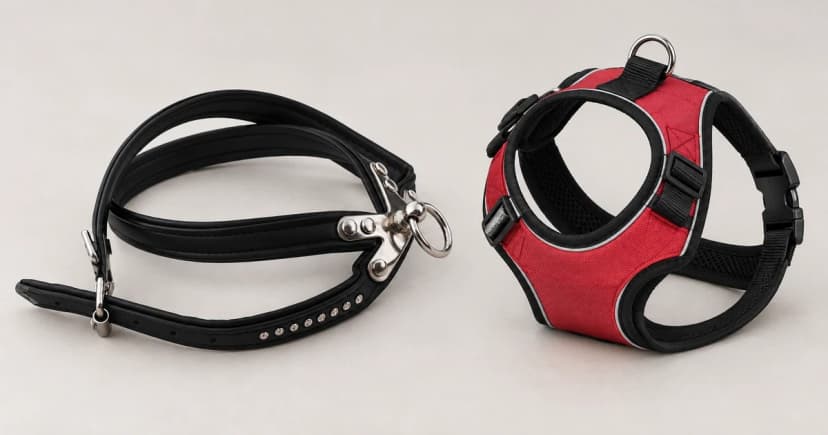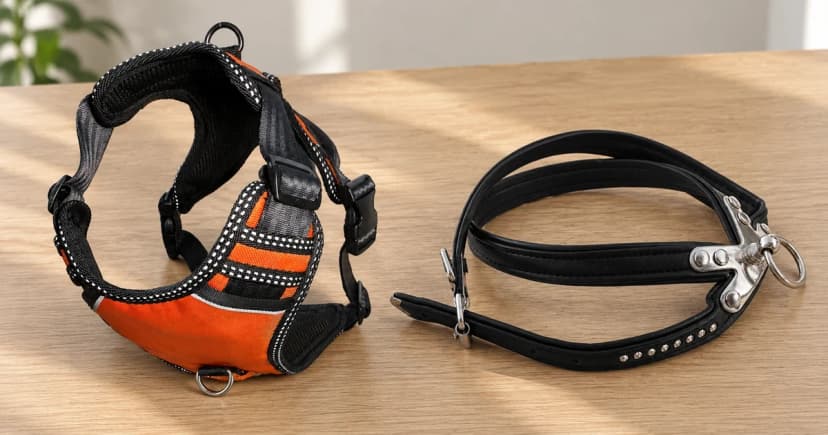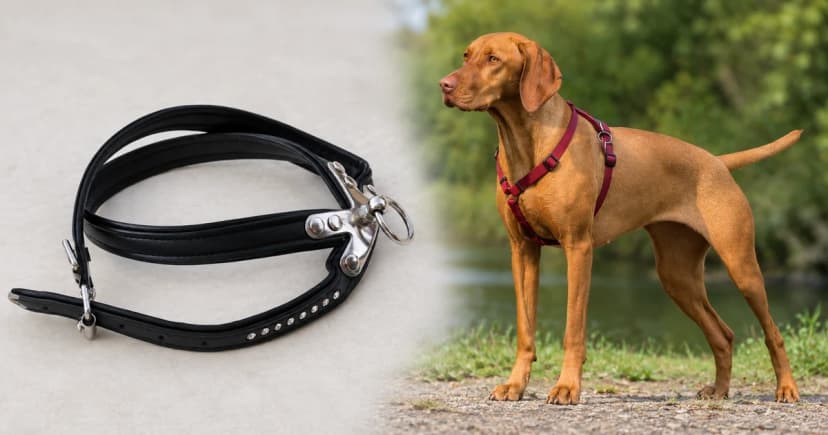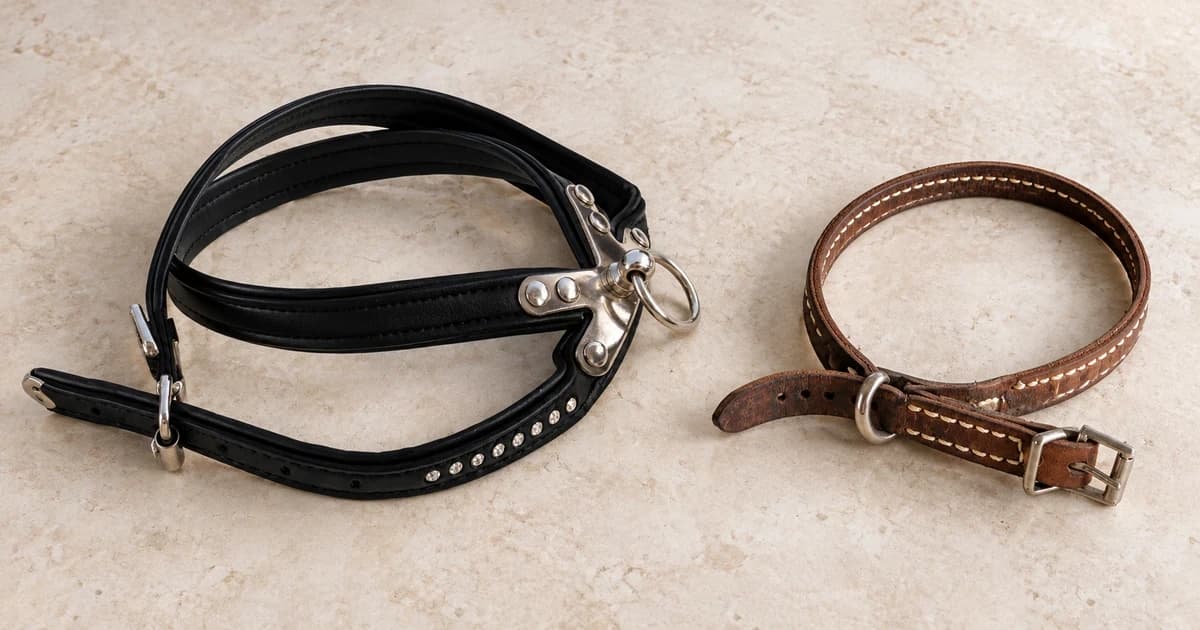
When asking is a harness better than a collar, a well-fitted body harness is often the better walking attachment for a dog that pulls against a neck strap, but no single piece of gear wins every situation automatically. A dog harness still has to fit cleanly around the shoulders, suit how your dog tolerates putting gear on, and pair with reward-based training—because switching attachment points alone does not teach loose-leash walking.
Start by separating three jobs that often get blurred together: carrying an identification tag on a flat collar, clipping a walking leash to the body or neck, and teaching your dog to walk calmly beside you.
Compare a neck attachment with a body attachment
A standard flat collar encircles the neck, whereas a body harness distributes strap contact across the chest and torso. The American Kennel Club's harness vs. collar comparison notes that either option can slip off if adjusted too loosely, while an overly tight or poorly cut harness can chafe the underarms or restrict stride.
Many households keep a lightweight flat collar on for ID tags while clipping the walking lead to a harness ring. Always attach the leash only to the structural D-ring designated by the manufacturer rather than clipping onto a thin ID loop or adjustment slider.
When pulling is the reason for reconsidering a collar
PDSA recommends switching to a harness for dogs that pull so leash tension does not press across the throat, while emphasizing that loose-lead walking remains a reward-based skill built over time. Never use leash jerks or uncomfortable hardware to force a walk.
If you are specifically comparing chest-led redirection against a standard back ring—especially when choosing a dog harness for a strong puller or evaluating a dog harness big enough for a large-chested dog—see our separate guide on how front-clip harnesses work for the mechanics and limits of front attachment points. If your dog coughs or shows neck discomfort on walks, consult your veterinarian rather than treating gear selection as a medical diagnosis.
A harness has its own fit and handling questions
Battersea's equipment guidance advises selecting a harness that keeps pressure off the neck and leaves the shoulders free to move, while distinguishing overhead, step-in and wrap-around buckle styles. A dog that backs away when a harness comes out may dislike having a loop pushed over the head or paws lifted—or the straps may be pinching.
Instead of forcing the dog through the straps, pause and check both handling and measurements. Follow our dog-harness size and fit guide to measure ribcage girth and chest placement accurately rather than guessing from weight labels.
Use what you observe on walks to choose the next step
| What you observe | Practical next step |
|---|---|
| The dog leans or pulls against a flat neck collar | Switch the walking lead to a properly fitted body harness and pair walks with reward-based loose-leash training. |
| You want to compare front-chest vs. back-ring redirection | Review how front-clip harnesses work and verify shoulder clearance under gentle tension. |
| The dog ducks away when equipment approaches | Check whether a clip-around style avoids overhead or paw-lifting steps, and consult a professional if fear or pain persists. |
| Straps twist, rub behind the elbows or gap when the dog turns | Stop using that adjustment and recheck girth and chest-strap measurements with the dog-harness size and fit guide. |
| You need both everyday ID display and a walking connection | Keep ID tags on a properly fitted collar and attach the walking leash to the harness's designated lead ring. |
Condition and learning still matter after the choice
Dogs Trust's harness guidance highlights unrestricted shoulder movement, gradual positive introduction and routine inspection of stitching, buckles and clips for wear. Compare walking harnesses and everyday collars according to your dog's body shape, handling comfort and training plan.