Travel with a cat in a car by keeping them inside a suitable, securely closed carrier and preparing the journey around that carrier. Check its condition, resolve how it will sit securely in your vehicle, manage temperature and plan what happens at the destination. A cat that enters a carrier at home has not demonstrated that every part of a car journey will be comfortable.
This guide concerns preparation and the journey itself. Use the separate carrier introduction guide for voluntary entry and door practice; allow time for that learning before the day you need to leave.
Make the plan before putting your cat inside
Confirm where you are going, when you need to arrive and how you will move from the car into the destination. Battersea's travelling advice recommends quieter traffic periods when you can choose and avoiding unnecessary stops. Reducing avoidable time in the car is a different decision from buying a larger carrier.
If previous journeys caused marked distress, vomiting or other signs of being unwell, discuss them with your veterinarian in advance. Do not turn a general travel article into a medication or fasting plan. Tell the vet about the expected journey and your cat's previous response so advice can be individual.
For a long trip, arrange food, water and toileting needs as part of the plan. Blue Cross's moving and travelling guidance describes those additional needs on very long journeys. It does not mean opening the carrier beside an unfamiliar roadside or letting your cat loose inside the car.
Check the carrier and bedding as separate items
Look at the actual doors, clips, seams and support parts before loading your cat. PDSA's veterinary carrier guidance calls for working clips and doors, rather than an assembly held together with string or cable ties. An attractive photograph cannot confirm that your own closure works.
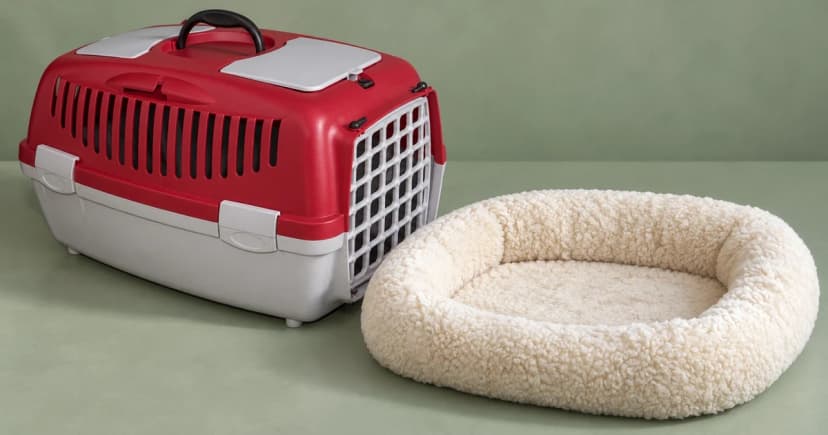
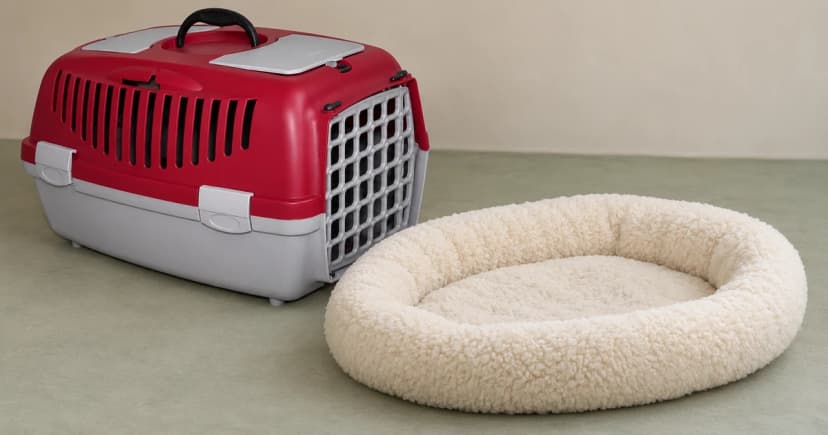
Check that your cat can stand, turn around and lie down, using the carrier size guide for the separate measurement task. Provide suitable padding and an absorbent layer for an accident. Familiar bedding can accompany the cat, but it should not prevent the intended closure or cover ventilation openings.
A clean liner does not settle the condition of the outer carrier. If cleaning is needed, use the component-specific carrier cleaning guide and your model's instructions. Finish the relevant drying and reassembly steps before planning to use it.
Resolve the vehicle arrangement for the exact carrier
Keep the cat enclosed throughout the drive. Cats Protection's carrier guidance explicitly advises against travelling with a cat loose in the car. Use a separate carrier for each cat, rather than assuming cats that get along at home should share that small space.
PDSA emphasizes a secured carrier on a flat surface so the cat does not slide to one end. Identify the placement and attachment method permitted by the exact carrier and vehicle instructions before departure. A carrying handle is not automatically an authorized belt route, and a carrier that looks stable in a photograph has not been crash tested.
Check how the arrangement sits with the carrier empty first. This article provides no universal threading diagram or collision-protection claim.
Prepare the cabin and keep the journey quiet
Ventilate the car before loading and avoid a cabin that is very hot or very cold. Battersea advises removing strong air fresheners and keeping driving smooth and noise low. Cats Protection also advises keeping heating or air conditioning from blowing directly at the cat.
Keep the carrier's ventilation openings clear. If using a familiar cover for privacy, check that the cat can still be observed and that air can circulate. A cover is not a reason to stop checking the cat or a substitute for controlling the cabin environment.
Do not leave your cat unattended in the car. Cats Protection states this directly, including in hot weather. Plan stops around that requirement instead of treating shade or a partly open window as permission to leave the cat behind.
Plan a contained arrival and note any difficulty
Keep the carrier closed while transferring it out of the vehicle. Support it steadily rather than swinging or tilting it. If the trip is a house move, Blue Cross advises keeping the cat contained until a room with closed doors and windows is prepared; familiar resting items, water, food and a litter tray belong in that arrival plan.
For a veterinary appointment or other destination, agree where the carrier will be placed and opened. Getting there is not the point at which an unfamiliar doorway becomes a secure place to release the cat.
Record the part that caused difficulty: loading, carrying, movement in the car, temperature or a change in your cat's behaviour. Report distress or illness to your vet rather than assuming every difficult journey is solved by another carrier. These notes describe what happened; they do not diagnose anxiety or motion sickness.
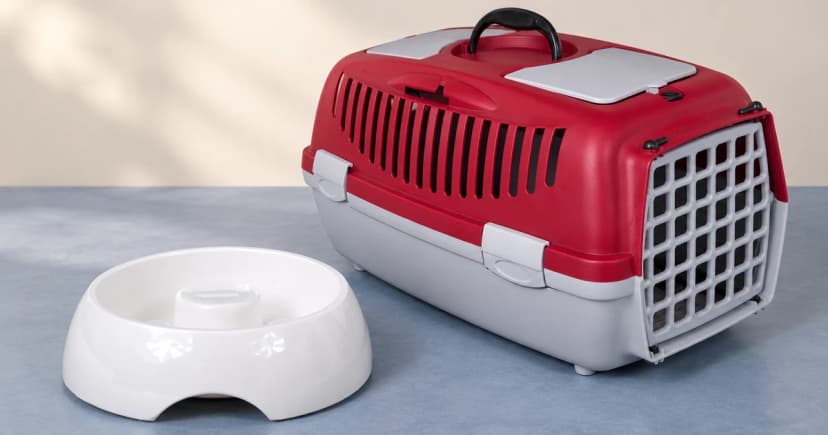
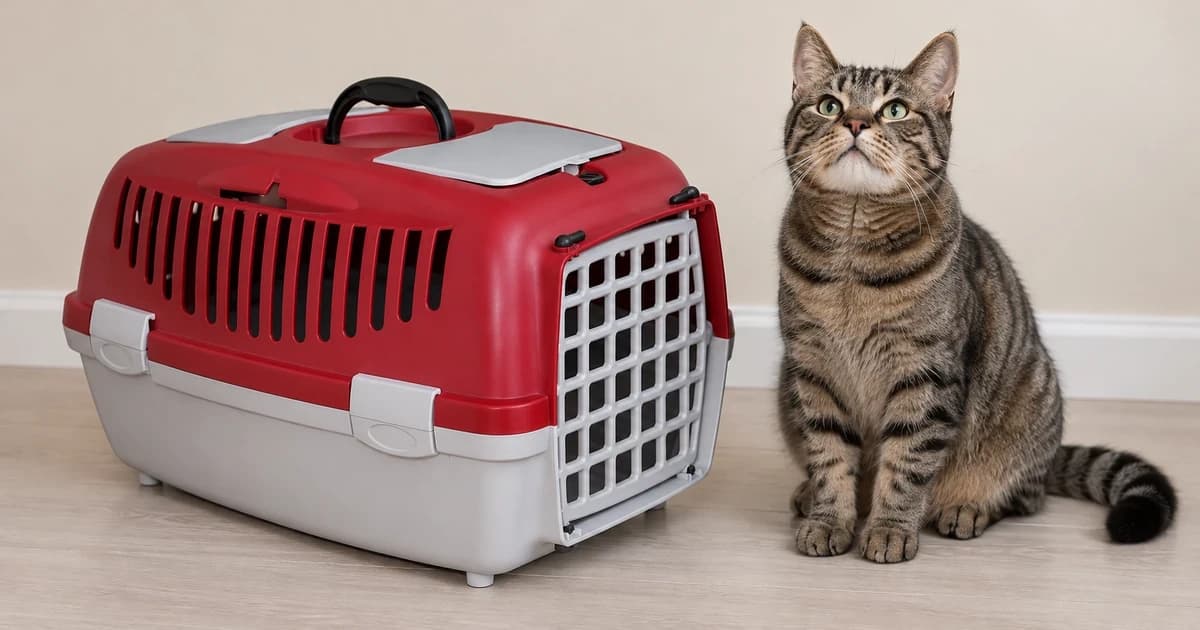
The pictured hard carrier is a reconstructed illustration, not a verified Pawlivy stock item or a transport certification. Match your journey plan to the equipment and cat you actually have.