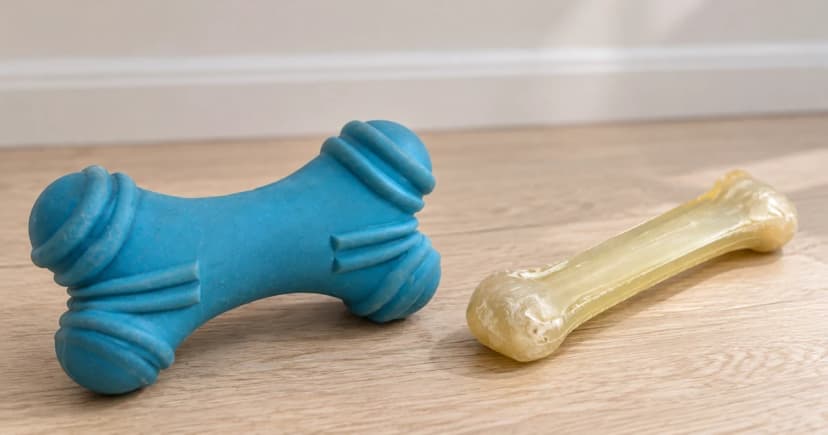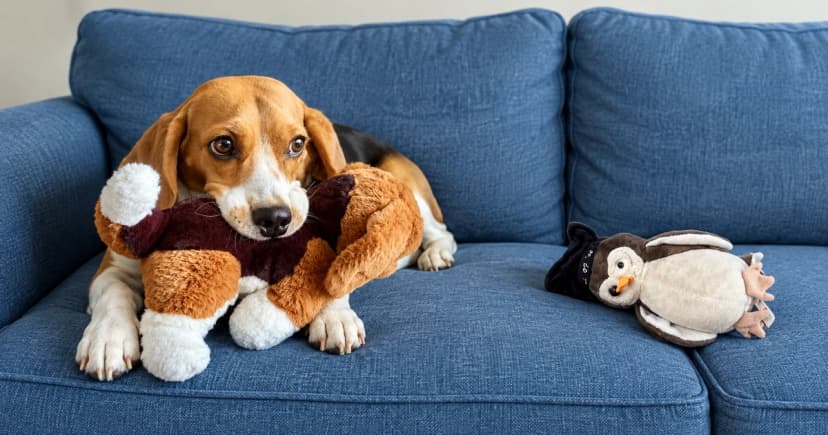
Dogs can bring toys to people for different reasons, including a familiar opportunity to play or an interaction that has earned attention before. Carrying a toy toward you does not reveal the dog's exact motive. Watch what happens next: does your dog approach, put the item down, move away with it or lose interest?
That next movement helps you choose a response. A greeting with an object in the mouth can lead to shared play, a brief acknowledgment or a pause. You do not need to take the toy to make the interaction worthwhile.
A familiar interaction can become part of the greeting
The veterinary team at Vet Help Direct explains that bringing a toy might initiate a game, particularly if doing so has led to play before. Its guide also makes the uncertainty explicit: different dogs can have different motivations, and we cannot know the reason for sure from the behavior alone.
PetMD's guide to toy greetings, written by veterinary behaviorist Wailani Sung and reviewed by veterinarian Veronica Higgs, describes learned play and attention patterns. It also describes dogs that carry an item and retreat when someone reaches toward it. Approaching with a toy is therefore different from placing it within your reach and remaining interested in an exchange.
Use that distinction when you arrive home or sit down near your dog. You can notice the context without assigning a story about a gift, gratitude, trust or rank. Those interpretations may feel appealing, but an individual dog's intention remains uncertain.
Observe the sequence rather than just the object
Keep your first observation simple. Note when the toy appears, what you do and what the dog does next. You are looking for a repeatable interaction, not testing the dog or trying to prove an emotion.
| What you can observe | What it does not establish | A manageable response |
|---|---|---|
| Your dog walks toward you while carrying a toy | That the item is being offered for you to take | Acknowledge the approach and wait to see the next movement |
| Your dog retreats when you reach toward the toy | One certain reason for retreating | Stop reaching and give the dog space |
| Your dog places the toy down and stays nearby | A requirement to start a particular game | Offer a familiar play choice if both of you are interested |
| Your dog walks away or stops engaging | That the interaction failed or needs to continue | Let the moment end |
| The interaction changes or becomes concerning | A diagnosis from the toy-carrying event | Pause and seek appropriate professional advice if needed |
A brief note can distinguish a greeting habit from an occasional event. For example, record that the dog picked up a toy after your arrival, approached, then moved away when you leaned forward. That description is more useful than recording an assumed motive.
Offer play without requiring a handover
If the dog remains interested, choose an activity you already know together. Blue Cross's play guidance emphasizes matching play to the dog and the equipment. Keep the interaction voluntary and allow it to end.
Follow the dog's response as you go. If the dog stays nearby and engages with an offered activity, you can continue at a manageable level. If the dog moves away, do not chase after the item or repeatedly reach for it. You can give a calm acknowledgment and leave the object with the dog.
Bringing a toy spontaneously is also different from a taught retrieve. If your goal is to teach pickup and return, our fetch guide addresses that separate task with easy pauses. You do not need to turn every greeting into a training session.
Keep the equipment question separate
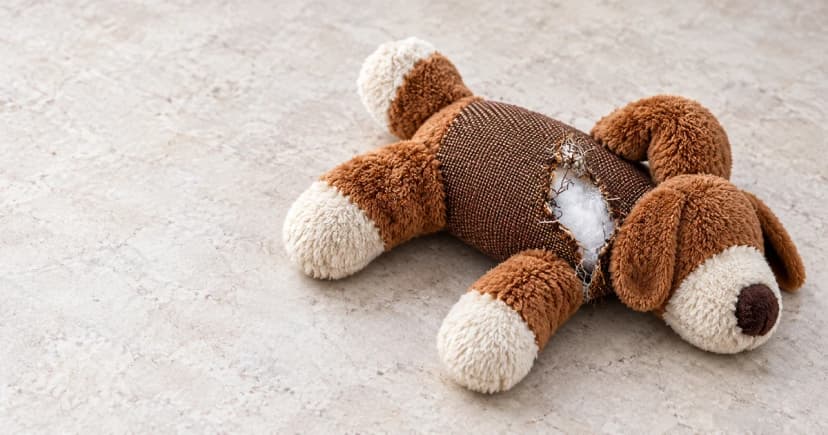
A toy used in a greeting still needs its own size, condition and intended-use checks. Carrying it does not prove that it is suitable for every kind of play. Follow the item's instructions and stop using a damaged object while you assess replacement needs.
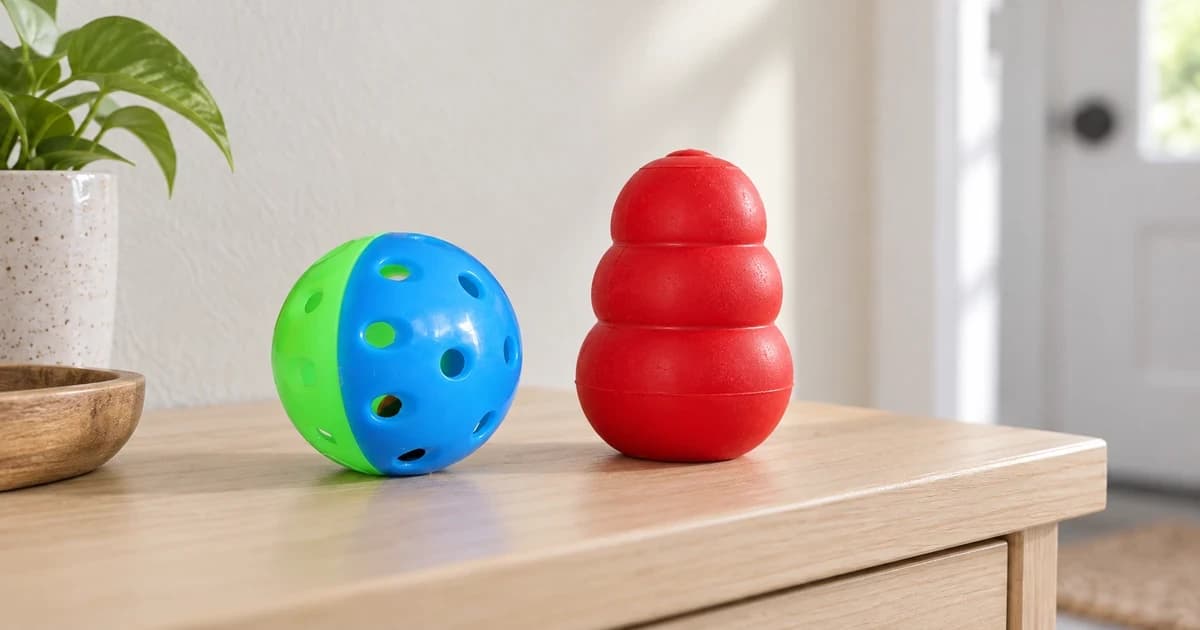
If you need to compare a replacement, the dog toys category is a place to begin looking. Confirm the exact item's guidance rather than assuming a familiar-looking shape has the same construction or intended use. Category listings do not establish current availability or a match for your dog.
If your dog shows little interest in toys generally, our guide to observing play preferences and changes considers that broader situation. One greeting does not answer it.
Know when to pause the interaction
If reaching toward the object produces tension, growling or another concerning response, stop the exchange and give space. The Vet Help Direct guide recommends a qualified clinical animal behaviorist for suspected guarding concerns. A toy-carrying greeting alone cannot establish that diagnosis, and this observation guide does not supply a treatment plan.
The useful outcome is a clearer record of what your dog actually does and a response that preserves choice. You may learn that a brief greeting is enough, that an offered game is welcome or that the dog prefers to keep carrying the toy. Leave the exact motive open and respond to the interaction in front of you.